
Journal of Zhejiang Agricultural Sciences ›› 2026, Vol. 67 ›› Issue (1): 125-135.DOI: 10.16178/j.issn.0528-9017.20250677
Previous Articles Next Articles
CUI Can1( ), QIAN Linghan1,2, GUAN Yun1, WU Yanzhou3, ZHANG Hualu3, ZHONG Yingmei1, LAI Weizhao2, LI Shenlei1,2,*()
Received:2025-09-25
Online:2026-01-11
Published:2026-01-19
Contact:
LI Shenlei
CLC Number:
CUI Can, QIAN Linghan, GUAN Yun, WU Yanzhou, ZHANG Hualu, ZHONG Yingmei, LAI Weizhao, LI Shenlei. Temporal dynamics of major insect pests in early season rice and their key meteorological driving factors in Zengcheng, Guangdong[J]. Journal of Zhejiang Agricultural Sciences, 2026, 67(1): 125-135.
Add to citation manager EndNote|Ris|BibTeX
URL: http://www.zjnykx.cn/EN/10.16178/j.issn.0528-9017.20250677
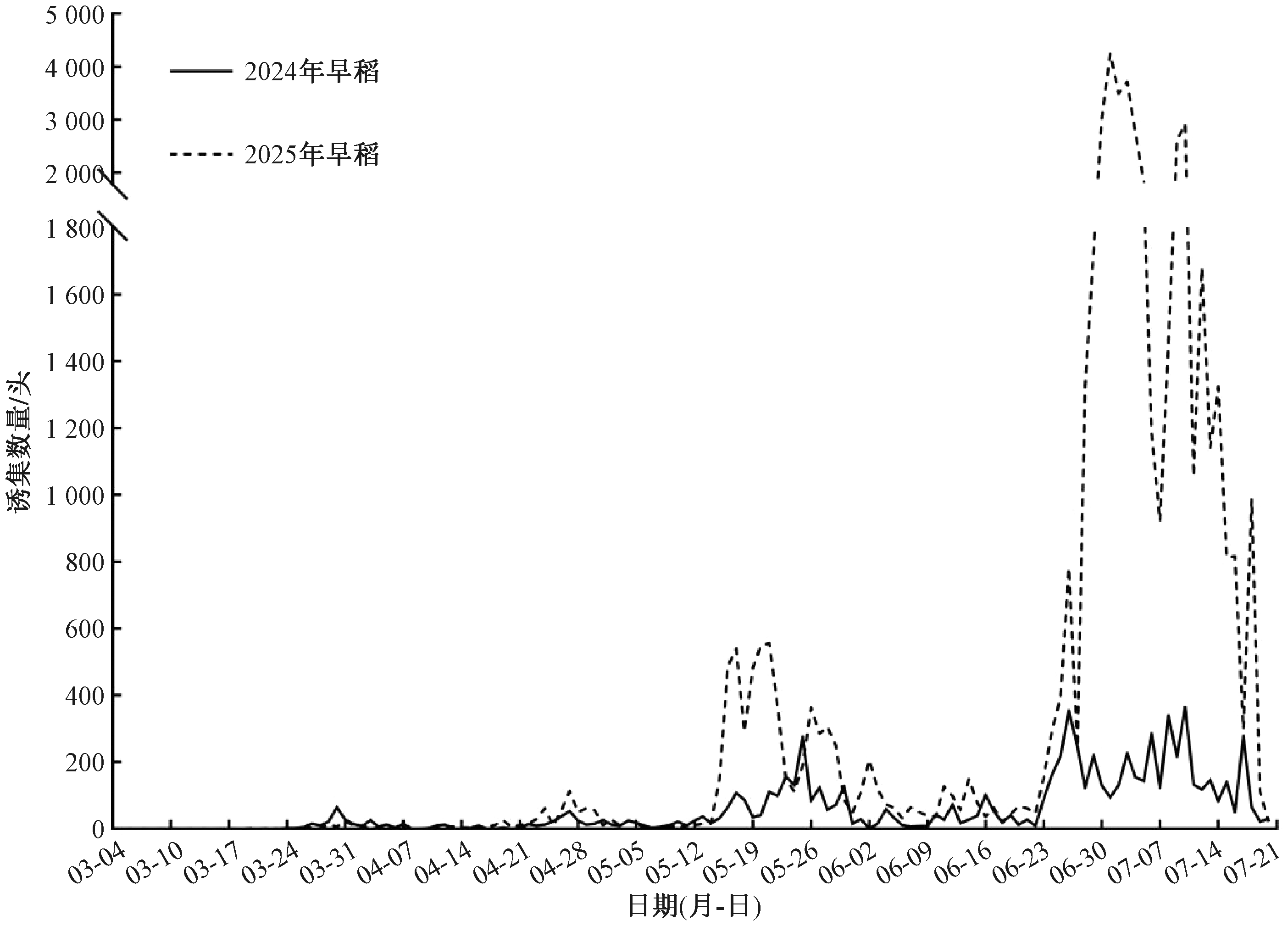
Fig.1 Interannual population dynamics of Chilo suppressalis during the early rice seasons of 2024 and 2025
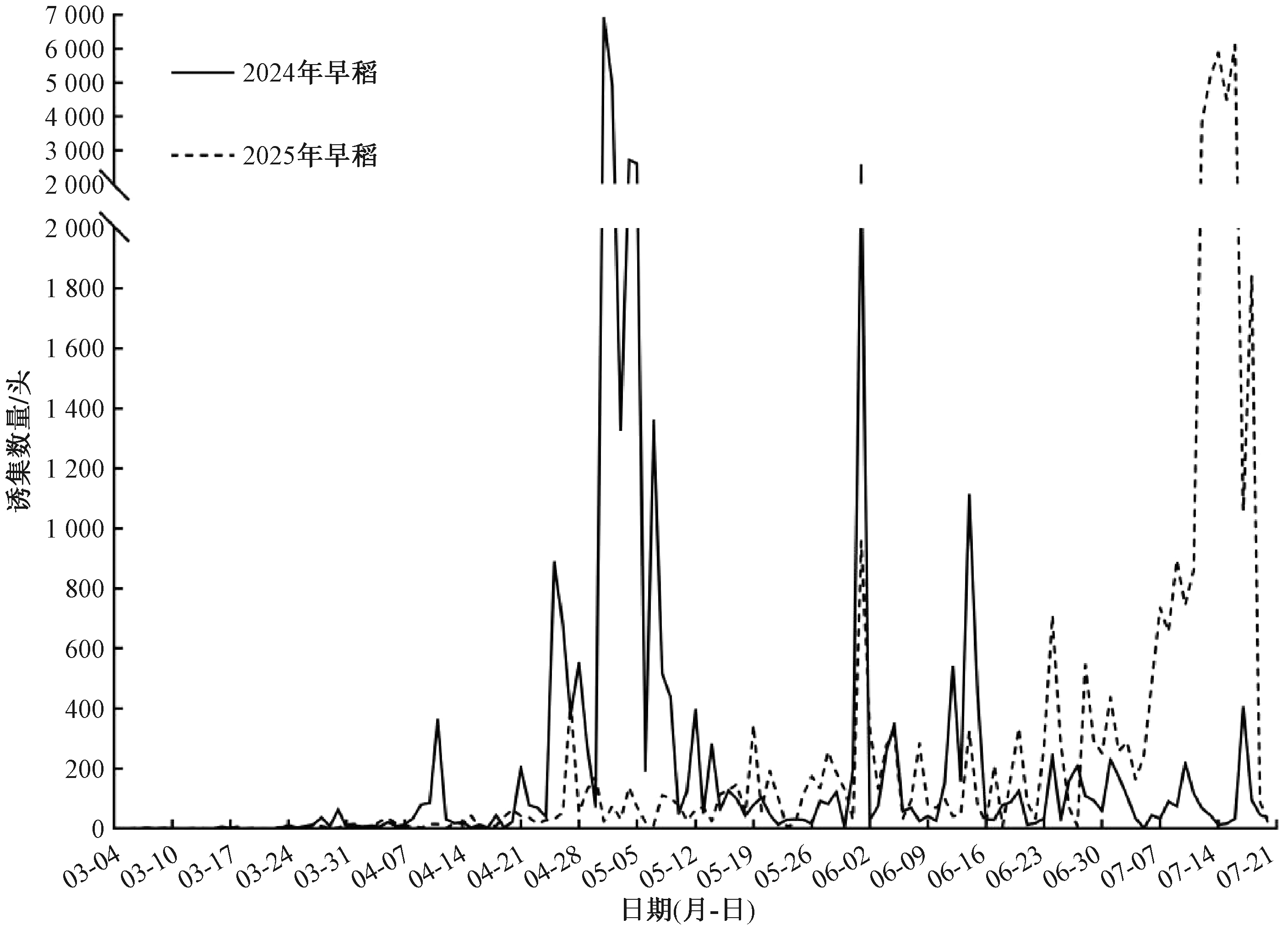
Fig.2 Interannual population dynamics of rice planthoppers during the early rice seasons of 2024 and 2025
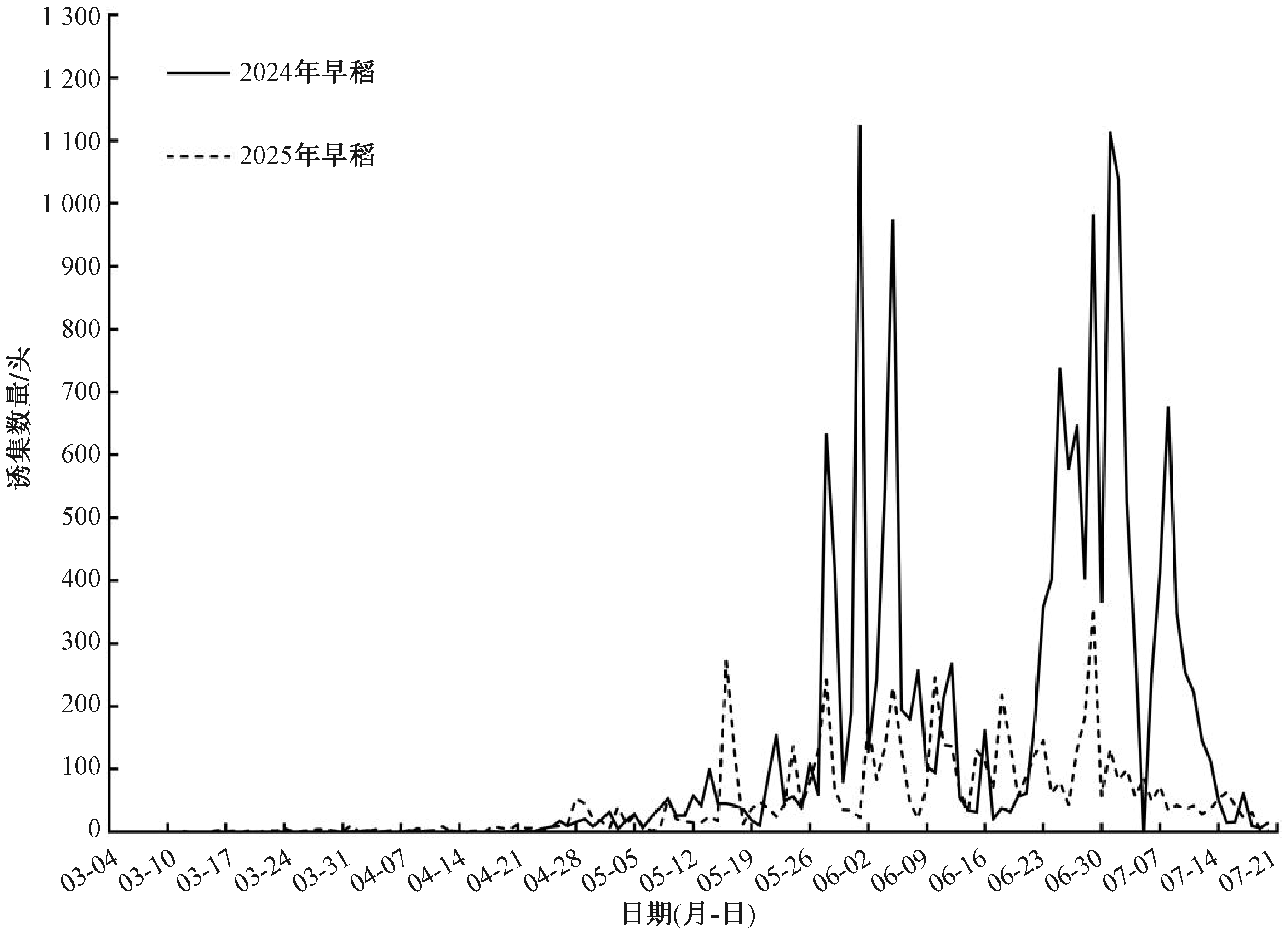
Fig.3 Interannual population dynamics of Cnaphalocrocis medinalis during the early rice seasons of 2024 and 2025
| 气象因子 | X2 | X3 | X4 | X5 | X6 | X7 | X8 | X9 | X10 | Y1 | Y2 | Y3 |
|---|---|---|---|---|---|---|---|---|---|---|---|---|
| X1 | 0.725** | 0.916** | 0.396* | 0.354* | 0.327* | 0.362* | -0.167 | -0.320* | 0.010 | 0.327* | 0.595** | -0.034 |
| (0.040) | (<0.001) | (0.834) | ||||||||||
| X2 | 0.629** | 0.267 | 0.353* | 0.259 | 0.348* | -0.347* | -0.252 | -0.018 | 0.615** | 0.562** | -0.109 | |
| (<0.001) | (<0.001) | (0.501) | ||||||||||
| X3 | 0.317* | 0.293 | 0.252 | 0.291 | -0.184 | -0.349* | 0.017 | 0.180 | 0.416** | -0.025 | ||
| (0.267) | (0.008) | (0.881) | ||||||||||
| X4 | 0.738** | 0.904** | 0.771** | 0.447** | 0.003 | -0.043 | 0.447** | 0.223 | 0.297 | |||
| (0.004) | (0.168) | (0.063) | ||||||||||
| X5 | 0.871** | 0.974** | 0.194 | 0.065 | -0.183 | 0.353* | 0.306 | 0.513** | ||||
| (0.025) | (0.055) | (0.001) | ||||||||||
| X6 | 0.907** | 0.498** | 0.160 | -0.069 | 0.439** | 0.199 | 0.403* | |||||
| (0.005) | (0.218) | (0.010) | ||||||||||
| X7 | 0.208 | 0.048 | -0.128 | 0.382* | 0.285 | 0.491** | ||||||
| (0.015) | (0.075) | (0.001) | ||||||||||
| X8 | 0.521** | 0.085 | 0.116 | -0.186 | 0.270 | |||||||
| (0.475) | (0.250) | (0.092) | ||||||||||
| X9 | -0.041 | 0.017 | -0.049 | 0.097 | ||||||||
| (0.916) | (0.765) | (0.553) | ||||||||||
| -0.240 | -0.320* | -0.143 | ||||||||||
| (0.136) | (0.044) | (0.378) |
Table 1 Correlation between populations of three major rice pests and meteorological factors in early-season rice
| 气象因子 | X2 | X3 | X4 | X5 | X6 | X7 | X8 | X9 | X10 | Y1 | Y2 | Y3 |
|---|---|---|---|---|---|---|---|---|---|---|---|---|
| X1 | 0.725** | 0.916** | 0.396* | 0.354* | 0.327* | 0.362* | -0.167 | -0.320* | 0.010 | 0.327* | 0.595** | -0.034 |
| (0.040) | (<0.001) | (0.834) | ||||||||||
| X2 | 0.629** | 0.267 | 0.353* | 0.259 | 0.348* | -0.347* | -0.252 | -0.018 | 0.615** | 0.562** | -0.109 | |
| (<0.001) | (<0.001) | (0.501) | ||||||||||
| X3 | 0.317* | 0.293 | 0.252 | 0.291 | -0.184 | -0.349* | 0.017 | 0.180 | 0.416** | -0.025 | ||
| (0.267) | (0.008) | (0.881) | ||||||||||
| X4 | 0.738** | 0.904** | 0.771** | 0.447** | 0.003 | -0.043 | 0.447** | 0.223 | 0.297 | |||
| (0.004) | (0.168) | (0.063) | ||||||||||
| X5 | 0.871** | 0.974** | 0.194 | 0.065 | -0.183 | 0.353* | 0.306 | 0.513** | ||||
| (0.025) | (0.055) | (0.001) | ||||||||||
| X6 | 0.907** | 0.498** | 0.160 | -0.069 | 0.439** | 0.199 | 0.403* | |||||
| (0.005) | (0.218) | (0.010) | ||||||||||
| X7 | 0.208 | 0.048 | -0.128 | 0.382* | 0.285 | 0.491** | ||||||
| (0.015) | (0.075) | (0.001) | ||||||||||
| X8 | 0.521** | 0.085 | 0.116 | -0.186 | 0.270 | |||||||
| (0.475) | (0.250) | (0.092) | ||||||||||
| X9 | -0.041 | 0.017 | -0.049 | 0.097 | ||||||||
| (0.916) | (0.765) | (0.553) | ||||||||||
| -0.240 | -0.320* | -0.143 | ||||||||||
| (0.136) | (0.044) | (0.378) |
| 害虫种类 | 气象因子 | 线性回归方程 | F值 | p值 | 调整R2 |
|---|---|---|---|---|---|
| 二化螟 | X1、X2、X4 | Y1=-18 554.202-12.905X1+1 241.607X2+555.958X4 | 14.117 | <0.001 | 0.502 |
| 稻飞虱 | X1、X3、X10 | Y2=7 762.875+53.881X1-57.996X3-738.285X10 | 15.300 | <0.001 | 0.524 |
| 稻纵卷叶螟 | X5 | Y3=-1 409.818+104.573X5 | 13.546 | 0.001 | 0.243 |
Table 2 Stepwise regression models for abundance of three major pests in early-season rice
| 害虫种类 | 气象因子 | 线性回归方程 | F值 | p值 | 调整R2 |
|---|---|---|---|---|---|
| 二化螟 | X1、X2、X4 | Y1=-18 554.202-12.905X1+1 241.607X2+555.958X4 | 14.117 | <0.001 | 0.502 |
| 稻飞虱 | X1、X3、X10 | Y2=7 762.875+53.881X1-57.996X3-738.285X10 | 15.300 | <0.001 | 0.524 |
| 稻纵卷叶螟 | X5 | Y3=-1 409.818+104.573X5 | 13.546 | 0.001 | 0.243 |
| 害虫 | 气象因子 | 偏相关系数(r) | T检验值 | p值 |
|---|---|---|---|---|
| 二化螟 | X1 | -0.377 | -2.443 | 0.020 |
| X2 | 0.637 | 4.958 | <0.001 | |
| X4 | 0.473 | 3.222 | 0.003 | |
| 稻飞虱 | X1 | 0.624 | 4.791 | <0.001 |
| X3 | -0.430 | -2.858 | 0.007 | |
| X10 | -0.434 | -2.891 | 0.006 |
Table 3 Partial correlation analysis of Chilo suppressalis and rice planthoppers population densities with meteorological factors
| 害虫 | 气象因子 | 偏相关系数(r) | T检验值 | p值 |
|---|---|---|---|---|
| 二化螟 | X1 | -0.377 | -2.443 | 0.020 |
| X2 | 0.637 | 4.958 | <0.001 | |
| X4 | 0.473 | 3.222 | 0.003 | |
| 稻飞虱 | X1 | 0.624 | 4.791 | <0.001 |
| X3 | -0.430 | -2.858 | 0.007 | |
| X10 | -0.434 | -2.891 | 0.006 |
| [1] | 程式华. 中国水稻育种百年发展与展望[J]. 中国稻米, 2021, 27(4): 1-6. |
| CHENG S H. One-hundred years’Development and prospect of rice breeding in China[J]. China Rice, 2021, 27(4): 1-6. | |
| [2] | 徐春春, 纪龙, 陈中督, 等. 中国水稻生产、市场与进出口贸易的回顾与展望[J]. 中国稻米, 2021, 27(4): 17-21. |
| XU C C, JI L, CHEN Z D, et al. Historical review and prospect of China's rice production, market and import and export trade[J]. China Rice, 2021, 27(4): 17-21. | |
| [3] | 李有志, 方继朝. 水稻害虫: 研究进展与展望[J]. 昆虫学报, 2024, 67(4): 443-455. |
| LI Y Z, FANG J C. Rice pests: research progresses and prospects[J]. Acta Entomologica Sinica, 2024, 67(4): 443-455. | |
| [4] | 赫思聪, 周淑香, 李丽娟, 等. 二化螟危害水稻产量损失研究[J]. 应用昆虫学报, 2024, 61(1): 157-161. |
| HE S C, ZHOU S X, LI L J, et al. Loss of rice crops caused by the stemborer, Chilo suppressalis[J]. Chinese Journal of Applied Entomology, 2024, 61(1): 157-161. | |
| [5] | 王丰, 柳武革, 刘迪林, 等. 广东优质稻发展及稻米品牌建设与展望[J]. 中国稻米, 2021, 27(4): 107-116. |
| WANG F, LIU W G, LIU D L, et al. Development of high quality rice, construction and prospects of rice brand in Guangdong Province[J]. China Rice, 2021, 27(4): 107-116. | |
| [6] | 韩永强, 李丹丹, 邓权权, 等. 50%氯虫苯甲酰胺悬浮剂拌种对二化螟和稻纵卷叶螟的防治效果[J]. 应用昆虫学报, 2022, 59(5): 1160-1172. |
| HAN Y Q, LI D D, DENG Q Q, et al. Control of the rice stem borer and rice leaf folder using the seed dressing agent chlorantraniliprole[J]. Chinese Journal of Applied Entomology, 2022, 59(5): 1160-1172. | |
| [7] | 周淑香, 李丽娟, 毛刚, 等. 不同世代发生区赤眼蜂防治二化螟效果差异分析[J]. 东北农业科学, 2021(6): 56-59. |
| ZHOU S X, LI L J, MAO G, et al. Effects of Trichogramma on Chilo suppressalis in different generation occurrence areas[J]. Journal of Northeast Agricultural Sciences, 2021(6): 56-59. | |
| [8] | 徐志德, 黄志农, 文吉辉, 等. 水稻生物学质量和营养与二化螟危害的关系[J]. 植物保护学报, 2011, 38(2): 139-146. |
| XU Z D, HUANG Z N, WEN J H, et al. Relationship between biological quality and nutrition of rice and damage of Chilo suppressalis[J]. Journal of Plant Protection, 2011, 38(2): 139-146. | |
| [9] | 吕进, 祝增荣, 娄永根, 等. 稻飞虱灾变和治理研究透析[J]. 应用昆虫学报, 2013, 50(3): 565-574. |
| LV J, ZHU Z R, LOU Y G, et al. Review of research into outbreaks and management of rice planthoppers[J]. Chinese Journal of Applied Entomology, 2013, 50(3): 565-574. | |
| [10] | 蒯鹏, 娄永根. 稻飞虱生物学、生态学及其防控技术研究进展[J]. 浙江大学学报(农业与生命科学版), 2022, 48(6): 692-700. |
| KUAI P, LOU Y G. Research advances in biology, ecology and management of rice planthoppers[J]. Journal of Zhejiang University (Agriculture & Life Sciences), 2022, 48(6): 692-700. | |
| [11] | PADMAVATHI C, KATTI G, PADMAKUMARI A P, et al. The effect of leaffolder Cnaphalocrocis medinalis (Guenee) [Lepidoptera: Pyralidae] injury on the plant physiology and yield loss in rice[J]. Journal of Applied Entomology, 2013, 137(4): 249-256. |
| [12] | 李霞, 徐秀秀, 韩兰芝, 等. 不同水稻品种对稻纵卷叶螟生长发育、存活、生殖及飞行能力的影响[J]. 生态学报, 2013, 33(14): 4370-4376. |
| LI X, XU X X, HAN L Z, et al. Effects of different rice varieties on larval development, survival, adult reproduction, and flight capacity of Cnaphalocrocis medinalis (GuenÉe)[J]. Acta Ecologica Sinica, 2013, 33(14): 4370-4376. | |
| [13] | 官道杰, 王建军, 孟祥坤. 我国二化螟抗药性发展及其抗性机制研究进展[J]. 吉林农业大学学报, 2024, 46(4): 523-530. |
| GUAN D J, WANG J J, MENG X K. Research advances in insecticide resistance and mechanisms of Chilo suppressalis in China[J]. Journal of Jilin Agricultural University, 2024, 46(4): 523-530. | |
| [14] | 杨眉, 褚晋, 田春晖, 等. 二化螟抗药性研究进展[J]. 江苏农业科学, 2023, 51(20): 15-20. |
| YANG M, CHU J, TIAN C H, et al. Research progress on resistance of Chilo suppressalis to insecticides[J]. Jiangsu Agricultural Sciences, 2023, 51(20): 15-20. | |
| [15] | 廖逊, 万虎, 李建洪. 褐飞虱对杀虫剂抗性研究进展[J]. 农药学学报, 2019, 21(S1): 718-728. |
| LIAO X, WAN H, LI J H. Research progress on resistance of brown planthopper to insecticides[J]. Chinese Journal of Pesticide Science, 2019, 21(S1): 718-728. | |
| [16] | 肖汉祥, 李燕芳, 凌善锋, 等. 广东褐飞虱种群对4种杀虫剂的抗药性[J]. 华南农业大学学报, 2018, 39(2): 70-74. |
| XIAO H X, LI Y F, LING S F, et al. Resistance of Nilaparvata lugens (Stl) populations to four types of insecticides in Guangdong Province[J]. Journal of South China Agricultural University, 2018, 39(2): 70-74. | |
| [17] | 陈澄宇, 赵云霞, 唐艺婷, 等. 稻纵卷叶螟化学农药减量增效防治技术进展[J]. 科技导报, 2024, 42(6): 79-85. |
| CHEN C Y, ZHAO Y X, TANG Y T, et al. Progresses of pesticide reduction techniques and the synergistic effects on the control of rice leaffolders Cnaphalocrocis medinalis[J]. Science & Technology Review, 2024, 42(6): 79-85. | |
| [18] | 林秀秀, 金道超, 陈祥盛. 稻纵卷叶螟抗药性研究进展[J]. 湖北农业科学, 2012, 51(3): 437-440. |
| LIN X X, JIN D C, CHEN X S. Research advances on resistance of Cnaphalocrocis medialis to chemical insecticide[J]. Hubei Agricultural Sciences, 2012, 51(3): 437-440. | |
| [19] | SUN Y, LIU S T, LING Y, et al. Insecticide resistance monitoring of Cnaphalocrocis medinalis (Lepidoptera: Pyralidae) and its mechanism to chlorantraniliprole[J]. Pest Management Science, 2023, 79(9): 3290-3299. |
| [20] | 叶恭银, 方琦, 徐红星, 等. 我国水稻螟虫发生及治理研究进展[J]. 植物保护, 2023, 49(5): 167-180. |
| YE G Y, FANG Q, XU H X, et al. Research advances on the occurrence, damage and management of rice stem borers in China[J]. Plant Protection, 2023, 49(5): 167-180. | |
| [21] | 陆宴辉, 刘杨, 杨现明, 等. 中国农业害虫综合防治研究进展: 2018年—2022年[J]. 植物保护, 2023, 49(5): 145-166. |
| LU Y H, LIU Y, YANG X M, et al. Advances in integrated management of agricultural insect pests in China: 2018—2022[J]. Plant Protection, 2023, 49(5): 145-166. | |
| [22] | 徐红星, 杨亚军, 郑许松, 等. 二十一世纪以来我国水稻害虫治理成就与展望[J]. 应用昆虫学报, 2019, 56(6): 1163-1177. |
| XU H X, YANG Y J, ZHENG X S, et al. Research on the management of rice insect pests in China since the 21 century: advances and future prospects[J]. Chinese Journal of Applied Entomology, 2019, 56(6): 1163-1177. | |
| [23] | 潘攀, 罗礼智, 江幸福, 等. 稻纵卷叶螟飞行行为特征[J]. 应用昆虫学报, 2013, 50(3): 583-591. |
| PAN P, LUO L Z, JIANG X F, et al. The characteristics of flight in the rice leaf roller, Cnaphalocrocis medinalis[J]. Chinese Journal of Applied Entomology, 2013, 50(3): 583-591. | |
| [24] | 刘维, 蔡雪薇, 刘垚, 等. 基于FLEXPART的稻纵卷叶螟迁飞路径及大气背景研究[J]. 气象, 2017, 43(4): 460-467. |
| LIU W, CAI X W, LIU Y, et al. Study on immigration path of rice leaf roller based on FLEXPART and atmospheric background[J]. Meteorological Monthly, 2017, 43(4): 460-467. | |
| [25] | 包云轩, 曹云, 谢晓金, 等. 中国稻纵卷叶螟发生特点及北迁的大气背景[J]. 生态学报, 2015, 35(11): 3519-3533. |
| BAO Y X, CAO Y, XIE X J, et al. Migration pattern of rice leaf roller and impact of atmospheric conditions on a heavy migration event in China[J]. Acta Ecologica Sinica, 2015, 35(11): 3519-3533. | |
| [26] | 陆明红, 刘万才, 胡高, 等. 中越水稻迁飞性害虫稻飞虱、稻纵卷叶螟发生关系分析[J]. 植物保护, 2018, 44(3): 31-36, 60. |
| LU M H, LIU W C, HU G, et al. Analysis of the relationships of rice planthopper and rice leaf folder occurrence between China and Vietnam[J]. Plant Protection, 2018, 44(3): 31-36, 60. | |
| [27] | 于彩霞, 霍治国, 张蕾, 等. 中国稻飞虱发生的大气环流指示指标[J]. 生态学杂志, 2014, 33(4): 1053-1060. |
| YU C X, HUO Z G, ZHANG L, et al. Leading indicators of atmospheric circulation characteristics on rice planthopper occurrence in China[J]. Chinese Journal of Ecology, 2014, 33(4): 1053-1060. | |
| [28] | 包云轩, 苍薪竹, 杨诗俊, 等. 大气低温胁迫对中国褐飞虱年内初始迁入的影响[J]. 生态学报, 2020, 40(20): 7519-7533. |
| BAO Y X, CANG X Z, YANG S J, et al. Impact of atmospheric low temperature stress on the initial immigration of Nilaparvata lugens(Stål)in a year in China[J]. Acta Ecologica Sinica, 2020, 40(20): 7519-7533. | |
| [29] | 秦金凤. 极端气温和极端降水天气对两广稻区褐飞虱迁入的影响研究[D]. 南京: 南京信息工程大学, 2024. |
| QIN J F. Effects of extreme temperature and precipitation on the migration of Nilaparvata lugens in Guangdong and Guangxi rice areas[D]. Nanjing: Nanjing University of Information Science & Technology, 2024. | |
| [30] | 肖海军, 朱杏芬, 薛芳森. 二化螟越冬幼虫滞育后发育起点温度与有效积温[J]. 植物保护, 2008, 34(4): 78-81. |
| XIAO H J, ZHU X F, XUE F S. Threshold and effective accumulative temperatures for post-diapause development of the over-wintering larvae of Chilo suppressalis[J]. Plant Protection, 2008, 34(4): 78-81. | |
| [31] | 汪信庚, 程家安, 何俊华. 二化螟发育历期和积温效应研究[J]. 浙江农业大学学报, 1993(4): 419-424. |
| WANG X G, CHENG J A, HE J H. Study on development times and thermal constants of the striped rice borer (Chilo suppressalis)[J]. Journal of Zhejiang Agricultural University, 1993(4): 419-424. | |
| [32] | 刘洋, 于法稳, 胡晓燕. 适应性农药投入: 自然灾害对农户施药决策的影响: 基于2022年CRRS玉米种植户数据的验证[J]. 农村经济, 2024(7): 122-134. |
| LIU Y, YU F W, HU X Y. Adaptive pesticide input: the impact of natural disasters on farmers' pesticide application decision-based on the data of CRRS corn growers in 2022[J]. Rural Economy, 2024(7): 122-134. | |
| [33] | 郭森, 李丽莉, 吕素洪, 等. 在北迁与南迁更替期九种夜蛾的种群结构与迁飞轨迹分析[J]. 应用昆虫学报, 2023, 60(6): 1700-1714. |
| GUO S, LI L L, LÜ S H, et al. Population and migration trajectory of nine Noctuidae species in the transitional period between northward and southward migration[J]. Chinese Journal of Applied Entomology, 2023, 60(6): 1700-1714. | |
| [34] | 任三学, 赵花荣, 齐月, 等. 气候变化背景下麦田沟金针虫暴发性发生为害[J]. 应用气象学报, 2020, 31(5): 620-630. |
| REN S X, ZHAO H R, QI Y, et al. The outbreak and damage of the pleonomus canaliculatus in wheat field under the background of climate change[J]. Journal of Applied Meteorological Science, 2020, 31(5): 620-630. | |
| [35] | 袁龙宇, 吴阳刚, 钟文东, 等. 广东省二化螟越冬地理种群发生水平、遗传多样性及系统发育分析[J]. 昆虫学报, 2025, 68(5): 667-678. |
| YUAN L Y, WU Y G, ZHONG W D, et al. Occurrence levels, genetic diversity and phylogenetic analysis of the overwintering geographic populations of Chilo suppressalis(Lepidoptera: Pyralidae)in Guangdong Province, South China[J]. Acta Entomologica Sinica, 2025, 68(5): 667-678. | |
| [36] | 戴长庚, 李鸿波, 张昌容, 等. 贵州水稻二化螟成虫羽化和交配节律研究[J]. 杂交水稻, 2020, 35(3): 79-82. |
| DAI C G, LI H B, ZHANG C R, et al. Adult emergence rhythm and mating rhythm of Chilo suppressalis in Guizhou[J]. Hybrid Rice, 2020, 35(3): 79-82. | |
| [37] | 胡锐灵. 高温胁迫对两种赤眼蜂的影响[D]. 广州: 华南农业大学, 2019. |
| HU R L. Effects of high temperature stress on two species of Trichogramma[D]. Guangzhou: South China Agricultural University, 2019. | |
| [38] | 钱秋. 稻纵卷叶螟幼虫对高温热击的耐受性与适应力[D]. 南京: 南京农业大学, 2015. |
| QIAN Q. Tolerance and adaptability of larval rice leaf folders to heat shock[D]. Nanjing: Nanjing Agricultural University, 2015. |
| [1] | JIN Hui, CHEN Yu, ZHANG Qinyi, YING Mengfei. Study on the occurrence of rice planthopper and their prediction in Shengzhou City [J]. Journal of Zhejiang Agricultural Sciences, 2025, 66(7): 1681-1685. |
| [2] | ZHU Yu, LIU Yang. Analysis of miRNA expression profiles at different developmental stages of Cnaphalocrocis medinalis [J]. Journal of Zhejiang Agricultural Sciences, 2025, 66(4): 979-985. |
| [3] | FANG Yunfeng, YAO Zhangliang. Two kinds of intelligent monitoring and evaluation system to rice leaf roller Cnaphalocrocis medinalis and rice stem borer Chilo suppressalis [J]. Journal of Zhejiang Agricultural Sciences, 2024, 65(3): 652-656. |
| Viewed | ||||||
|
Full text |
|
|||||
|
Abstract |
|
|||||
