
Journal of Zhejiang Agricultural Sciences ›› 2026, Vol. 67 ›› Issue (5): 1097-1102.DOI: 10.16178/j.issn.0528-9017.20250303
Previous Articles Next Articles
MA Xiabin1( ), YE Luliang1, DUANMU Liling1, CHEN Weimin1, GUO Qinwei2, QIAN Chuntao3, NI Weichen1,3()
Received:2025-04-21
Online:2026-05-11
Published:2026-05-12
Contact:
NI Weichen
CLC Number:
MA Xiabin, YE Luliang, DUANMU Liling, CHEN Weimin, GUO Qinwei, QIAN Chuntao, NI Weichen. Production and characterization of diploid Luffa by distant hybridization[J]. Journal of Zhejiang Agricultural Sciences, 2026, 67(5): 1097-1102.
Add to citation manager EndNote|Ris|BibTeX
URL: http://www.zjnykx.cn/EN/10.16178/j.issn.0528-9017.20250303
| 引物编号 | 正向引物序列(5′→3′) | 反向引物序列(5′→3′) |
|---|---|---|
| LCSSR01 | GCGAAGAGGAGCGAAGAA | ATTGGCAATGCAATGAGG |
| LCSSR07 | CGTGTCTTCGGGATAATA | CGAAGCATCTTTTACCAT |
| LCSSR10 | TAGAAAGGAAAGGAGGAA | TTCAAGAGTTCAGGGTTT |
| LCSSR14 | GGGATATTGCGGTGGAGT | GGTTAGGTGGCGTTCGTC |
| LCSSR16 | TTGAGCCTGAGGGATAGA | GGATGCTGCTGATAAGTG |
| LCSSR35 | TCTAAGCGCCCTGCATTATT | GCACCAGTAGCAGTGGTCAA |
Table 1 Primers for simple sequence repeats(SSR)
| 引物编号 | 正向引物序列(5′→3′) | 反向引物序列(5′→3′) |
|---|---|---|
| LCSSR01 | GCGAAGAGGAGCGAAGAA | ATTGGCAATGCAATGAGG |
| LCSSR07 | CGTGTCTTCGGGATAATA | CGAAGCATCTTTTACCAT |
| LCSSR10 | TAGAAAGGAAAGGAGGAA | TTCAAGAGTTCAGGGTTT |
| LCSSR14 | GGGATATTGCGGTGGAGT | GGTTAGGTGGCGTTCGTC |
| LCSSR16 | TTGAGCCTGAGGGATAGA | GGATGCTGCTGATAAGTG |
| LCSSR35 | TCTAAGCGCCCTGCATTATT | GCACCAGTAGCAGTGGTCAA |
| 杂交组合 | 授粉数 | 坐瓜数 | 坐瓜率/% | 饱满种子数 | 结籽率/% |
|---|---|---|---|---|---|
| TL 01×XY 018 | 145 | 115 | 79.31 | 5 | 4.34 |
| TL 01×SJ 04 | 134 | 108 | 80.60 | 3 | 2.78 |
| TL 01×DX 019 | 97 | 65 | 67.01 | 3 | 4.61 |
| TL 01×NM 1901 | 121 | 81 | 66.94 | 0 | 0 |
| TL 01×HS 203 | 107 | 73 | 68.22 | 1 | 1.37 |
Table 2 Seed setting of different distant hybrid combinations
| 杂交组合 | 授粉数 | 坐瓜数 | 坐瓜率/% | 饱满种子数 | 结籽率/% |
|---|---|---|---|---|---|
| TL 01×XY 018 | 145 | 115 | 79.31 | 5 | 4.34 |
| TL 01×SJ 04 | 134 | 108 | 80.60 | 3 | 2.78 |
| TL 01×DX 019 | 97 | 65 | 67.01 | 3 | 4.61 |
| TL 01×NM 1901 | 121 | 81 | 66.94 | 0 | 0 |
| TL 01×HS 203 | 107 | 73 | 68.22 | 1 | 1.37 |
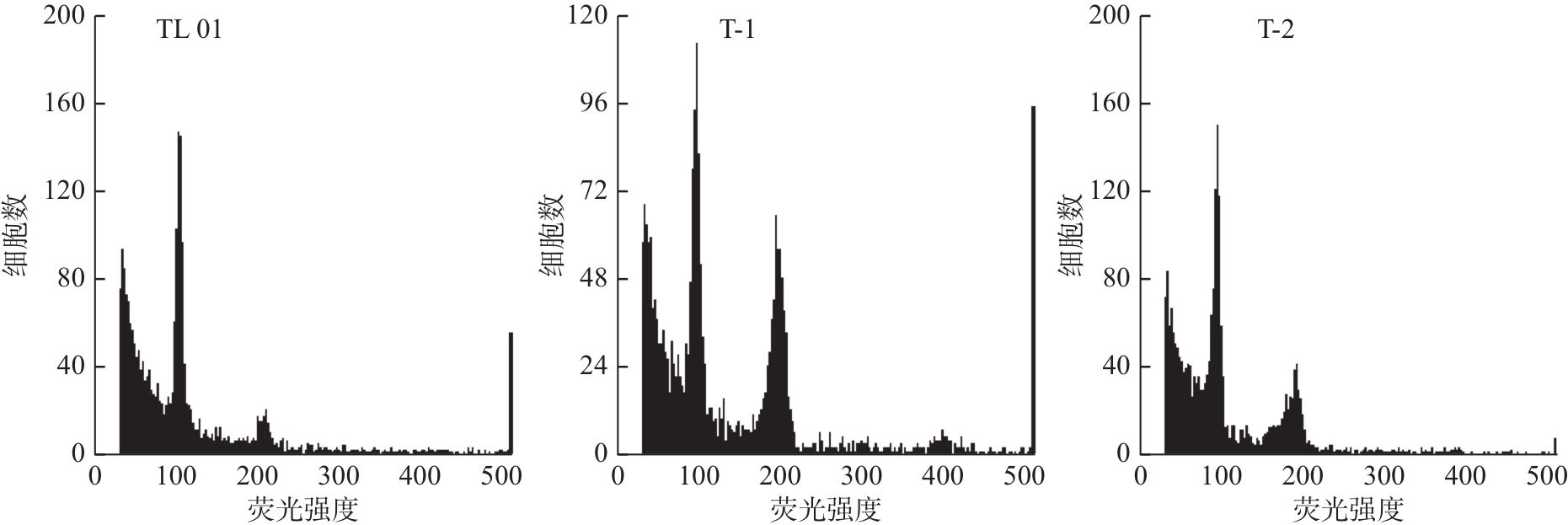
Fig.1 Ploidy identification of regenerated plants
| 品系 | 雄花直径 | 雌花直径 | 瓜柄长 | 叶柄长 |
|---|---|---|---|---|
| P1 | 9.56±0.41 | 8.12±0.47 | 5.76±0.26 | 14.34±0.36 |
| P2 | 8.99±0.11 | 7.44±0.19 | 9.51±0.57 | 15.77±0.59 |
| TL 01 | 8.81±0.56 | 10.40±0.36 | 10.55±0.25 | 14.41±0.62 |
| T-1 | 10.49±0.39 | 7.98±0.22 | 9.27±0.46 | 12.31±0.66 |
Table 3 Traits of regenerated plants
| 品系 | 雄花直径 | 雌花直径 | 瓜柄长 | 叶柄长 |
|---|---|---|---|---|
| P1 | 9.56±0.41 | 8.12±0.47 | 5.76±0.26 | 14.34±0.36 |
| P2 | 8.99±0.11 | 7.44±0.19 | 9.51±0.57 | 15.77±0.59 |
| TL 01 | 8.81±0.56 | 10.40±0.36 | 10.55±0.25 | 14.41±0.62 |
| T-1 | 10.49±0.39 | 7.98±0.22 | 9.27±0.46 | 12.31±0.66 |
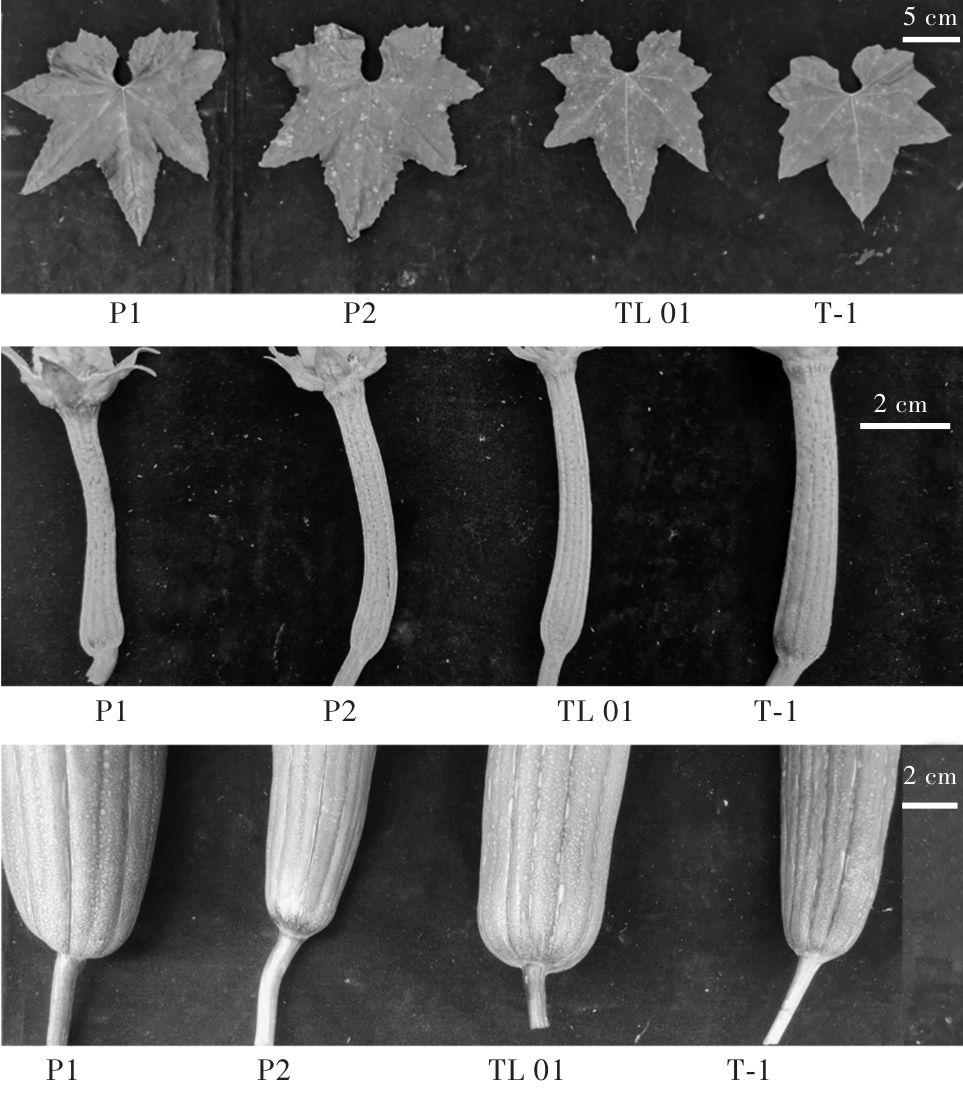
Fig.2 Morphology of leaf,melon tip,and young fruit of different Luffa strains
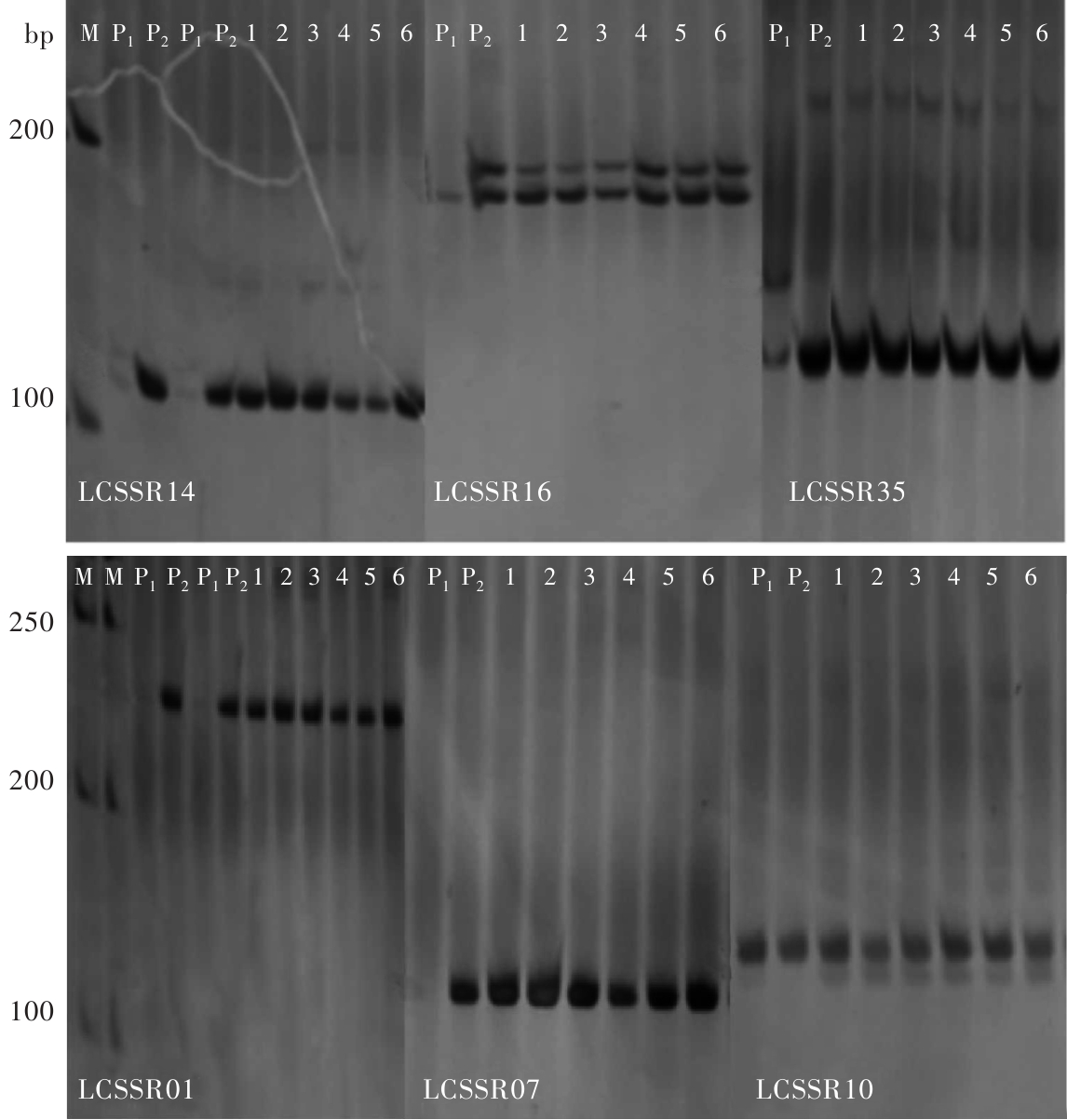
Fig.3 SSR molecular identification of selfing generation of regenerated plants
| [1] | XU Y Y, LIU Z, LOU L N,et al. Identification of browning-related microRNAs and their targets reveals complex miRNA-mediated browning regulatory networks in Luffa cylindrica [J]. Scientific Reports,2018,8:16242. |
| [2] | ZHU H S, LIU J T, WEN Q F,et al. De novo sequencing and analysis of the transcriptome during the browning of fresh-cut Luffa cylindrica Fusi-3 fruits[J]. PLoS One,2017,12(11):e0187117. |
| [3] | 曾美娟,刘建汀,李祖亮,等. 普通丝瓜GH3基因家族全基因组鉴定及表达分析[J]. 江苏农业科学,2022,50(18):82-87. |
| ZENG M J, LIU J T, LI Z L,et al. Genome-wide identification and expression analysis of GH3 gene family of Luffa cylindrica [J]. Jiangsu Agricultural Sciences,2022,50(18):82-87. | |
| [4] | 卜华虎,任志强,王晓清,等. 植物单倍体育种研究进展[J]. 山西农业科学,2017,45(12):2032-2037. |
| BU H H, REN Z Q, WANG X Q,et al. Research advances in haploid breeding of plants[J]. Journal of Shanxi Agricultural Sciences,2017,45(12):2032-2037. | |
| [5] | 董亚静,桂琳,丁子健,等. 辣椒花蕾取样方式及低温预处理对花药培养的影响[J]. 分子植物育种,2023:1-8.(2023-03-01)[2025-04-21]. . |
| DONG Y J, GUI L, DING Z J,et al. Effect of picking method and low temperature pretreatment of bud on anther culture in pepper[J]. Molecular Plant Breeding,2023:1-8.(2023-03-01)[2025-04-21]. . | |
| [6] | 高宁宁,李晓慧,康利允,等. 厚皮甜瓜未受精子房离体培养获得胚囊再生植株[J]. 果树学报,2020,37(7):1036-1045. |
| GAO N N, LI X H, KANG L Y,et al. Acquisition of plants regenerated from embryo sac of unfertilized ovary in muskmelon[J]. Journal of Fruit Science,2020,37(7):1036-1045. | |
| [7] | 杨红,顾妍,张朝阳,等. 辐射花粉授粉诱导西瓜单倍体[J]. 江苏农业科学,2017,45(22):159-161. |
| YANG H, GU Y, ZHANG C Y,et al. Induction of watermelon haploid by radiation pollen pollination[J]. Jiangsu Agricultural Sciences,2017,45(22):159-161. | |
| [8] | 苏芃, HIEN N H,管苇,等. 辐射花粉授粉技术诱导黄瓜单倍体[J]. 江苏农业学报,2015,31(1):134-137. |
| SU P, HIEN N H, GUAN W,et al. Induction of haploid cucumbers by irradiated pollen pollination[J]. Jiangsu Journal of Agricultural Sciences,2015,31(1):134-137. | |
| [9] | 刘小娟,柳欣,张明虎,等. 利用远缘杂交和未减数配子基因创制小麦加倍单倍体[J]. 作物学报,2023,49(12):3154-3161. |
| LIU X J, LIU X, ZHANG M H,et al. Creation of doubled haploid in wheat using distant hybridization and unreduced gamete genes[J]. Acta Agronomica Sinica,2023,49(12):3154-3161. | |
| [10] | MINGLIANG DING H Z. Research and breeding application progress of the technique of producing double haploid of wheat by wide hybridization between wheat and maize[J]. Agricultural Science & Technology,2017,18(12):2202-2208. |
| [11] | 张帅,刘智权,陈汝秋,等. 水稻、高粱远缘杂交种质资源创新[J]. 杂交水稻,2023,38(3):50-56. |
| ZHANG S, LIU Z Q, CHEN R Q,et al. Innovation of germplasm resources by distant hybridization between rice and sorghum[J]. Hybrid Rice,2023,38(3):50-56. | |
| [12] | 刘传光,江奕君,毛兴学,等. 水稻与玉米远缘杂交改良籼稻温敏两用核不育系之SSR分析[J]. 中国农学通报,2006,22(2):152-155. |
| LIU C G, JIANG Y J, MAO X X,et al. SSR analysis of indica rice PTGMS lines improved by rice and maize distant hybrid[J]. Chinese Agricultural Science Bulletin,2006,22(2):152-155. | |
| [13] | 朱培坤,张洪胜,党高兵,等. 水稻-玉米112的选育及其生物学特性[J]. 农业科技通讯,2015(6):236-238. |
| ZHU P K, ZHANG H S, DANG G B,et al. Breeding and biological characteristics of rice-maize 112[J]. Bulletin of Agricultural Science and Technology,2015(6):236-238. | |
| [14] | 毕研胜,郑莉娜,张璐,等. 甜瓜自交系BPC-4双单倍体的创制、鉴定及基因组变化[J]. 南京农业大学学报,2023,46(6):1040-1050. |
| BI Y S, ZHENG L N, ZHANG L,et al. Creation,identification and genomic changes of doublehaploid of melon BPC-4[J]. Journal of Nanjing Agricultural University,2023,46(6):1040-1050. | |
| [15] | 孙博文,黄耀,孙亚亭,等. 远缘杂交结合胚培养法获得厚皮甜瓜阿鲁斯达令双单倍体[J]. 江苏农业学报,2022,38(3):775-781. |
| SUN B W, HUANG Y, SUN Y T,et al. Production of doubled haploid in muskmelon Earl's Darling by interspecific hybridization and embryo culture[J]. Jiangsu Journal of Agricultural Sciences,2022,38(3):775-781. | |
| [16] | 黄耀,刘麒,姚协丰,等. 甜瓜与非洲角(Cucumis africanus)远缘杂交诱导甜瓜双单倍体[J]. 果树学报,2022,39(10):1824-1833. |
| HUANG Y, LIU Q, YAO X F,et al. Induction of doubled haploids in melon using a distant cross between melon and Cucumis africanus [J]. Journal of Fruit Science,2022,39(10):1824-1833. | |
| [17] | 王葆生,刘湘萍,廉勇,等. 单倍体育种技术研究进展[J]. 北方农业学报,2018,46(5):44-49. |
| WANG B S, LIU X P, LIAN Y,et al. Research progress on haploid breeding technology[J]. Journal of Northern Agriculture,2018,46(5):44-49. | |
| [18] | 郭晓灿,韩佳慧,童未名,等. 萝卜与芸薹属远缘杂交不亲和性克服及DNA甲基化的研究进展[J]. 江苏农业科学,2019,47(22):12-17. |
| GUO X C, HAN J H, TONG W M,et al. Research progress of incompatibility overcome and DNA methylation of distant hybridization between radish and Brassica species[J]. Jiangsu Agricultural Sciences,2019,47(22):12-17. | |
| [19] | 魏家香,俞佳虹,程远,等. 辣椒种间杂交的现状及其研究进展[J]. 分子植物育种,2018,16(16):5474-5482. |
| WEI J X, YU J H, CHENG Y,et al. Current situation and research progress of interspecific hybridization in pepper[J]. Molecular Plant Breeding,2018,16(16):5474-5482. | |
| [20] | JANSKY S, DOUCHES D, HAYNES K. Transmission of scab resistance to tetraploid potato via unilateral sexual polyploidization[J]. American Journal of Potato Research,2018,95(3):272-277. |
| [21] | 孙敬三,陈纯贤,路铁刚. 禾木科植物染色体消除型远缘杂交的研究进展[J]. 植物学通报,1998,33(1):1. |
| SUN J S, CHEN C X, LU T G. Research progress on chromosome elimination distant hybridization in Hemulaceae plants[J]. Chinese Bulletin of Botany,1998,33(1):1. | |
| [22] | 李淑洁,李静雯,张正英. 染色体消除法诱导啤酒大麦单倍体技术研究[J]. 麦类作物学报,2012,32(5):853-857. |
| LI S J, LI J W, ZHANG Z Y. Study on inducting barley(Hordeum vulgare)haploids using Hordeum bulbosum chromosome elimination in Hordeum vulgare× Hordeum bulbosum crosses[J]. Journal of Triticeae Crops,2012,32(5):853-857. | |
| [23] | 祁利潘,李越,罗亚婷,等. 马铃薯双单倍体包含父系DNA的罕见实例[J]. 分子植物育种,2023:1-11.(2023-09-07)[2025-04-21].. |
| QI L P, LI Y, LUO Y T,et al. Rare instances of paternal DNA in potato dihaploids[J]. Molecular Plant Breeding,2023:1-11(2023-09-07)[2025-04-21].. | |
| [24] | AMUNDSON K R, ORDOÑEZ B, SANTAYANA M,et al. Rare instances of haploid inducer DNA in potato dihaploids and ploidy-dependent genome instability[J]. The Plant Cell,2021,33(7):2149-2163. |
| [25] | DENG Y, TANG B, ZHOU X,et al. Direct regeneration of haploid or doubled haploid plantlets in cucumber(Cucumis sativus L.)through ovary culture[J]. Plant Cell,Tissue and Organ Culture,2020,142(2):253-268. |
| [26] | 周霞,张璐,周俊国,等. 黄瓜未授粉子房离体培养获得胚囊再生植株[J]. 园艺学报,2020,47(3):455-466. |
| ZHOU X, ZHANG L, ZHOU J G,et al. Embryonary sac regenerated plants were obtained in cucumber via in vitro unpollinated ovary culture[J]. Acta Horticulturae Sinica,2020,47(3):455-466. | |
| [27] | DIAO W P, JIA Y Y, SONG H,et al. Efficient embryo induction in cucumber ovary culture and homozygous identification of the regenetants using SSR markers[J]. Scientia Horticulturae,2009,119(3):246-251. |
| [28] | 刁卫平,贾媛媛,江彪,等. 黄瓜未授粉子房培养获得同源四倍体[J]. 园艺学报,2008,35(12):1781-1786. |
| DIAO W P, JIA Y Y, JIANG B,et al. Induction of autotetraploid cucumbers by unpollinated ovary culture and their characterization[J]. Acta Horticulturae Sinica,2008,35(12):1781-1786. | |
| [29] | 高宁宁,李晓慧,康利允,等. 单倍体甜瓜染色体加倍技术研究[J]. 中国瓜菜,2021,34(6):28-32. |
| GAO N N, LI X H, KANG L Y,et al. Study on chromosome doubling technique of haploid muskmelon[J]. China Cucurbits and Vegetables,2021,34(6):28-32. |
| [1] | LI Tianqi, YUAN Qian, ZHAO Yongtao, ZHANG Zhongzhou, ZHEN Shicong, WANG Junsen, ZHANG Feng, SUN Xianye, LU Xiangdong, MEI Ning. Breeding innovation and high yield analysis of new wheat variety Luomai 76 with large grain and high yield [J]. Journal of Zhejiang Agricultural Sciences, 2025, 66(9): 2096-2101. |
| [2] | ZHAO Haijun, WANG Jianmin, YAN Shanshan, ZHANG Pei, GAI Weiling. Authenticity identification of inter-subgroup hybridization offspring of Paeonia Sect. Mouton based on SSR markers [J]. Journal of Zhejiang Agricultural Sciences, 2025, 66(7): 1672-1675. |
| [3] | ZHU Chenhui, HUANG Yuqing, LI Bai, XUE Qin, YE Lihua. Exploiting the public data to develop a new molecular marker linked to powdery mildew resistance locus in muskmelon [J]. Journal of Zhejiang Agricultural Sciences, 2025, 66(5): 1206-1209. |
| Viewed | ||||||
|
Full text |
|
|||||
|
Abstract |
|
|||||
