浙江农业科学 ›› 2026, Vol. 67 ›› Issue (7): 1625-1631.DOI: 10.16178/j.issn.0528-9017.20260301

• 禾谷类作物 • 上一篇    下一篇

喷施赤霉素和表油菜素内酯对三系杂交水稻制种中粳型不育系花时的影响

施扬1(), 倪素红2, 山铖燕2, 罗业翀2, 丁正权1, 潘月云1, 黄海祥1, 邵洁3()   

  1. 1.嘉兴市农业科学研究院,浙江 嘉兴 314016
    2.浙江禾天下种业股份有限公司,浙江 嘉兴 314001
    3.平湖市农业农村局,浙江 平湖 314200
  • 收稿日期:2026-04-18 出版日期:2026-07-11 发布日期:2026-07-27
  • 通讯作者: 邵洁
  • 作者简介:邵洁,E-mail:362968049@qq.com
    施扬,从事水稻育种工作。E-mail:syang24@163.com
  • 基金资助:
    嘉兴市科技项目(2025CGZ065)

Effects of spraying gibberellin(GA)and epibrassinolide(epi-BR)on flowering time of japonica male sterile lines in three-line hybrid rice seed production

SHI Yang1(), NI Suhong2, SHAN Chengyan2, LUO Yechong2, DING Zhengquan1, PAN Yueyun1, HUANG Haixiang1, SHAO Jie3()   

  1. 1.Jiaxing Academy of Agricultural Sciences,Jiaxing 314016,Zhejiang
    2.Zhejiang Hetianxia Seed Industry Co. ,Ltd. ,Jiaxing 314001,Zhejiang
    3.Pinghu Agricultural and Rural Affairs Bureau,Pinghu 314200,Zhejiang
  • Received:2026-04-18 Online:2026-07-11 Published:2026-07-27
  • Contact: SHAO Jie

摘要:

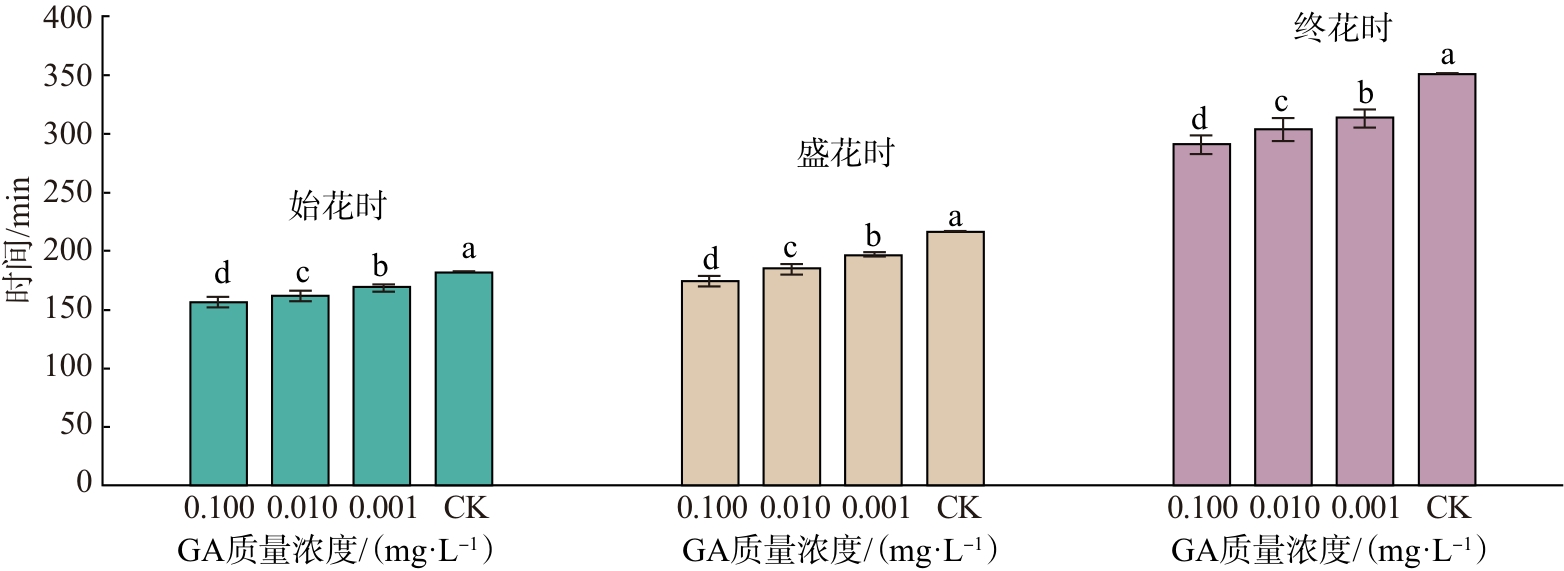
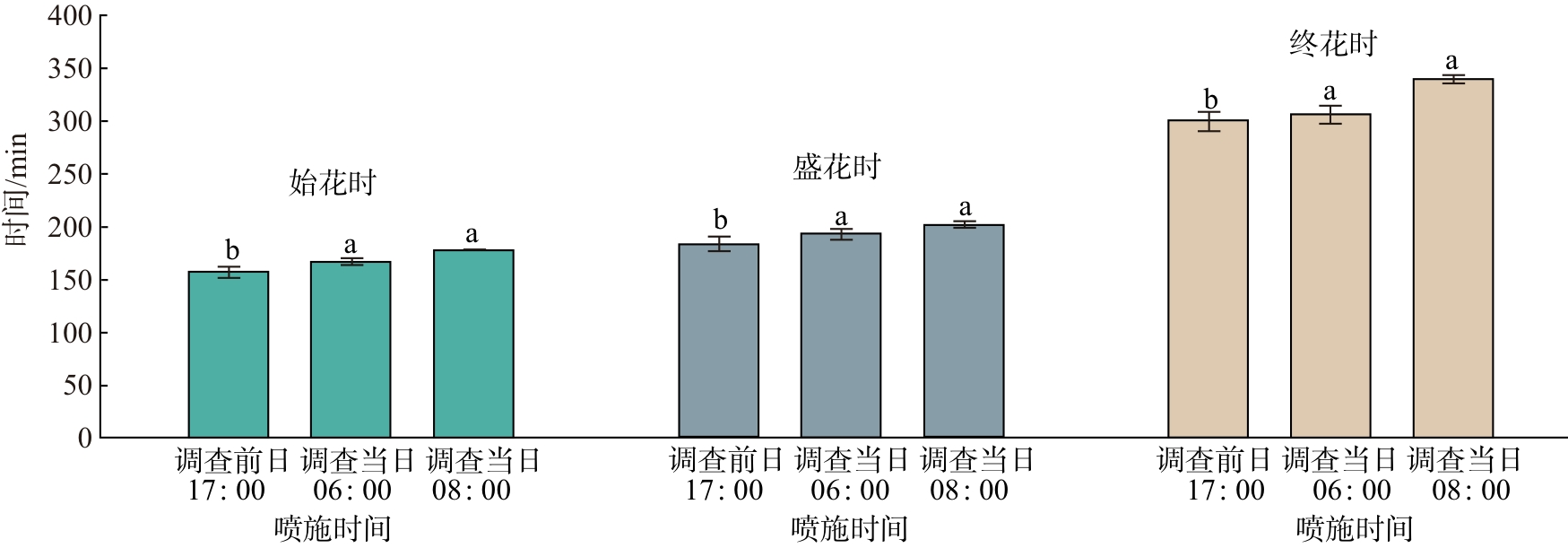
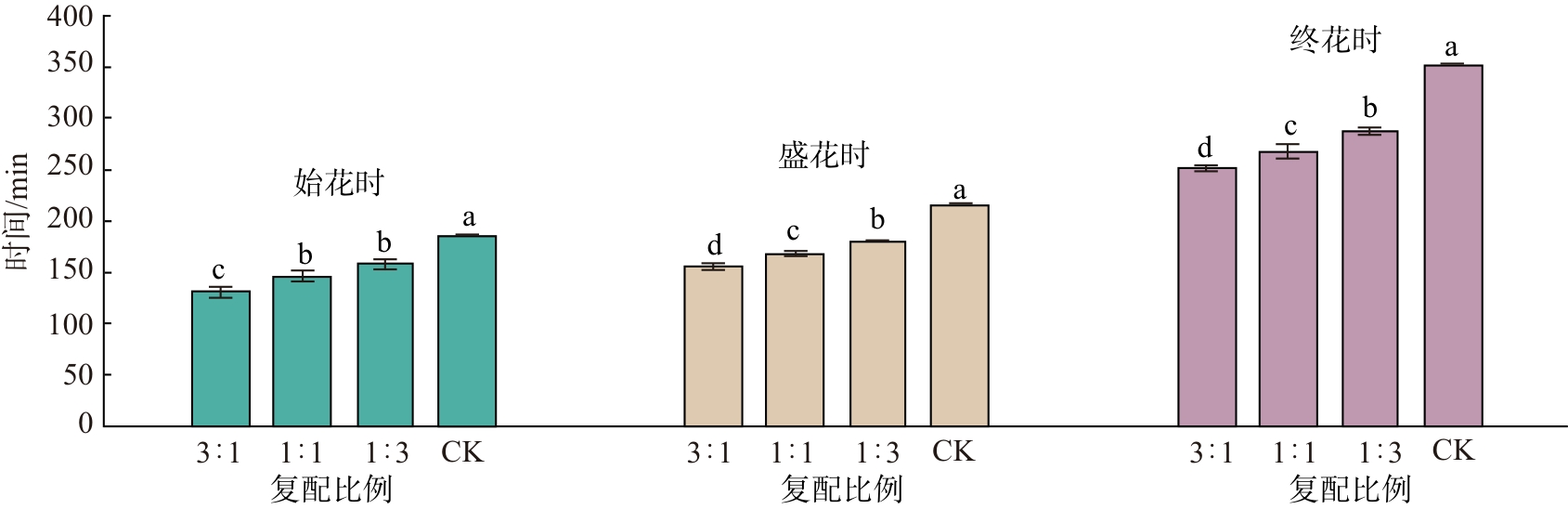
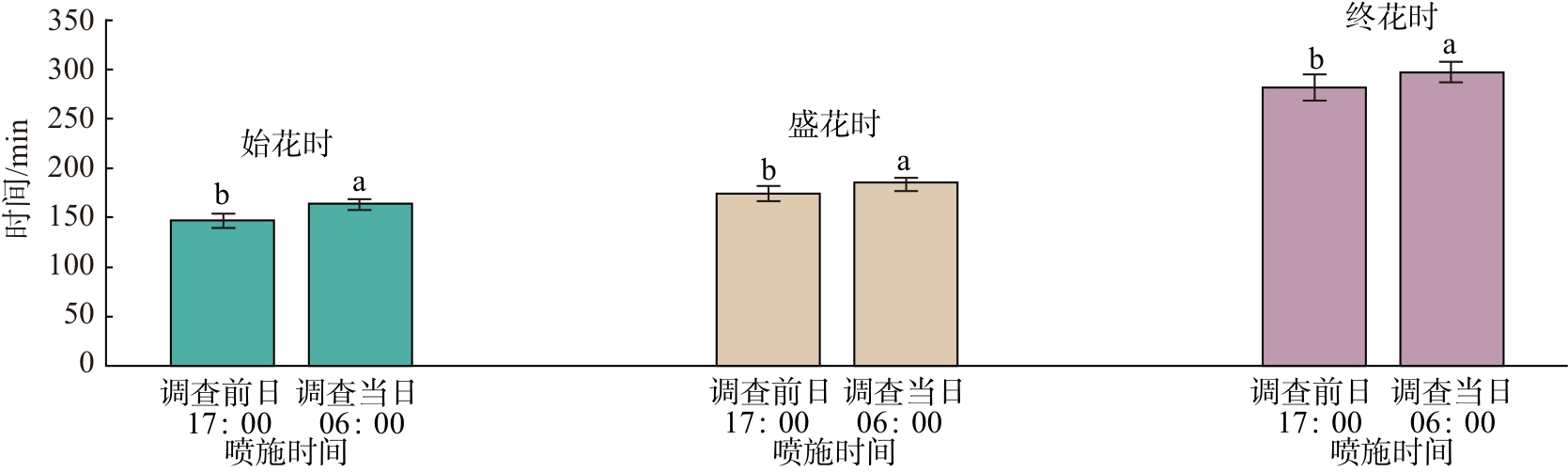
为明确赤霉素(GA)及其与表油菜素内酯(epi-BR)复配对粳稻不育系花时性状的调控效应,缓解籼粳杂交稻制种中花时不遇难题,以长粒型粳稻不育系品种嘉禾112A为材料,于抽穗期开展不同GA质量浓度、喷施时间及GA与epi-BR复配比例的田间试验,系统分析其对花时节点与开花各阶段时长的调控规律。结果表明,外源GA可显著(p0.05)提前花时,且呈浓度依赖性,0.100 mg·L-1处理效果最优,同时能显著缩短颖花开放前期进程与整体开花持续时长,对开花后期进程无明显影响;喷施时间对调控效果影响显著,调查前一日17:00喷施GA的花时提前效应显著优于当日早晨处理,而早晨喷施更利于缩短整体开花持续时长。GA与epi-BR复配显示出协同增效作用,其中GA与epi-BR按质量浓度比3∶1复配(GA质量浓度为0.100 mg·L-1,epi-BR质量浓度为0.033 mg·L-1)时促进效果最佳,显著优于单一GA处理与对照,且在前日17:00喷施条件下效果最优。综上,于开花前一日17:00喷施GA与epi-BR按质量浓度比3∶1配置的混合液,是实现嘉禾112A花时高效同步提前的最优调控策略。本研究为解决籼粳杂交稻制种中的花时不遇问题提供了一项创新且具潜力的技术策略。

关键词: 水稻, 赤霉素, 表油菜素内酯, 花时, 粳稻不育系, 化学调控

Abstract:

To clarify the regulatory effects of gibberellin(GA)and its combination with epibrassinolide(epi-BR)on floret opening time traits of japonica rice male sterile lines,and to alleviate the problem of floret opening time asynchrony in indica-japonica hybrid rice seed production,a field experiment was conducted at the heading stage using the long-grain japonica rice male sterile line Jiahe 112A as material. The experiment included treatments with different GA mass concentrations,spraying time,and GA/epi-BR mixing ratios,and the regulatory patterns of these factors on floret opening time and durations of different flowering stages were systematically analyzed. The results showed that exogenous GA significantly advanced floret opening time in a concentration-dependent manner,with the 0.100 mg·L-1 treatment exhibiting the optimal effect. Meanwhile,GA significantly shortened the early floret opening process and total flowering duration,but had no significant effect on the late floret opening process. Spraying time significantly affected the regulatory effect:spraying GA at 17:00 on the day before investigation showed a significantly stronger effect on advancing floret opening time than morning treatments on the day of investigation,while morning spraying was more conducive to shortening the total flowering duration. The combination of GA and epi-BR exhibited a synergistic effect;the optimal promoting effect was achieved when GA and epi-BR were mixed at a mass concentration ratio of 3∶1(with GA at 0.100 mg·L-1 and epi-BR at 0.033 mg·L-1),which was significantly superior to both the single GA treatment and the control,and the effect was optimal when sprayed at 17:00 on the day before investigation. Collectively,spraying the GA/epi-BR mixture prepared at a mass concentration ratio of 3∶1 at 17:00 on the day before investigation is the optimal regulatory strategy to achieve efficient and synchronous advancement of floret opening time for Jiahe 112A. This study provides an innovative and promising technical strategy for addressing floret opening time asynchrony in indica-japonica hybrid rice seed production.

Key words: rice, gibberellin, epibrassinolide, flowering time, japonica rice male sterile line, chemical regulation

中图分类号: