
浙江农业科学 ›› 2026, Vol. 67 ›› Issue (7): 1816-1828.DOI: 10.16178/j.issn.0528-9017.20250247
荣智卓1( ), 吴春艳2(), 唐翔宇1
收稿日期:2025-03-30
出版日期:2026-07-11
发布日期:2026-07-27
通讯作者:
吴春艳
作者简介:吴春艳,E-mail:99427464@qq.com。基金资助:
RONG Zhizhuo1(), WU Chunyan2(), TANG Xiangyu1
Received:2025-03-30
Online:2026-07-11
Published:2026-07-27
Contact:
WU Chunyan
摘要:
为揭示不同土地利用方式间土壤生态系统多功能性和微生物多样性的差异,为农田土壤生产管理和可持续发展提供科学依据,以果园、玉米地、大豆地、大棚和撂荒地5种农田土壤为研究对象,分析不同土地利用方式间的土壤理化性状、酶活性和微生物多样性,比较不同土地利用方式间的生态系统多功能性和微生物多样性差异。结果表明,不同土地利用方式下土壤生态系统多功能性指标存在显著(p0.05)差异。相关分析显示,不同土地利用方式下土壤pH值、碱解氮含量、全氮含量、全磷含量、有效磷含量、有机质含量等理化指标以及β-葡萄糖苷酶、N-乙酰-β-氨基葡萄糖苷酶、纤维素酶、多酚氧化酶、过氧化物酶的活性与生态系统多功能性显著相关。方差分析结果表明,果园土壤的生态系统多功能性最高,而玉米地土壤在75%阈值下生态系统多功能性几乎丧失。高通量测序结果表明,果园土壤细菌多样性最高,细菌群落在农田土壤生态系统中对土壤生态系统多功能性的影响相比真菌更为显著。综上,保护农田土壤细菌多样性应成为提高农田土壤生态系统多功能性的核心策略,果园土壤的高生态系统多功能性验证了微生物多样性对生态系统功能的正向反馈机制,是值得推广的土地利用方式。
中图分类号:
荣智卓, 吴春艳, 唐翔宇. 长期不同土地利用方式对农田土壤生态系统多功能性和微生物多样性的影响[J]. 浙江农业科学, 2026, 67(7): 1816-1828.
RONG Zhizhuo, WU Chunyan, TANG Xiangyu. Effects of long-term different land use patterns on farmland soil ecosystem multifunctionality and microbial diversity[J]. Journal of Zhejiang Agricultural Sciences, 2026, 67(7): 1816-1828.
| 土地利用方式 | pH值 | 有机质含量/ (g·kg-1) | 全磷含量/ (g·kg-1) | 有效磷含量/ (g·kg-1) | 速效钾含量/ (mg·kg-1) | 全钾含量/ (g·kg-1) | 碱解氮含量/ (mg·kg-1) | 全氮含量/% |
|---|---|---|---|---|---|---|---|---|
| 撂荒地 | 7.46±0.36 a | 9.95±4.45 c | 10.44±0.73 c | 0.11±0.06 c | 83.93±31.5 b | 14.95±2.86 a | 37.45±11.70 d | 0.06±0.01 c |
| 果园 | 6.94±0.18 b | 32.28±7.44 a | 13.25±3.03 b | 0.85±0.49 b | 44.48±1.89 b | 11.59±1.13 bc | 132.07±49.60 a | 0.17±0.05 a |
| 大豆地 | 5.27±0.27 c | 13.38±1.11 c | 7.67±0.63 d | 0.03±0.01 c | 75.37±11.20 b | 12.78±0.93 bc | 63.23±13.20 cd | 0.08±0.01 bc |
| 大棚 | 6.87±0.08 b | 23.12±2.07 b | 18.09±1.73 a | 1.69±0.19 a | 288.92±136.40 a | 13.38±0.62 ab | 117.48±15.90 ab | 0.16±0.01 a |
| 玉米地 | 4.45±0.19 d | 14.99±0.99 c | 13.96±1.02 b | 0.08±0.01 c | 236.95±31.00 a | 11.14±1.18 c | 89.37±26.02 bc | 0.11±0.01 b |
表1 不同土地利用方式的土壤基本理化性状
Table 1 Basic physical and chemical properties of soil under different land use patterns
| 土地利用方式 | pH值 | 有机质含量/ (g·kg-1) | 全磷含量/ (g·kg-1) | 有效磷含量/ (g·kg-1) | 速效钾含量/ (mg·kg-1) | 全钾含量/ (g·kg-1) | 碱解氮含量/ (mg·kg-1) | 全氮含量/% |
|---|---|---|---|---|---|---|---|---|
| 撂荒地 | 7.46±0.36 a | 9.95±4.45 c | 10.44±0.73 c | 0.11±0.06 c | 83.93±31.5 b | 14.95±2.86 a | 37.45±11.70 d | 0.06±0.01 c |
| 果园 | 6.94±0.18 b | 32.28±7.44 a | 13.25±3.03 b | 0.85±0.49 b | 44.48±1.89 b | 11.59±1.13 bc | 132.07±49.60 a | 0.17±0.05 a |
| 大豆地 | 5.27±0.27 c | 13.38±1.11 c | 7.67±0.63 d | 0.03±0.01 c | 75.37±11.20 b | 12.78±0.93 bc | 63.23±13.20 cd | 0.08±0.01 bc |
| 大棚 | 6.87±0.08 b | 23.12±2.07 b | 18.09±1.73 a | 1.69±0.19 a | 288.92±136.40 a | 13.38±0.62 ab | 117.48±15.90 ab | 0.16±0.01 a |
| 玉米地 | 4.45±0.19 d | 14.99±0.99 c | 13.96±1.02 b | 0.08±0.01 c | 236.95±31.00 a | 11.14±1.18 c | 89.37±26.02 bc | 0.11±0.01 b |
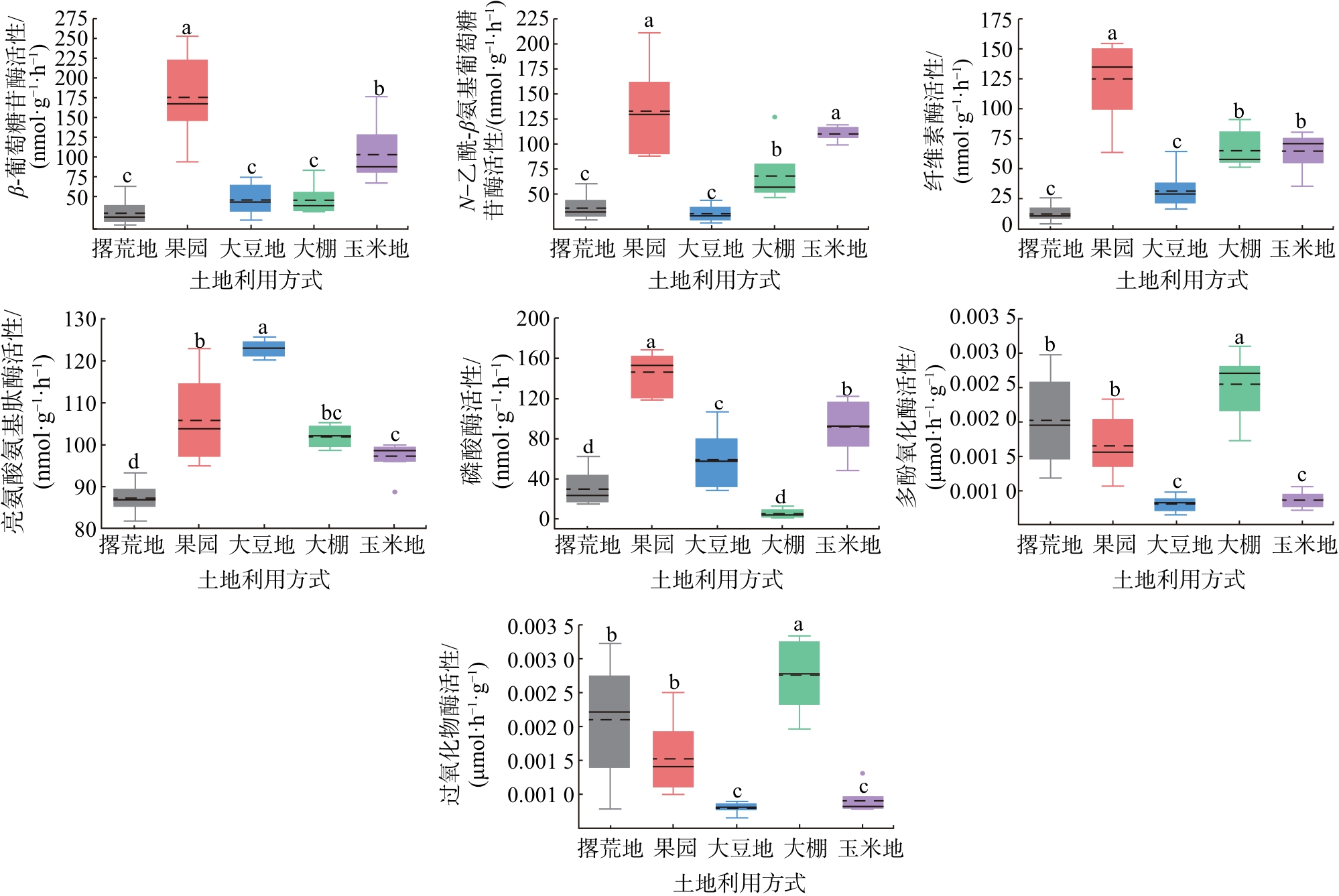
图1 不同土地利用方式对土壤酶活性的影响柱间无相同小写字母表示组间差异显著(p0.05)。下同。
Fig.1 Effects of different land use patterns on soil enzyme activities
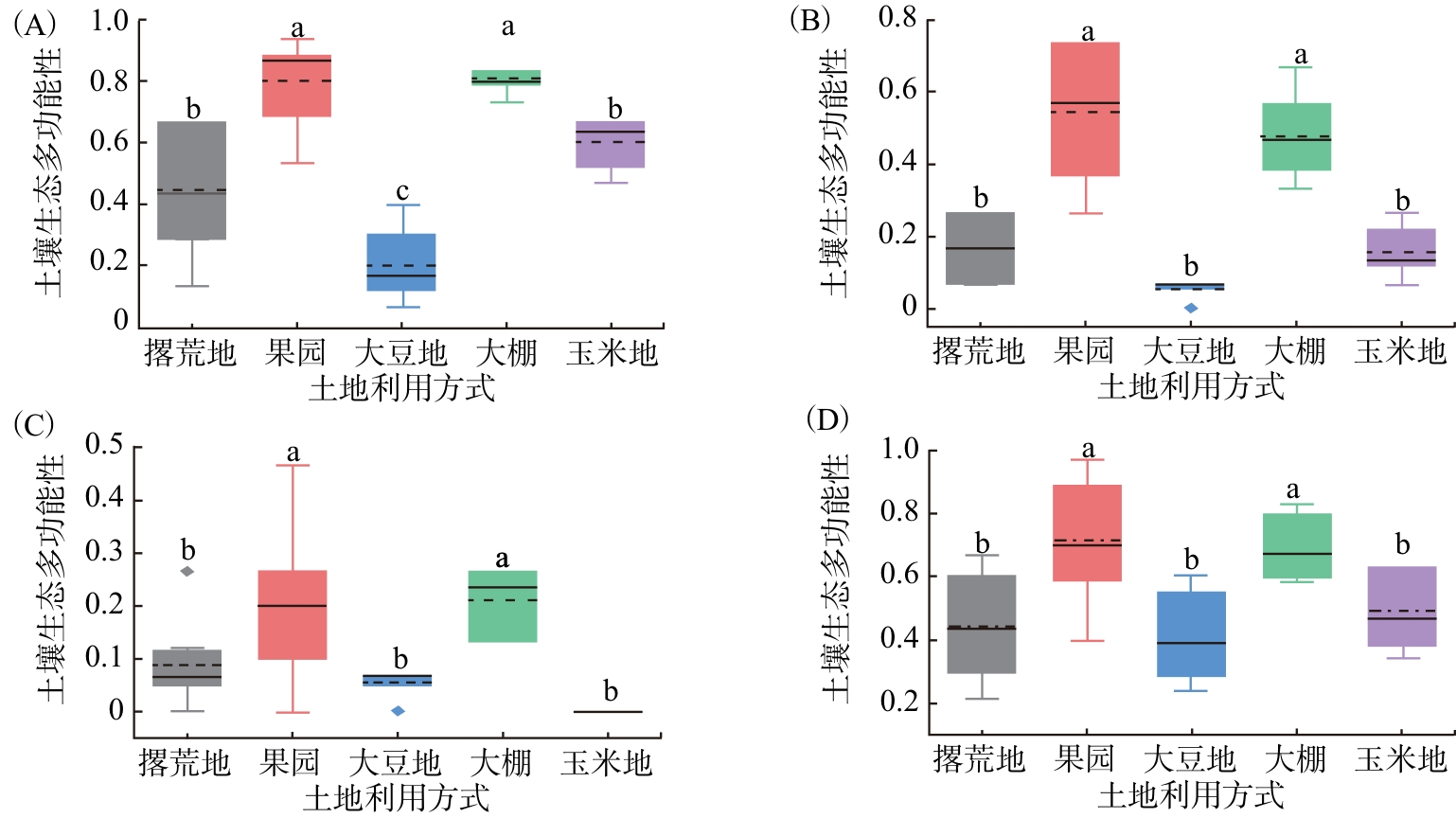
图2 不同土地利用方式下的土壤生态系统多功能性(A)为25%阈值下的EMF;(B)为50%阈值下的EMF;(C)为75%阈值下的EMF;(D)为平均值法计算得到的EMF。
Fig.2 Soil EMF under different land use patterns
| 指标 | 撂荒地 | 果园 | 大豆地 | 大棚 | 玉米地 | |
|---|---|---|---|---|---|---|
| 细菌 | 香农指数 | 7.19±0.16 a | 7.22±0.05 a | 6.92±0.19 b | 7.08±0.11 ab | 6.56±0.21 c |
| 辛普森指数 | 0.001 9±0 bc | 0.001 7±0 c | 0.002 9±0 b | 0.002 0±0 bc | 0.004 7±0 a | |
| Chao1指数 | 2 684.08±280.40 ab | 2 931.34±182.50 a | 2 334.42±372.40 bc | 2 704.78±428.80 ab | 2 032.27±257.30 c | |
| ACE指数 | 2 698.83±283.60 ab | 2 950.42±182.80 a | 2 342.68±374.80 bc | 2 726.87±443.30 ab | 2 045.67±259.30 c | |
| 真菌 | 香农指数 | 4.85±0.28 a | 4.41±0.23 ab | 3.85±0.29 bc | 3.73±0.51 bc | 3.39±1.06 c |
| 辛普森指数 | 0.03±0.02 a | 0.04±0.01 a | 0.07±0.03 a | 0.06±0.03 a | 0.16±0.24 a | |
| Chao1指数 | 721.37±96.59 a | 677.34±70.31 a | 488.37±65.62 b | 396.25±64.75 c | 375.12±81.42 c | |
| ACE指数 | 722.65±97.09 a | 681.70±73.33 a | 490.32±65.85 b | 397.95±66.47 c | 380.35±79.24 c | |
表2 不同土地利用方式对细菌和真菌的α多样性的影响
Table 2 Effect of different land use patterns on bacterial and fungal alpha diversity
| 指标 | 撂荒地 | 果园 | 大豆地 | 大棚 | 玉米地 | |
|---|---|---|---|---|---|---|
| 细菌 | 香农指数 | 7.19±0.16 a | 7.22±0.05 a | 6.92±0.19 b | 7.08±0.11 ab | 6.56±0.21 c |
| 辛普森指数 | 0.001 9±0 bc | 0.001 7±0 c | 0.002 9±0 b | 0.002 0±0 bc | 0.004 7±0 a | |
| Chao1指数 | 2 684.08±280.40 ab | 2 931.34±182.50 a | 2 334.42±372.40 bc | 2 704.78±428.80 ab | 2 032.27±257.30 c | |
| ACE指数 | 2 698.83±283.60 ab | 2 950.42±182.80 a | 2 342.68±374.80 bc | 2 726.87±443.30 ab | 2 045.67±259.30 c | |
| 真菌 | 香农指数 | 4.85±0.28 a | 4.41±0.23 ab | 3.85±0.29 bc | 3.73±0.51 bc | 3.39±1.06 c |
| 辛普森指数 | 0.03±0.02 a | 0.04±0.01 a | 0.07±0.03 a | 0.06±0.03 a | 0.16±0.24 a | |
| Chao1指数 | 721.37±96.59 a | 677.34±70.31 a | 488.37±65.62 b | 396.25±64.75 c | 375.12±81.42 c | |
| ACE指数 | 722.65±97.09 a | 681.70±73.33 a | 490.32±65.85 b | 397.95±66.47 c | 380.35±79.24 c | |
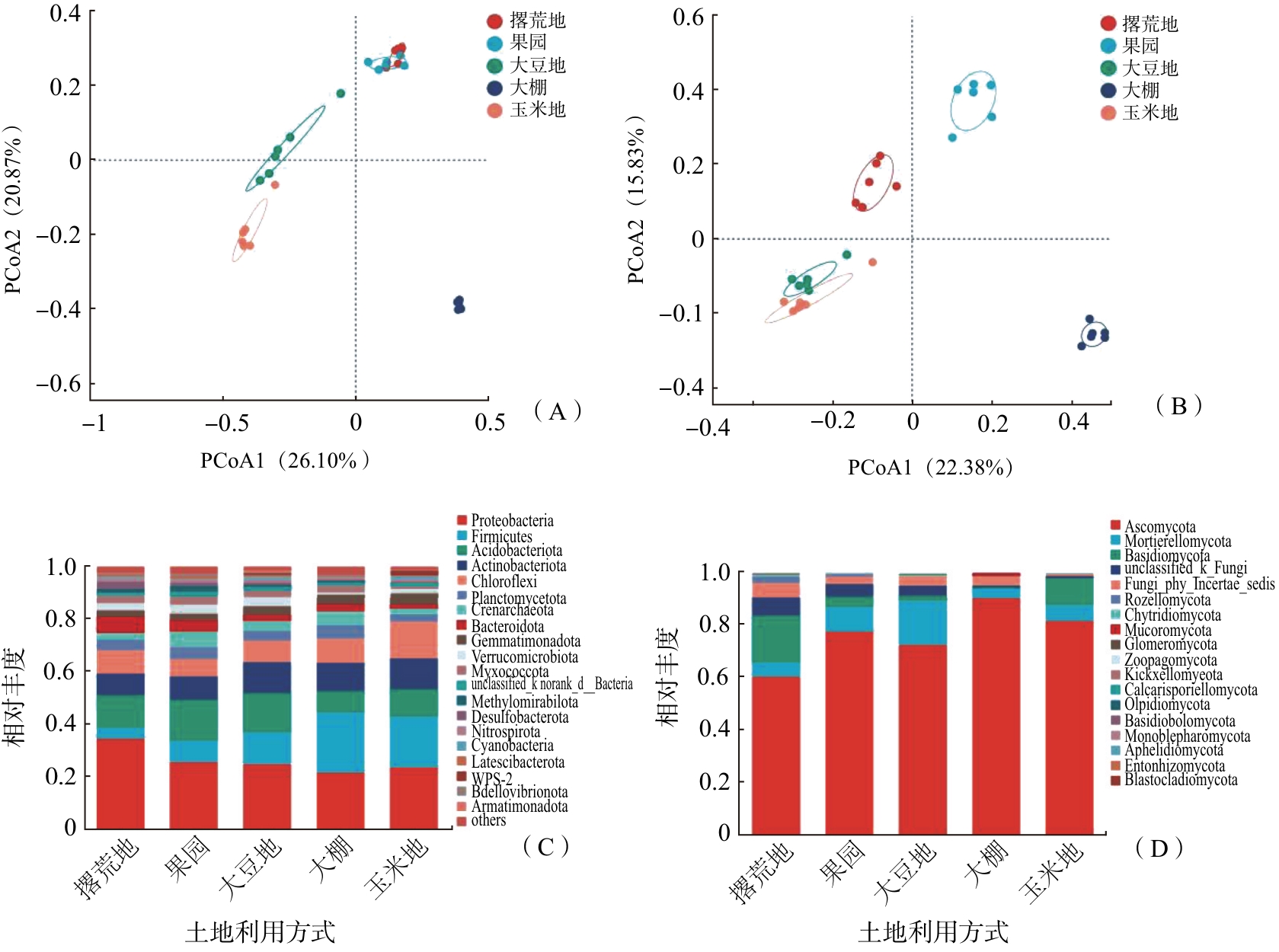
图3 不同土地利用方式下土壤细菌(A、C)、真菌(B、D)群落的主坐标分析(A、B)和物种组成(C、D)PCoA1、PCoA2分别为第1主坐标和第2主坐标。
Fig.3 Principal coordinate analysis(A,B)and species composition(C,D)of soil bacterial(A,C)and fungal(B,D)communities under different land use patterns
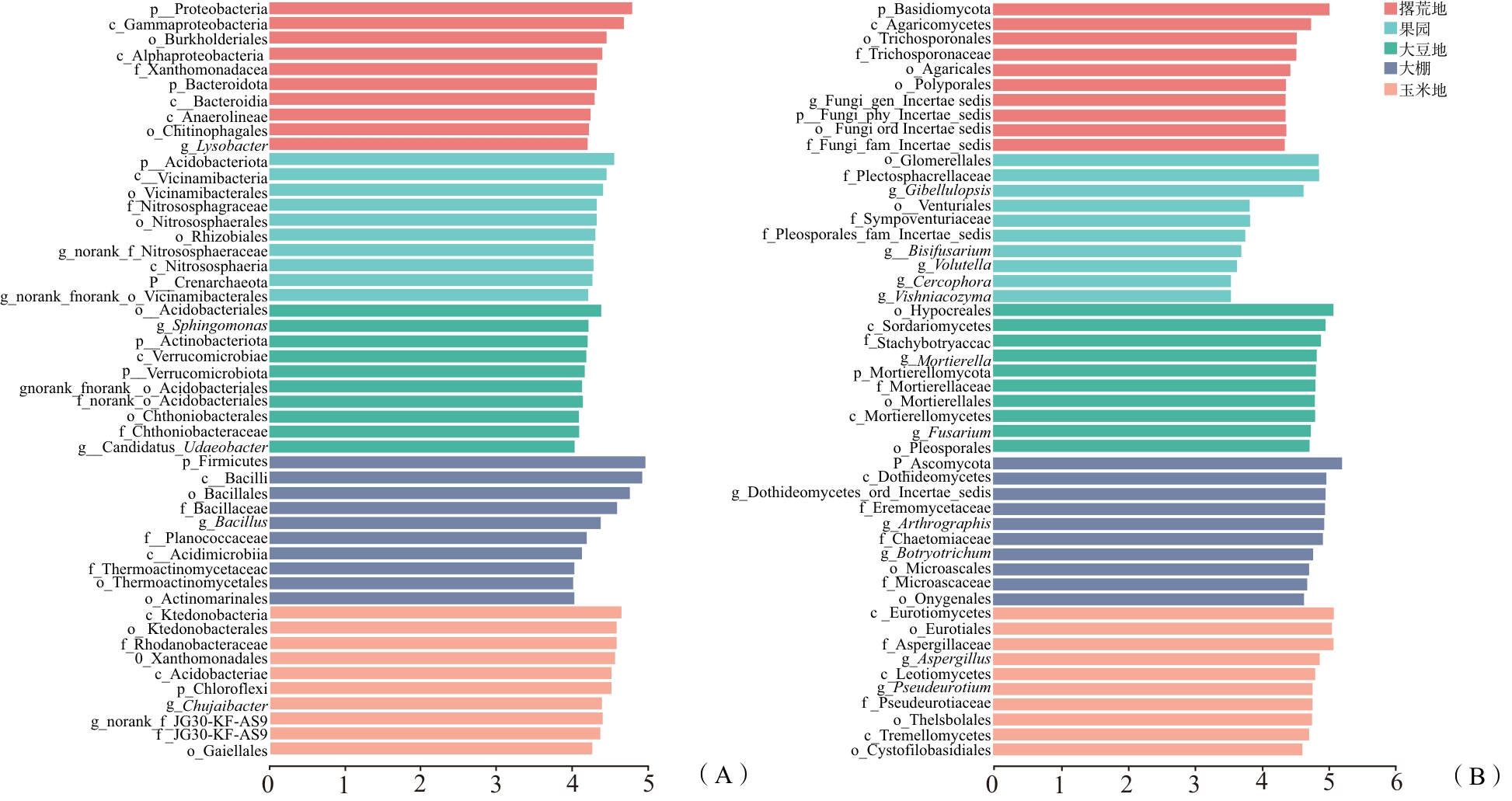
图4 不同土地利用方式土壤细菌(A)、真菌(B)的LEfSe分析
Fig.4 LEfSe analysis of soil bacteria(A)and fungi(B)under different land use patterns
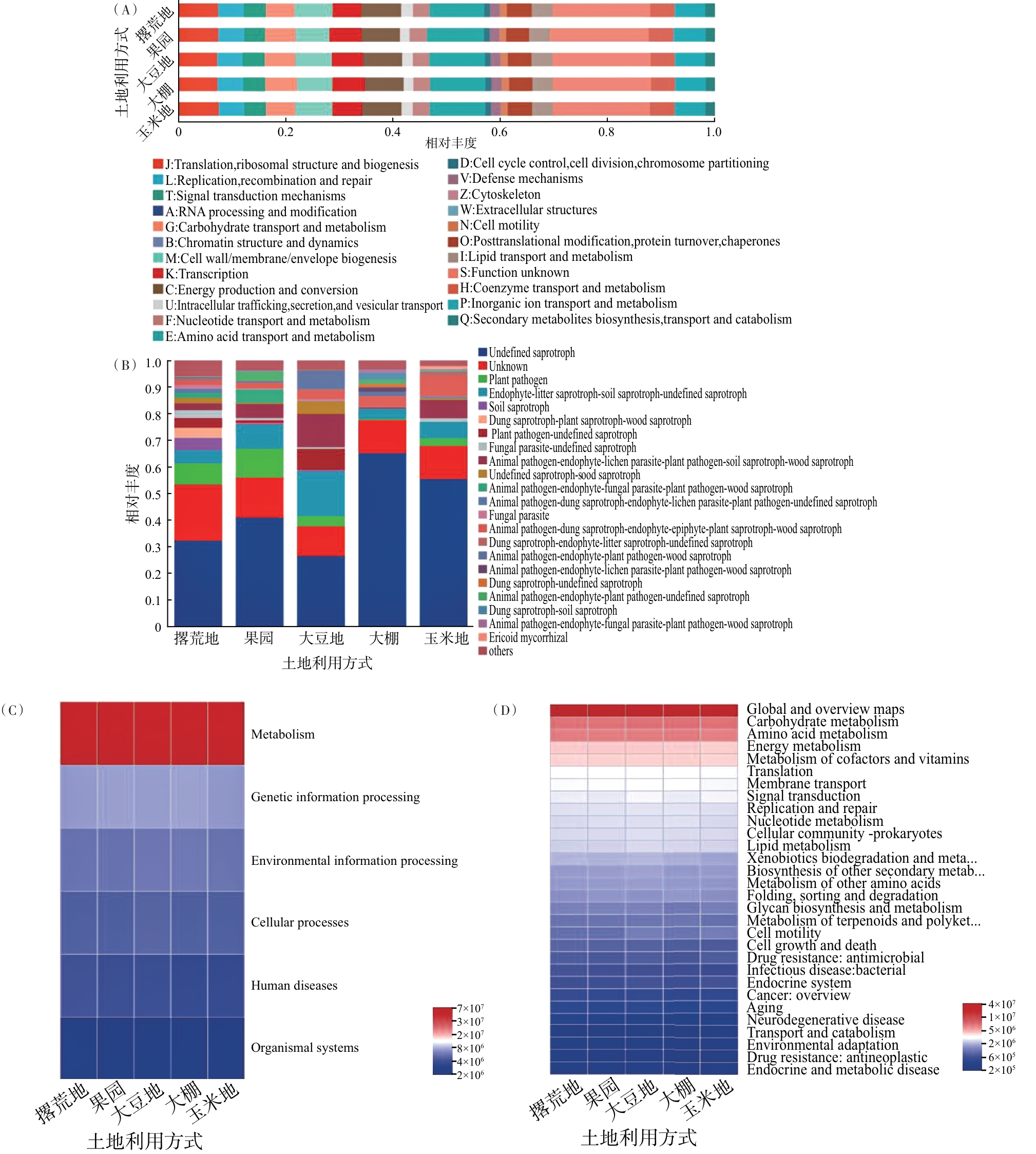
图5 不同土地利用方式下土壤微生物的功能基因组成A为COG功能分类统计柱状图;B为基于FUNGuild功能预测分析的真菌营养类型预测相对丰度柱状图;C、D为基于KEGG数据库的热图,C为Level 1,D为Level 2。
Fig.5 Functional gene composition of soil microorganism under different land use patterns
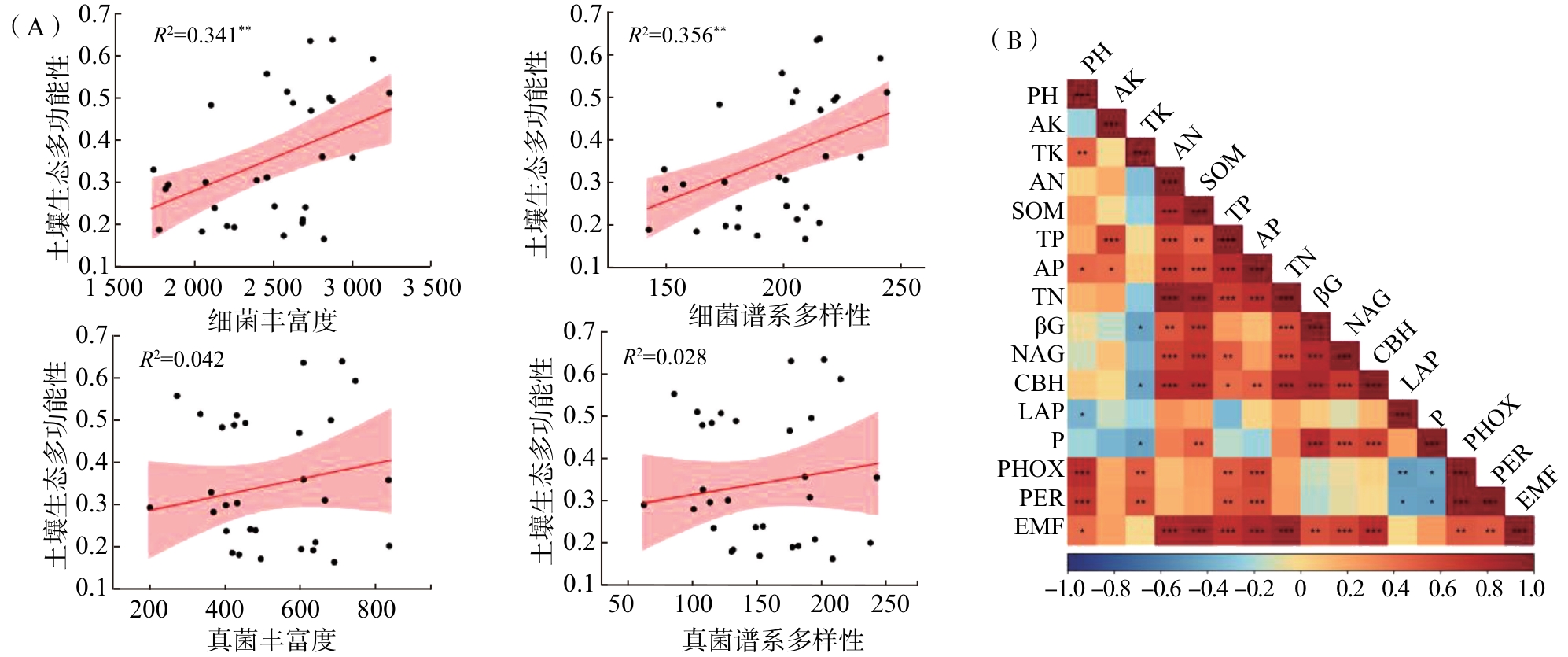
图6 微生物(细菌、真菌)丰富度、谱系多样性与生态系统多功能性之间的线性关系(A)以及土壤生态系统多功能性(EMF)与理化指标之间的相关性(B)“**”表示极显著(p0.01)。PH,pH值;AK,速效钾含量;TK,全钾含量;AN,碱解氮含量;OM,有机质含量;TP,全磷含量;AP,有效磷含量;TN,全氮含量;βG,β-葡萄糖苷酶活性;NAG,乙酰-β-氨基葡萄糖苷酶活性;CBH,纤维素酶活性;LAP,亮氨酸氨基肽酶活性;P,磷酸酶活性;PHOX,多酚氧化酶活性;PER,过氧化物酶活性;EMF,生态系统多功能性。
Fig.6 Linear relationship between microbial(bacteria,fungi)richness,phylogenetic diversity and ecosystem multifunctionality(A)and the correlation between soil ecosystem multifunctionality(EMF)and physical and chemical indicators(B)
| [50] | Shaffique S, Khan M A, Imran M,et al. Research progress in the field of microbial mitigation of drought stress in plants[J]. Frontiers in Plant Science,2022,13:870626. |
| [51] | Delgado-Baquerizo M, Maestre F T, Reich P B,et al. Microbial diversity drives multifunctionality in terrestrial ecosystems[J]. Nature Communications,2016,7:10541. |
| [52] | 陆思旭,贺丽燕,王旭东. 耕作措施对玉米田耕层土壤微生物群落功能多样性的影响[J]. 干旱地区农业研究,2020,38(5):15-22. |
| [53] | Lehmann J, Kleber M. The contentious nature of soil organic matter[J]. Nature,2015,528(7580):60-68. |
| [1] | 王凯,王聪,冯晓明,等. 生物多样性与生态系统多功能性的关系研究进展[J]. 生态学报,2022,42(1):11-23. |
| [2] | 赵慧英,王海燕. 土壤多功能性及其驱动因素研究进展[J]. 应用与环境生物学报,2024,30(3):615-622. |
| [3] | 李世贵,吕天晓,顾金刚,等. 土壤微生物分子生态学研究方法[J]. 中国土壤与肥料,2008(6):1-4. |
| [4] | Huang Q, Wang J L, Wang C,et al. The 19-years inorganic fertilization increased bacterial diversity and altered bacterial community composition and potential functions in a paddy soil[J]. Applied Soil Ecology,2019,144:60-67. |
| [5] | Kennedy A C. Bacterial diversity in agroecosystems[J]. Agriculture,Ecosystems Environment,1999,74(1/2/3):65-76. |
| [6] | Singh B K, Bardgett R D, Smith P,et al. Microorganisms and climate change:terrestrial feedbacks and mitigation options[J]. Nature Reviews Microbiology,2010,8(11):779-790. |
| [7] | Zhou J Z, Deng Y, Luo F,et al. Phylogenetic molecular ecological network of soil microbial communities in response to elevated CO2 [J]. MBio,2011,2(4):e00122-e00111. |
| [8] | Bragazza L, Parisod J, Buttler A,et al. Biogeochemical plant-soil microbe feedback in response to climate warming in peatlands[J]. Nature Climate Change,2013,3(3):273-277. |
| [9] | de Vries F T, Griffiths R I, Bailey M,et al. Soil bacterial networks are less stable under drought than fungal networks[J]. Nature Communications,2018,9:3033. |
| [10] | Chen Q L, Cui H L, Su J Q,et al. Antibiotic resistomes in plant microbiomes[J]. Trends in Plant Science,2019,24(6):530-541. |
| [11] | Wagg C, Bender S F, Widmer F,et al. Soil biodiversity and soil community composition determine ecosystem multifunctionality[J]. Proceedings of the National Academy of Sciences of the United States of America,2014,111(14):5266-5270. |
| [12] | 郑佳华,赵萌莉,王琪,等. 不同利用方式对大针茅草原生态系统多功能性的影响[J]. 草地学报,2022,30(5):1054-1062. |
| [13] | 及利,杨雨春,王君,等. 不同土地利用方式下酚酸物质与土壤微生物群落的关系[J]. 生态学报,2019,39(18):6710-6720. |
| [14] | Yang Y, Chai Y B, Xie H J,et al. Responses of soil microbial diversity,network complexity and multifunctionality to three land-use changes[J]. Science of the Total Environment,2023,859:160255. |
| [15] | Zhou T R, Lv Q L, Zhang L X,et al. Converted paddy to upland in saline-sodic land could improve soil ecosystem multifunctionality by enhancing soil quality and alleviating microbial metabolism limitation[J]. Science of the Total Environment,2024,924:171707. |
| [16] | Banerjee S, Thrall P H, Bissett A,et al. Linking microbial co-occurrences to soil ecological processes across a woodland-grassland ecotone[J]. Ecology and Evolution,2018,8(16):8217-8230. |
| [17] | Yang X, You L C, Hu H W,et al. Conversion of grassland to cropland altered soil nitrogen-related microbial communities at large scales[J]. Science of the Total Environment,2022,816:151645. |
| [18] | 李泽波,成雅君,蔡诗文,等. 桉树人工林土壤生态系统多功能性对改造措施的响应[J]. 桉树科技,2024,41(3):15-20. |
| [19] | 鲍士旦. 土壤农化分析[M]. 3版. 北京:中国农业出版社,2000. |
| [20] | 李奕赞,张江周,贾吉玉,等. 农田土壤生态系统多功能性研究进展[J]. 土壤学报,2022,59(5):1177-1189. |
| [21] | Qi T Y, Degen A, Wang W Y,et al. Environmental factors and soil properties that drive the distribution and diversity patterns of weeds and ecosystem multifunctionality in Alpine grassland[J]. Biological Conservation,2025,305:111103. |
| [22] | Jia L, Zhang H J, Lu J Y,et al. Green manuring with balanced fertilization improves soil ecosystem multifunctionality by enhancing soil quality and enzyme activities in a smooth vetch-maize rotation system[J]. Agriculture,Ecosystems Environment,2025,387:109632. |
| [23] | 霍皇煜,米琦,周天财,等. 青藏高原高寒草地土壤酶活性海拔地带性特征[J]. 生态学报,2024,44(1):405-415. |
| [24] | 杨帆,徐洋,崔勇,等. 近30年中国农田耕层土壤有机质含量变化[J]. 土壤学报,2017,54(5):1047-1056. |
| [25] | Chen H, Li D J, Zhao J,et al. Effects of nitrogen addition on activities of soil nitrogen acquisition enzymes:a meta-analysis[J]. Agriculture,Ecosystems Environment,2018,252:126-131. |
| [26] | 唐瑞,蒲勇,戴文颖,等. 施氮活化根际土壤磷素促进粗齿冷水花的磷素积累[J]. 植物营养与肥料学报,2023,29(12):2299-2309. |
| [27] | 董秀芹,袁红莉,高同国. 木质素降解酶及相关基因研究进展[J]. 生物技术通报,2014,30(11):62-72. |
| [28] | 邓健,赵雪,卢笑玥,等. 半干旱草地土壤团聚体氮磷转化相关酶活性对氮添加的响应[J]. 生态学报,2023,43(16):6539-6549. |
| [29] | 刘洋荧,王尚,厉舒祯,等. 基于功能基因的微生物碳循环分子生态学研究进展[J]. 微生物学通报,2017,44(7):1676-1689. |
| [30] | 李懿,杨子松. 岷江流域不同土地利用方式下的土壤微生物特征及其与土壤养分的关系[J]. 水土保持研究,2020,27(1):33-38,46. |
| [31] | 张丽,闫倩,王保莉,等. 不同土地利用方式下滨海盐土细菌多样性变化[J]. 西北农业学报,2011,20(8):163-167,198. |
| [32] | Ledo A, Smith P, Zerihun A,et al. Changes in soil organic carbon under perennial crops[J]. Global Change Biology,2020,26(7):4158-4168. |
| [33] | 时鹏,高强,王淑平,等. 玉米连作及其施肥对土壤微生物群落功能多样性的影响[J]. 生态学报,2010,30(22):6173-6182. |
| [34] | 竹兰萍,徐飞,王佳颖,等. 嘉陵江滨岸带不同土地利用类型土壤真菌群落结构与功能多样性[J]. 环境科学,2022,43(12):5808-5818. |
| [35] | 尹国丽,李亚娟,张振粉,等. 不同草田轮作模式土壤养分及细菌群落组成特征[J]. 生态学报,2020,40(5):1542-1550. |
| [36] | 张平究,梁川,陈芳,等. 退耕还湿后土壤细菌群落结构和生物量变化过程[J]. 生态学报,2023,43(11):4747-4759. |
| [37] | 魏志文,李韵雅,江威,等. 无锡地区常见树木根际土壤酸杆菌多样性[J]. 生态学杂志,2018,37(9):2649-2656. |
| [38] | 甫文疆,赵芸晨. 根际与根内细菌非同步响应玉米连作效应研究[J]. 植物营养与肥料学报,2023,29(11):2108-2119. |
| [39] | Wang M, Shi S, Lin F,et al. Response of the soil fungal community to multi-factor environmental changes in a temperate forest[J]. Applied Soil Ecology,2014,81:45-56. |
| [40] | 吴希慧,王蕊,高长青,等. 土地利用驱动的土壤性状变化影响微生物群落结构和功能[J]. 生态学报,2021,41(20):7989-8002. |
| [41] | 白小龙,张恩,武晋民,等. 不同改良物料对盐碱土壤真菌群落结构的影响[J]. 环境科学,2024,45(6):3562-3570. |
| [42] | 宁琪,陈林,李芳,等. 被孢霉对土壤养分有效性和秸秆降解的影响[J]. 土壤学报,2022,59(1):206-217. |
| [43] | 张金波,王永斌,谭巍巍,等. 大豆根际微生物的研究进展[J]. 大豆科学,2024,43(4):471-480. |
| [44] | Zhao W X, Hou R H, Liu M J,et al. Analysis of soil microbial community structure changes in the drainage field of the Shengli coalfield based on high-throughput sequencing[J]. BMC Microbiology,2025,25(1):132. |
| [45] | Huang J Q, Liu X L, Liu J G,et al. Changes of soil bacterial community,network structure,and carbon,nitrogen and sulfur functional genes under different land use types[J]. Catena,2023,231:107385. |
| [46] | Zhu S J, Xu L L, He C Z,et al. Effects of land use type on soil organic carbon in different soil types[J]. Journal of Integrative Agriculture,2026,25(2):540-552. |
| [47] | 黎劼. 病原菌对植物的作用及其受环境因子的影响[J]. 河南科技,2013,32(12):223-223,235. |
| [48] | 陈桂鲜,吴传发,葛体达,等. 土壤多功能性对微生物多样性降低的响应[J]. 环境科学,2022,43(11):5274-5285. |
| [49] | Li M H, Guo J J, Ren T,et al. Crop rotation history constrains soil biodiversity and multifunctionality relationships[J]. Agriculture,Ecosystems Environment,2021,319:107550. |
| [1] | 宋根, 范亚飞, 张秀芬, 宋春光, 贾振华, 王长松, 冯建龙, 吴艳红, 韩丽丽, 郭丁鑫, 陈洁, 周国彦. 生物有机肥对旱碱麦种植及土壤性状的影响[J]. 浙江农业科学, 2026, 67(7): 1649-1653. |
| [2] | 李娟, 安建华, 王文慧, 刘小娟, 石娟娟, 魏周全. 不同茬口对白条党参根腐病及其根际土壤真菌群落的影响[J]. 浙江农业科学, 2026, 67(7): 1698-1704. |
| [3] | 吕勇杰, 郝瑞鑫, 陈君红, 徐明星, 程敏, 马军伟, 吴绍华. 浙江省缙云县土壤有机碳对环境因子的阈值响应与协同驱动机制[J]. 浙江农业科学, 2026, 67(7): 1775-1782. |
| [4] | 周苗, 蔡玮, 徐洁章, 刘晓霞, 林宝义. 播种量及根瘤菌接种对紫云英产量与土壤培肥效应的影响[J]. 浙江农业科学, 2026, 67(7): 1796-1800. |
| [5] | 金怡, 李海申, 孙健, 周潮滨, 姜玲, 胡淳莉, 占建勇, 王志安. 道地产区多年生杭白芍根际微生物群落特征[J]. 浙江农业科学, 2026, 67(7): 1801-1811. |
| [6] | 张佳佳. 不同生草类型对山地杨梅园土壤性状和果实特性的影响[J]. 浙江农业科学, 2026, 67(6): 1366-1370. |
| [7] | 吴昊, 李俊兵, 徐继根, 张顺昌, 沈宣才, 骆徐汇, 何风杰, 程建徽. 不同基肥对葡萄园土壤理化性质及果实品质的影响[J]. 浙江农业科学, 2026, 67(6): 1511-1517. |
| [8] | 李洁, 张光婷, 刘玉红, 张杭, 庞美蓉, 孙彩霞. 基于熵权TOPSIS法的海宁蜜梨品质及土壤质量综合评价[J]. 浙江农业科学, 2026, 67(5): 1151-1157. |
| [9] | 粟贵俊, 程静雯, 楼玲, 庞英华, 顾万帆, 沈建国, 陈浩然. 氟啶胺用量对设施土壤微生物环境、小白菜抗病性及产量的影响[J]. 浙江农业科学, 2026, 67(5): 1286-1289. |
| [10] | 王平松, 李洪仙, 李绍兴, 吴朝慧, 袁清婷, 朱玲, 雷仲茂, 陈朝江, 万祖轩, 蔡翼杨. 生物质灰对植烟土壤和烤烟的影响[J]. 浙江农业科学, 2026, 67(5): 1301-1307. |
| [11] | 刘迎春, 钟东东, 沈超, 王晓燕, 李勇纲, 刘尚敏, 董合干. 干旱区棉花秸秆还田对土壤理化性质及棉花产量的影响[J]. 浙江农业科学, 2026, 67(4): 1006-1011. |
| [12] | 蒋正航, 应珊珊, 朱跃忠, 徐洁章, 黄张婷. 稻麦轮作模式下不同秸秆还田处理对作物产量和土壤质量的影响[J]. 浙江农业科学, 2026, 67(4): 1012-1017. |
| [13] | 周艺凡, 李志琦, 蔡国学, 李四光, 彭清, 赵敬坤, 王洁, 石孝均. 氮磷钾配施对高粱-油菜轮作产量和养分吸收的影响[J]. 浙江农业科学, 2026, 67(4): 884-892. |
| [14] | 叶放, 王林伟, 沈益民, 吴玉勇, 汪玉瑛. 有机肥替代化肥对杨梅品质及土壤理化性质的影响[J]. 浙江农业科学, 2026, 67(4): 958-962. |
| [15] | 李含文, 黄勤超, 焦玉生, 王鹏, 张云贵, 李志宏, 刘青丽, 王宁, 蒋雨洲. 黑龙江植烟区土壤养分特征及肥力评价[J]. 浙江农业科学, 2026, 67(4): 993-998. |
| 阅读次数 | ||||||
|
全文 |
|
|||||
|
摘要 |
|
|||||
