Journal of Zhejiang Agricultural Sciences ›› 2026, Vol. 67 ›› Issue (7): 1775-1782.DOI: 10.16178/j.issn.0528-9017.20260216

Previous Articles     Next Articles

Threshold response and synergistic driving mechanism of soil organic carbon to environmental factors in Jinyun County,Zhejiang Province

LYU Yongjie1(), HAO Ruixin2, CHEN Junhong1, XU Mingxing3, CHENG Min2, MA Junwei4, WU Shaohua2()   

  1. 1.Soil,Fertilizer,Energy and Farmland Construction Center in Jinyun County,Jinyun 321400,Zhejiang
    2.School of;Public Administration,Zhejiang University of Finance and Economics,Hangzhou 310018,Zhejiang
    3.Institute of Land Ecological Restoration,Zhenjiang Institute of Geology,Hangzhou 310007,China
    4.Institute of Environment,Resource,Soil and Fertilizer,Zhejiang Academy of Agricultural Sciences,Hangzhou 310021,Zhejiang
  • Received:2026-03-25 Online:2026-07-11 Published:2026-07-27
  • Contact: WU Shaohua

Abstract:

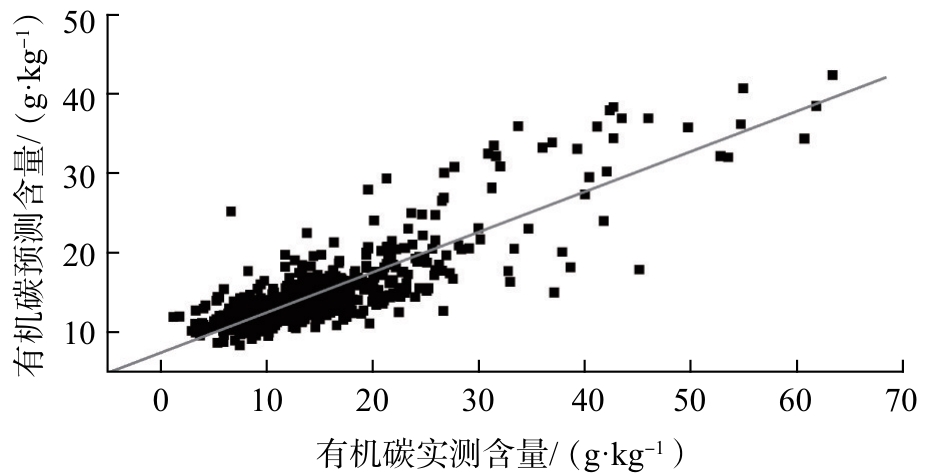
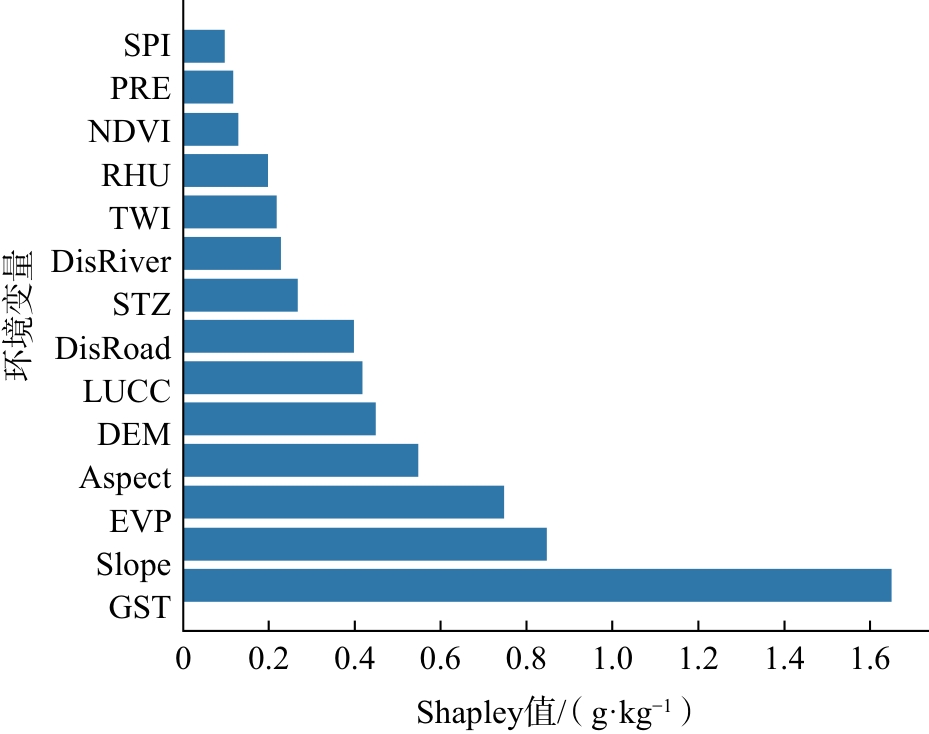
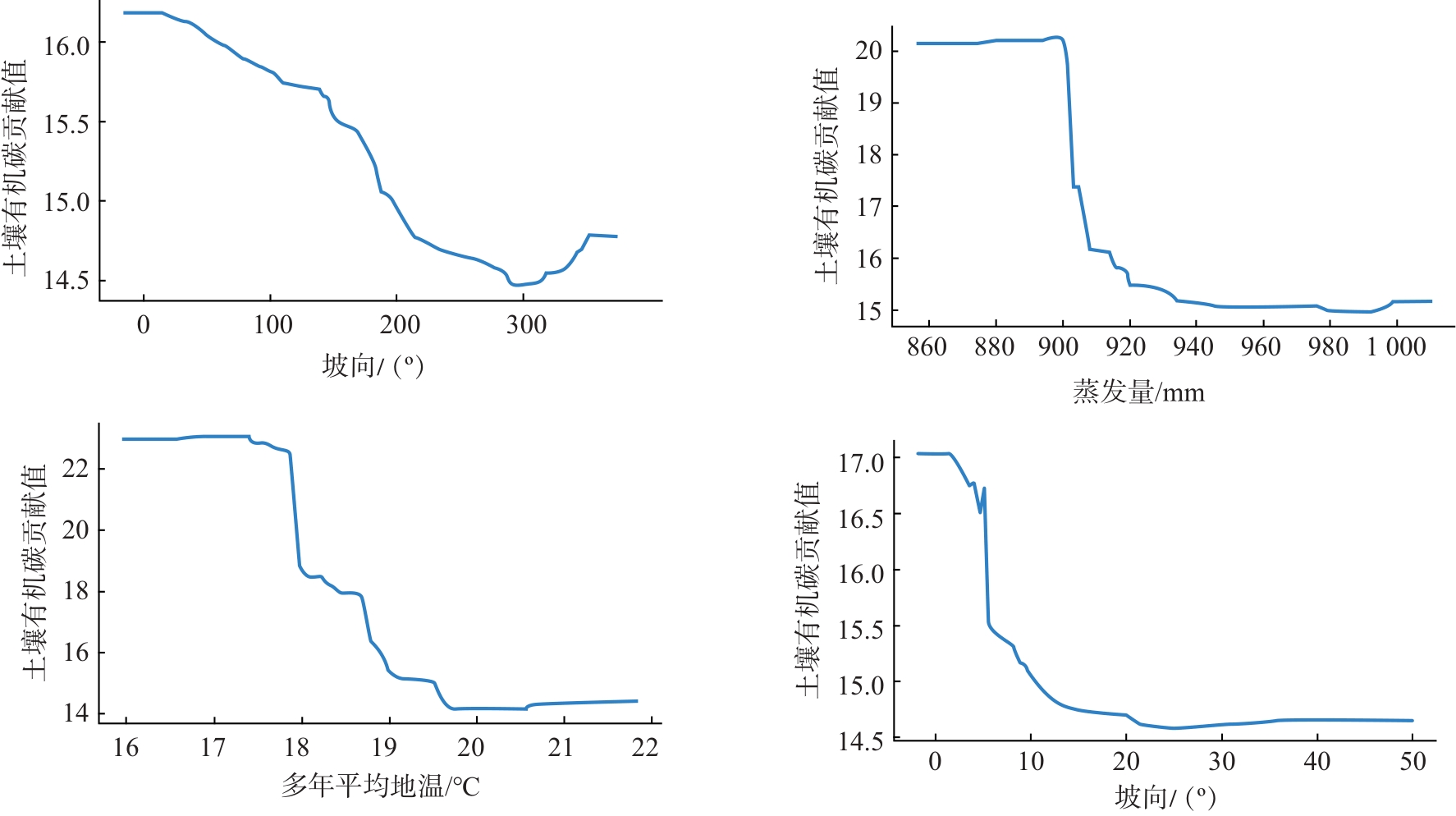
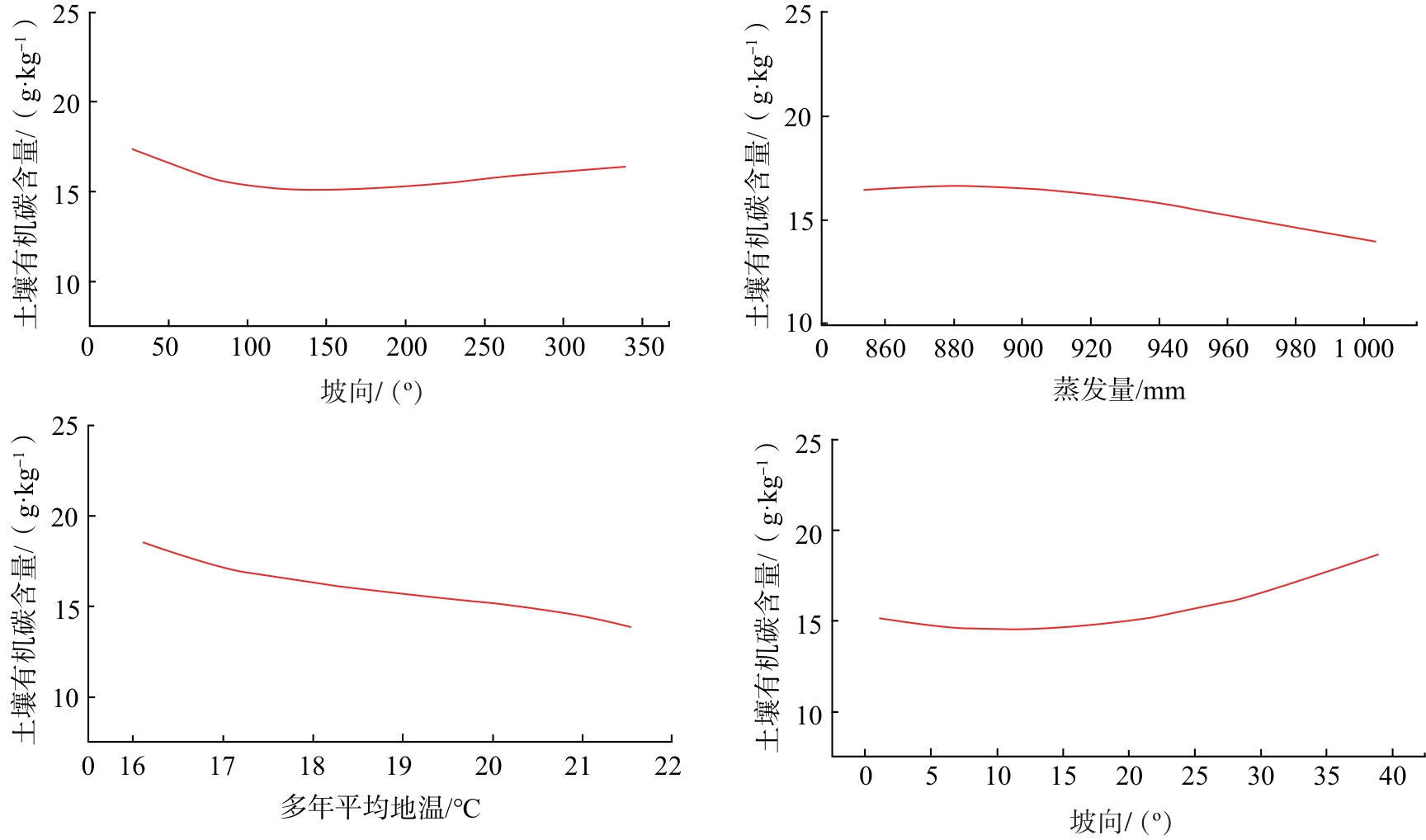
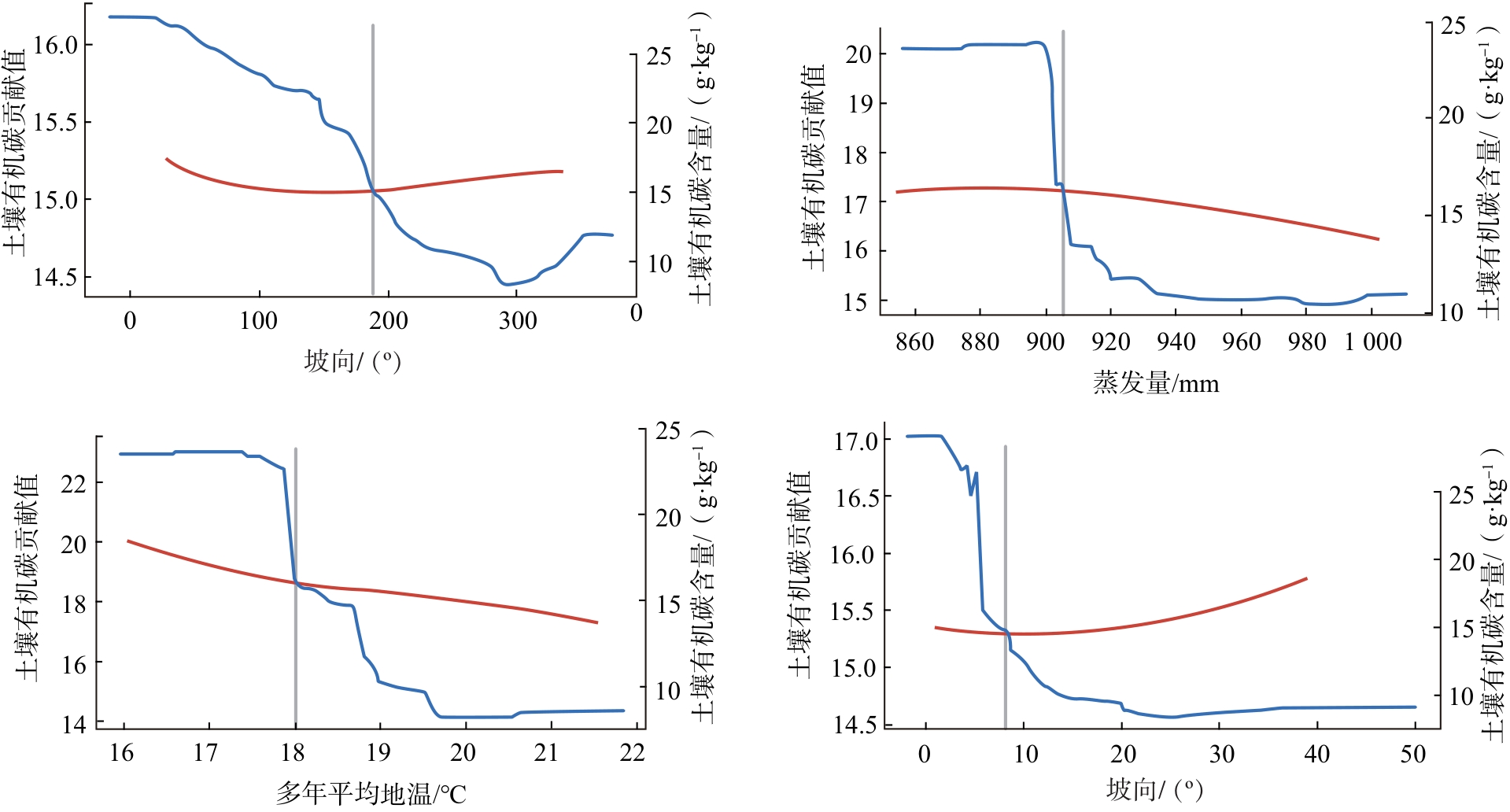
Soil organic carbon(SOC)responses to environmental factors are commonly nonlinear and threshold-dependent,yet most studies remain limited to importance ranking and fail to identify regulatory boundaries and triggering mechanisms,constraining precise carbon management. This article took the hilly area of Jinyun County,Zhejiang Province as an example,used soil sampling points and multiple environmental variables to construct a random forest model,and combined SHAP(SHapley Additive exPlanations)partial dependence diagram and sensitivity fitting curve to propose a "contribution-response consistency" criterion to identify the high-impact intervals of the main control factor,and constructed a comprehensive impact intensity index(SⅡ)to characterize the strength of the synergistic effect of multiple factors. The results revealed that SOC spatial heterogeneity was not driven by single factor continuous driving,but exhibited obvious interval control characteristics. Aspect(0 °-100 °),evapotranspiration(880-920 mm),ground surface temperature(17-19 ℃),and slope(0 °-10 °)form a sensitivity interval of SOC response. Significant (p0.05) SOC responses occurred only when multiple factors simultaneously fall within this interval,whereas single factor alone was insufficient to trigger variation. The SII further indicated SOC in hilly area was regulated by multi-factor threshold synergy rather than additive effects. This study revealed the environmental regulation boundary of SOC formation from the perspectives of interval and synergy,providing a theoretical basis for the transformation of carbon sequestration management in hilly areas from "factor optimization" to "condition matching".

Key words: soil organic carbon(SOC), dominant controlling factor, threshold, partial dependence analysis, sensitivity

CLC Number: