浙江农业科学 ›› 2026, Vol. 67 ›› Issue (1): 166-170.DOI: 10.16178/j.issn.0528-9017.20240583

• 蚕桑与特种养殖 • 上一篇    下一篇

微藻粉替代鲜活微藻对滩涂贝类规模化育苗的影响

李腾腾1,2(), 方军1,2, 黄承靖5, 任鹏1,2, 滕爽爽1,2, 邵艳卿1,2, 加晶3,4,*()   

  1. 1.浙江省海洋水产养殖研究所,浙江 温州 325005
    2.全省近岸生物种质资源保护与利用重点实验室,浙江 温州 325005
    3.微藻生物能源与资源北京市重点实验室, 北京 100142
    4.国家开发投资集团有限公司,国投生物科技投资有限公司,国投微藻生物科技中心, 北京 100034
    5.浙江海洋大学 水产学院,浙江 舟山 316022
  • 收稿日期:2024-07-21 出版日期:2026-01-11 发布日期:2026-01-19
  • 通讯作者: 加晶
  • 作者简介:加晶,E-mail: jiajing@sdic.com.cn
    李腾腾,主要从事单细胞藻类培养研究。E-mail: 1635822879@qq.com
  • 基金资助:
    横向科研项目(JS2020065);浙江省重大育种子课题(2023ZY1056);浙江省农业(水产)新品种选育重大科技专项(2021C02069-7-02);温州市种子种苗科技创新专项项目(Z20170013)

Effects of microalgal powder substitution for live microalgae on large-scale nursery of mudflat shellfish

LI Tengteng1,2(), FANG Jun1,2, HUANG Chengjing5, REN Peng1,2, TENG Shuangshuang1,2, SHAO Yanqing1,2, JIA Jing3,4,*()   

  1. 1. Zhejiang Mariculture Research Institute, Wenzhou 325005, Zhejiang
    2. Zhejiang Key Laboratory of Coastal Biological Germplasm Resources Conservation and Utilization, Wenzhou 325005, Zhejiang
    3. Beijing Key Laboratory of Microalgae Bioenergy and Bioresource, Beijing 100142
    4. SDIC Microalgae Biotechnology Center, SDIC Biotechnology Investment Co., Ltd., State Development and Investment Corporation, Beijing 100034
    5. College of Fisheries, Zhejiang Ocean University, Zhoushan 316022, Zhejiang
  • Received:2024-07-21 Online:2026-01-11 Published:2026-01-19
  • Contact: JIA Jing

摘要:

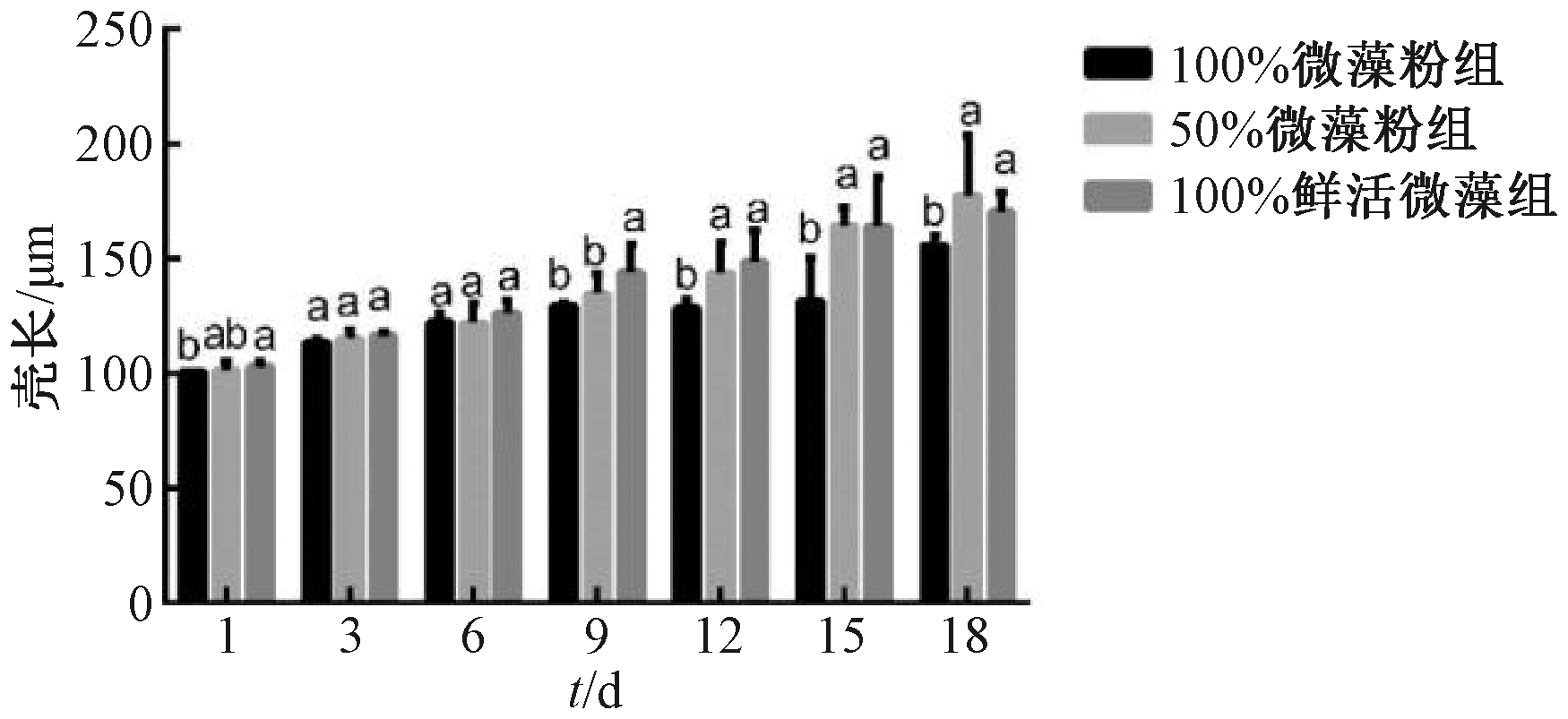
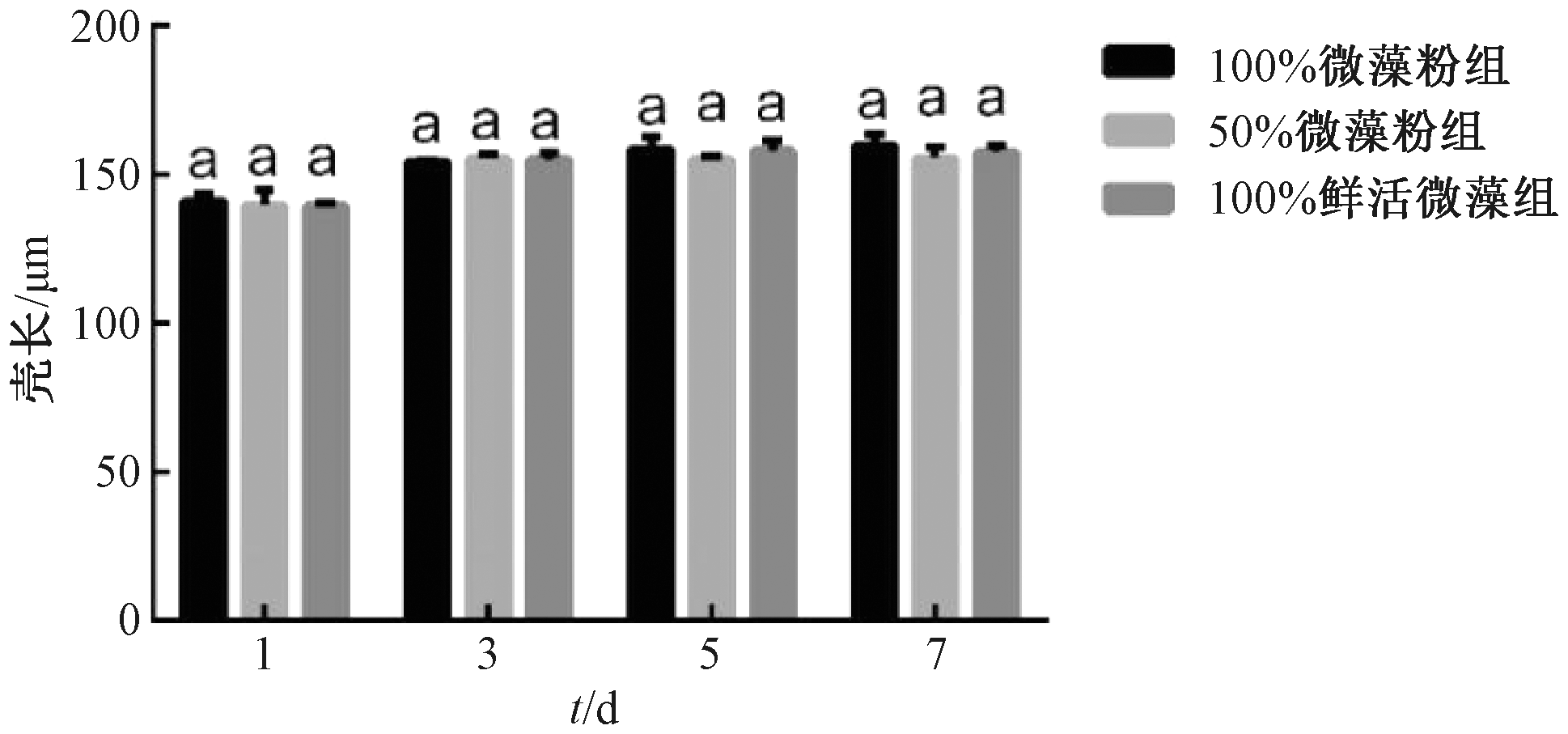
本试验以泥蚶(Tegillarca granosa)浮游幼虫、文蛤(Meretrix meretrix)浮游幼虫和菲律宾蛤仔(Ruditapes philippinarum)稚贝为对象,研究了微藻粉分别以0、50%和100%的比例替代鲜活微藻饵料(分别记为100%鲜活微藻组、50%微藻粉组和100%微藻粉组)对滩涂贝类规模化育苗的影响。 结果发现: 在泥蚶浮游幼虫的培育过程中,自第12天起,100%微藻粉组的壳长显著(p<0.05)低于50%微藻粉组和100%鲜活微藻组,而后两组之间无显著差异。在文蛤浮游幼虫的培育过程中,3组的壳长始终无显著差异。在菲律宾蛤仔稚贝的培育过程中,100%鲜活微藻组和50%微藻粉组的存活率显著高于100%微藻粉组,而前两组间无显著性差异。综上,在这3种滩涂贝类的人工规模化培育中,微藻粉可以部分或全部替代鲜活微藻使用,其中,50%替代比例表现出更优的适用性。

关键词: 微藻粉, 滩涂贝类, 生长, 饵料替代

Abstract:

In this study, the effects of microalgal powder substitution for live microalgae at a ratio of 0, 50% and 100% (denoted as the 100% live microalgae group, 50% microalgae powder group, and 100% microalgae powder group, respectively) on large-scale nursery of mudflat shellfish were investigated using planktonic larvae of Tegillarca granosa and Meretrix meretrix, and juveniles of Ruditapes philippinarum. The results showed that during the cultivation of Tegillarca granosa planktonic larvae, starting from day 12, the shell length in the 100% microalgae powder group was significantly (p<0.05) lower than that in the 50% microalgae powder group and the 100% live microalgae group, with no significant difference between the latter two groups. No significant differences in shell length were observed among the three groups during the rearing of Meretrix meretrix planktonic larvae. For Ruditapes philippinarum juveniles, the survival rate of both the 100% live microalgae group and the 50% microalgae powder group was significantly higher than that of the 100% microalgae powder group, with no significant difference between the former two groups. In conclusion, microalgae powder is a viable substitute for live microalgae in the artificial large-scale rearing of these three mudflat shellfish species, with the 50% substitution ratio demonstrating better applicability.

Key words: microalgae powder, mudflat shellfish, growth, feed replacement

中图分类号: