浙江农业科学 ›› 2026, Vol. 67 ›› Issue (10): 2532-2540.DOI: 10.16178/j.issn.0528-9017.20250252

• 资源与环境 • 上一篇    下一篇

化肥减量配施微生物菌肥对红果参果实产量和品质的影响

沈良江1(), 张国平1,2, 吕霞1,2()   

  1. 1.云南农业大学 园林园艺学院,云南 昆明 650500
    2.云南省滇台特色农业产业化工程研究中心,云南 昆明 650500
  • 收稿日期:2025-04-01 出版日期:2026-10-11 发布日期:2026-10-19
  • 通讯作者: 吕霞
  • 作者简介:吕霞,E-mail:1072956071@qq.com。
    沈良江,研究方向为园艺植物绿色栽培。E-mail:1955264949@qq.com。
  • 基金资助:
    云南省科技人才和平台计划(202005AF150035)

Effects of chemical fertilizer reduction combined with microbial fertilizers on yield and quality of Cyclocodon lancifolius

SHEN Liangjiang1(), ZHANG Guoping1,2, LYU Xia1,2()   

  1. 1.School of Landscape Architecture and Horticulture,Yunnan Agricultural University,Kunming 650500,Yunnan
    2.Dian-tai Engineering Research Center for Characteristic Agriculture Industrialization of Yunnan Province,Kunming 650500,Yunnan
  • Received:2025-04-01 Online:2026-10-11 Published:2026-10-19
  • Contact: LYU Xia

摘要:

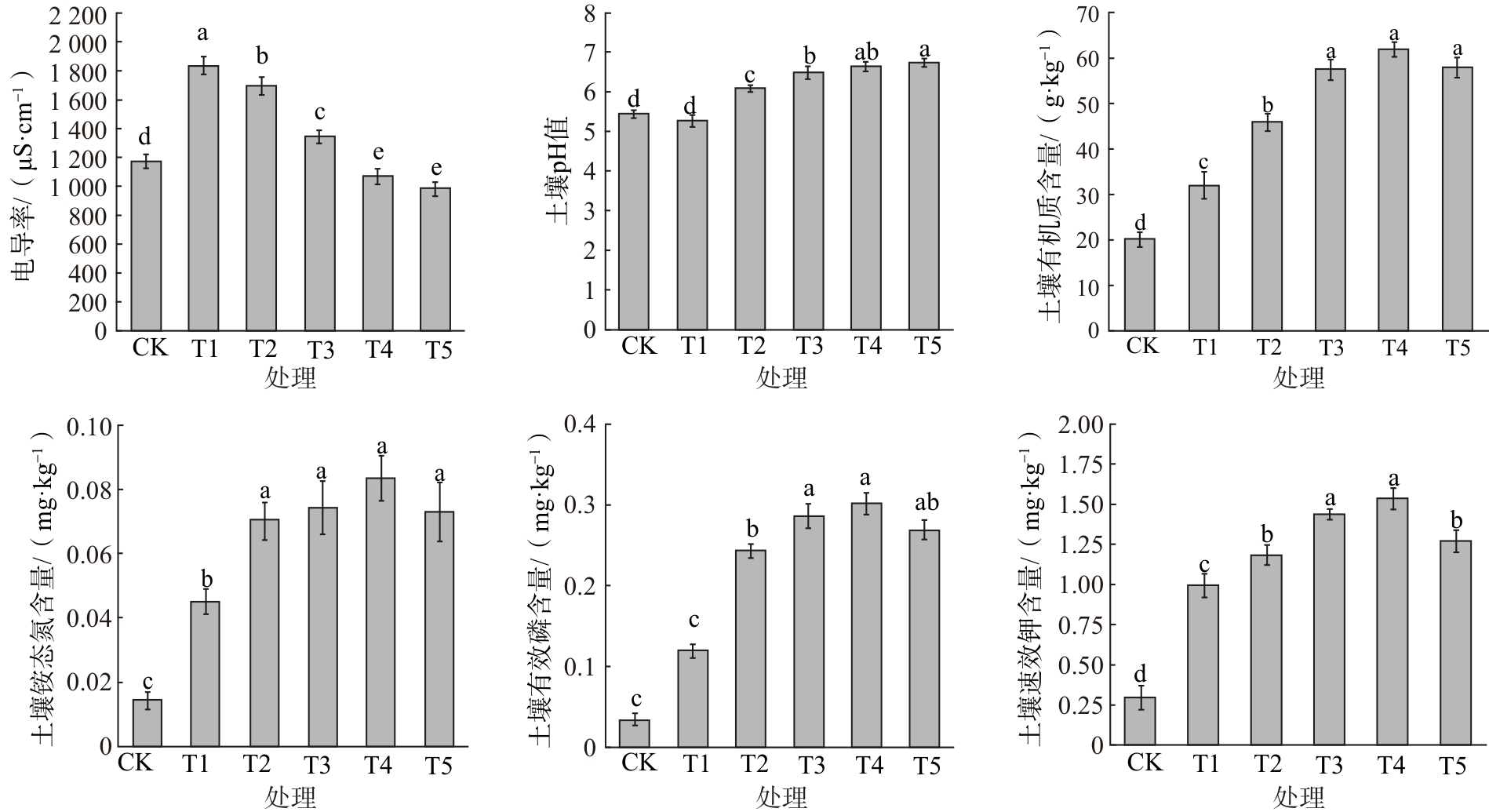
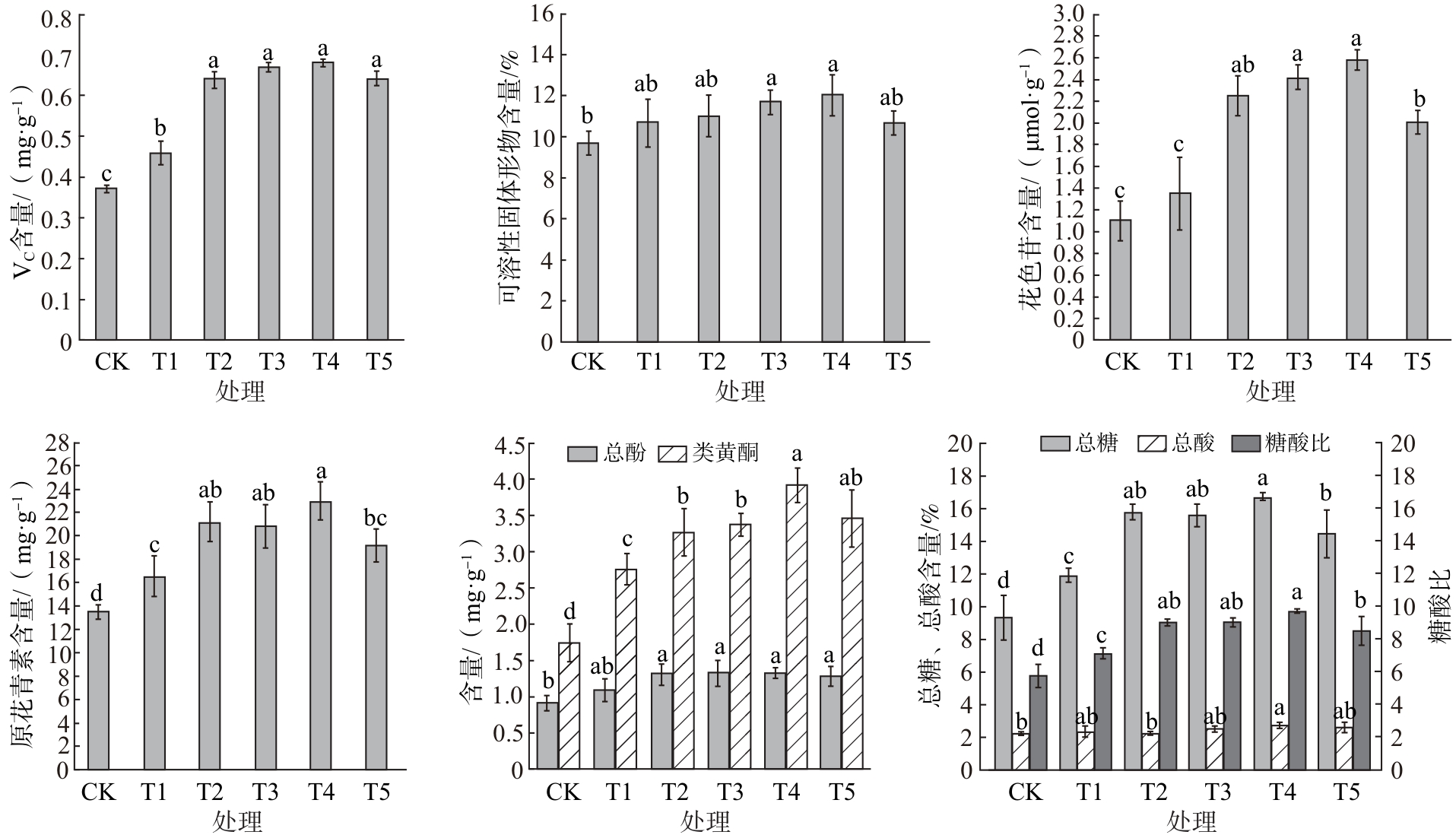
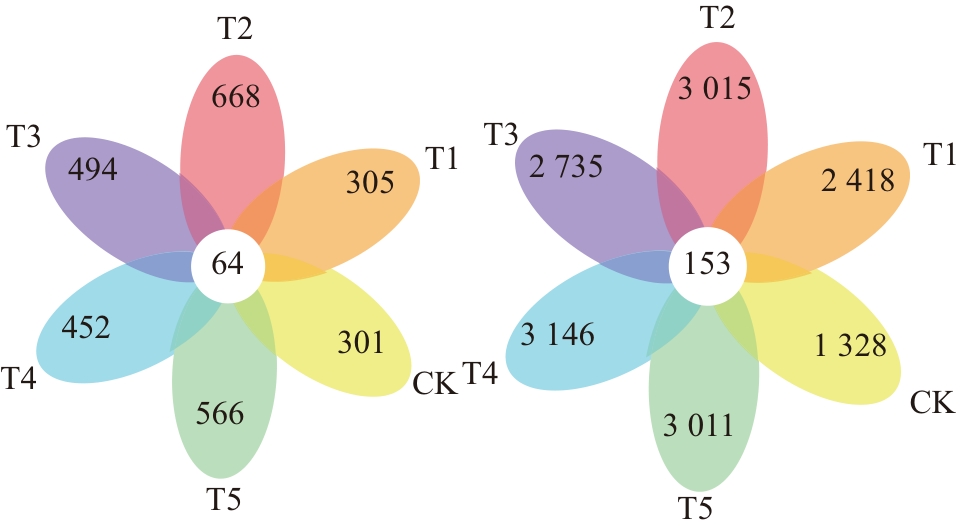
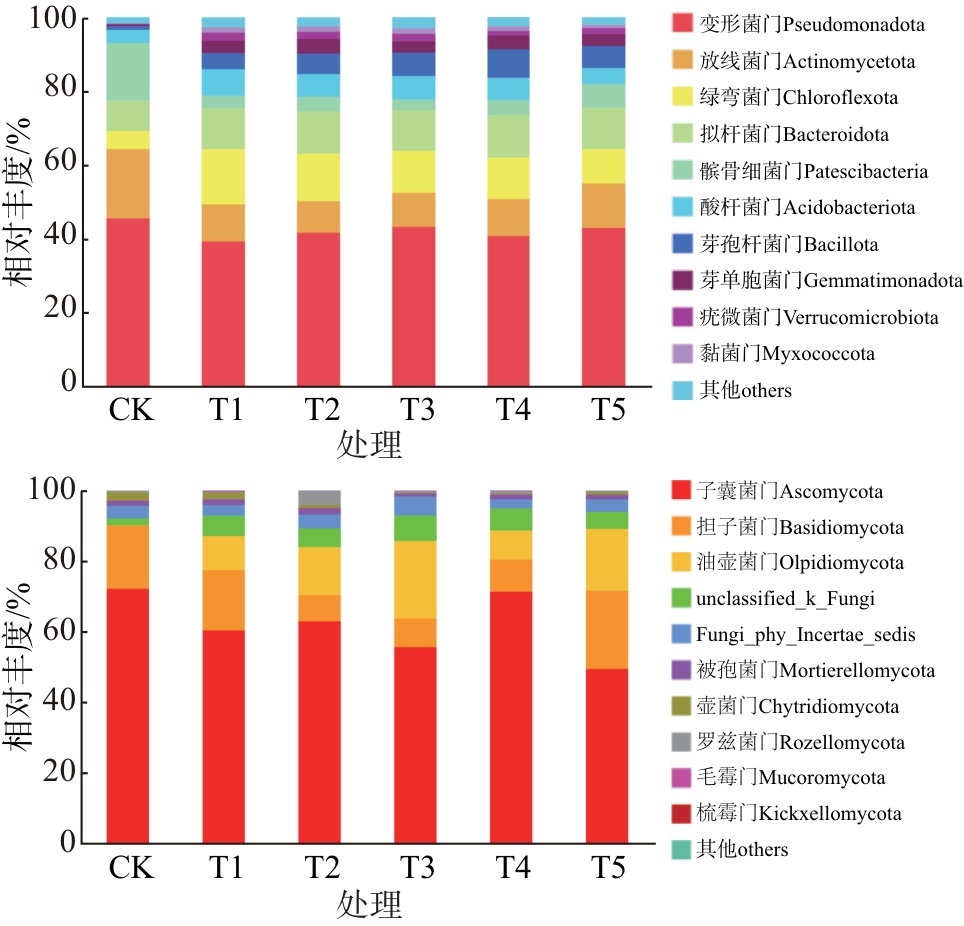
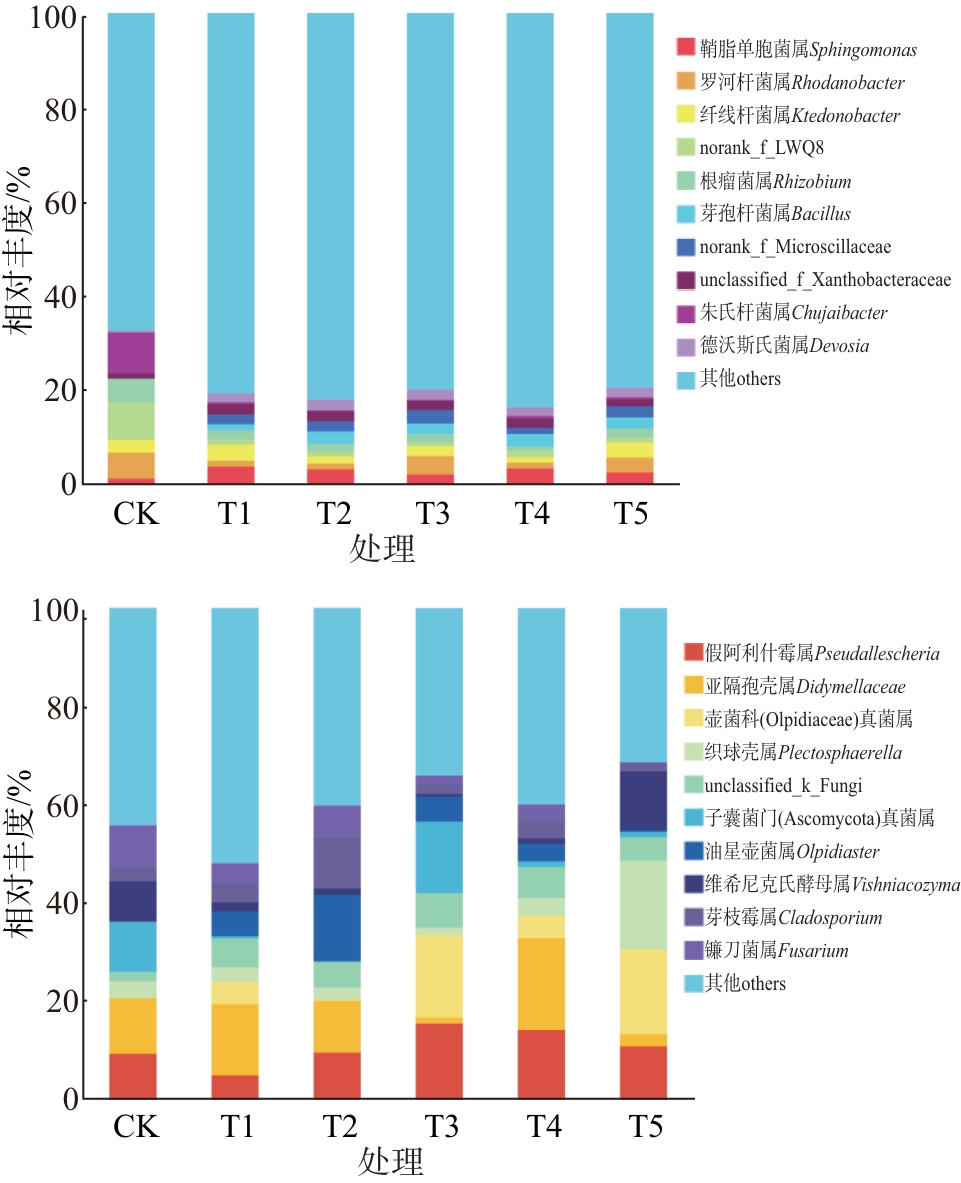
本研究旨在探究化肥减量配施微生物菌肥对红果参产量、品质及根际微生物群落的影响。以大黑果红果参为试验材料,设置6个处理:不施肥(CK)、常规量复合肥(T1)、常规量复合肥+微生物菌肥(T2)、85%复合肥+15%微生物菌肥(T3)、75%复合肥+25%微生物菌肥(T4)和65%复合肥+35%微生物菌肥(T5),测定了土壤理化性质、微生物群落结构及果实品质参数。结果显示,化肥减量配施微生物菌肥大大改善了土壤环境,T4处理下的土壤pH值趋近中性,电导率较T1显著(p<0.05)降低41.94%,有机质、铵态氮、有效磷、速效钾含量较T1分别显著增加94.10%、45.97%、60.46%和35.27%。微生物群落分析显示,相较于T1,T4处理显著提高了细菌Chao1、ACE和Shannon指数,增幅分别为60.26%、49.07%、25.14%,提升了芽孢杆菌属(Bacillus)等有益菌种的相对丰度。品质指标中,T4处理的表现最优,该处理下的维生素C、可溶性固形物、花色苷、总糖及类黄酮含量显著高于CK和T1,红果参产量较CK和T1分别提高86.73%和28.10%。研究表明,25%微生物菌肥替代可有效调节根际微生物群落,进而提升果实产量和品质,同时实现土壤改良,为红果参的绿色栽培提供了科学依据。

关键词: 红果参, 化肥减量增效, 微生物菌肥, 根际微生物

Abstract:

This study aimed to investigate the effects of fertilizer reduction combined with microbial fertilizer application on the yield,quality,and rhizosphere microbial community of Cyclocodon lancifolius. Using the Daheiguo variety as the experimental material,6 treatments were set up:no fertilization(CK),conventional rate of compound fertilizer(T1),conventional rate of compound fertilizer + microbial fertilizer(T2),85% compound fertilizer + 15% microbial fertilizer(T3),75% compound fertilizer + 25% microbial fertilizer(T4),and 65% compound fertilizer + 35% microbial fertilizer(T5). By measuring soil physicochemical properties,microbial community structure,and fruit quality parameters,the results showed that reduced chemical fertilization improved soil conditions,with the T4 treatment bringing soil pH value closer to neutral,reducing electrical conductivity significantly(p<0.05)by 41.94% compared with T1,and the organic matter,ammonium nitrogen,available phosphorus,and available potassium contents significantly increased by 94.10%,45.97%,60.46%,and 35.27%,respectively,compared with T1. Microbial community analysis showed that,compared with T1,T4 significantly increased the Chao1,ACE,and Shannon indexes of bacteria by 60.26%,49.07%,25.14%,respectively,as well as the relative abundance of beneficial bacteria such as Bacillus. The T4 treatment exhibited the best quality indicators,with significantly higher contents of vitamin C,soluble solids,anthocyanins,total sugar,and flavonoids compared with CK and T1. Furthermore,the yield under T4 increased by 86.73% and 28.10% compared with CK and T1,respectively. This study demonstrated that replacing 25% of chemical fertilizer with microbial fertilizer effectively regulated the rhizosphere microbial community,thereby enhancing fruit yield and quality while improving soil conditions. These findings provided scientific support for the sustainable cultivation of Cyclocodon lancifolius.

Key words: Cyclocodon lancifolius, chemical fertilizer reduction and efficiency enhancement, microbial fertilizer, rhizosphere microorganism

中图分类号: