
浙江农业科学 ›› 2026, Vol. 67 ›› Issue (10): 2541-2552.DOI: 10.16178/j.issn.0528-9017.20250306
常一笑1,2,3( ), 许佳扬1,2, 支丽英1,2,4, 李健1,2, 金明康2,5(), 丁恺1,2()
收稿日期:2025-04-21
出版日期:2026-10-11
发布日期:2026-10-19
通讯作者:
金明康,丁恺
作者简介:丁恺,E-mail:kding@iue.ac.cn。基金资助:
CHANG Yixiao1,2,3(), XU Jiayang1,2, ZHI Liying1,2,4, LI Jian1,2, JIN Mingkang2,5(), DING Kai1,2()
Received:2025-04-21
Online:2026-10-11
Published:2026-10-19
Contact:
JIN Mingkang,DING Kai
摘要:
草甘膦是全球使用最广泛的除草剂之一,但其在土壤中的残留可能导致土壤质量退化及抗生素抗性基因(ARGs)的传播,进而影响土壤健康。本研究以赤子爱胜蚓(Eisenia fetida)为对象,依据环境残留现状设置2种不同的草甘膦残留量(0.5和2.0 mg·kg-1),探究草甘膦残留条件下蚯蚓活动对土壤养分、细菌群落及ARGs的影响。结果表明,蚯蚓活动改善了土壤质量,促进了有机质矿化,增加了无机氮积累,并改变了细菌群落结构。此外,蚯蚓活动提高了土壤细菌多样性,抑制了病原菌丰度,降低了ARGs丰度,且削弱了病原菌与ARGs的相互作用网络。功能预测结果显示,蚯蚓活动显著(p<0.05)增加了外源物质代谢相关基因的丰度,增幅为8.61%,这可能是土壤细菌降解草甘膦能力增强的关键机制。本研究通过蚯蚓活动下土壤理化特性、细菌群落结构及ARGs的相互作用网络动态变化,阐明了蚯蚓改善草甘膦残留土壤健康状况的作用机制,为基于生物调控的土壤健康评估体系构建提供了理论依据和数据支持。
中图分类号:
常一笑, 许佳扬, 支丽英, 李健, 金明康, 丁恺. 蚯蚓对草甘膦残留土壤细菌群落及土壤健康的影响[J]. 浙江农业科学, 2026, 67(10): 2541-2552.
CHANG Yixiao, XU Jiayang, ZHI Liying, LI Jian, JIN Mingkang, DING Kai. Effects of earthworms on bacterial communities and soil health in glyphosate-residual soil[J]. Journal of Zhejiang Agricultural Sciences, 2026, 67(10): 2541-2552.
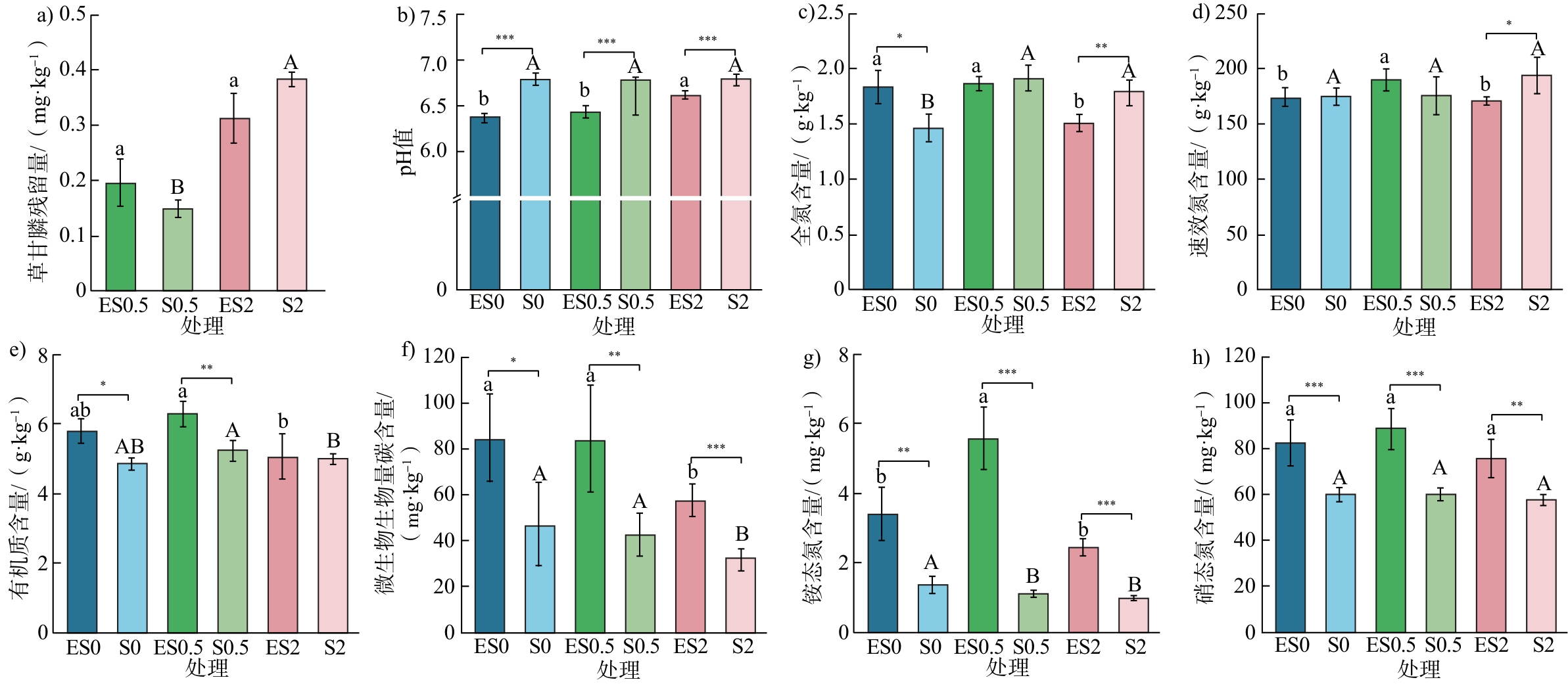
图1 蚯蚓活动对草甘膦残留土壤理化性质的影响柱上无相同小写字母表示有蚯蚓处理间存在显著差异(p<0.05),无相同大写字母表示无蚯蚓处理间存在显著差异(p<0.05)。“*”表示显著(p<0.05)差异,“**”、“***”表示极显著(**,p<0.01;***,p<0.001)差异。下同。
Fig.1 The effect of earthworm activity on the physicochemical properties of soil containing glyphosate residues
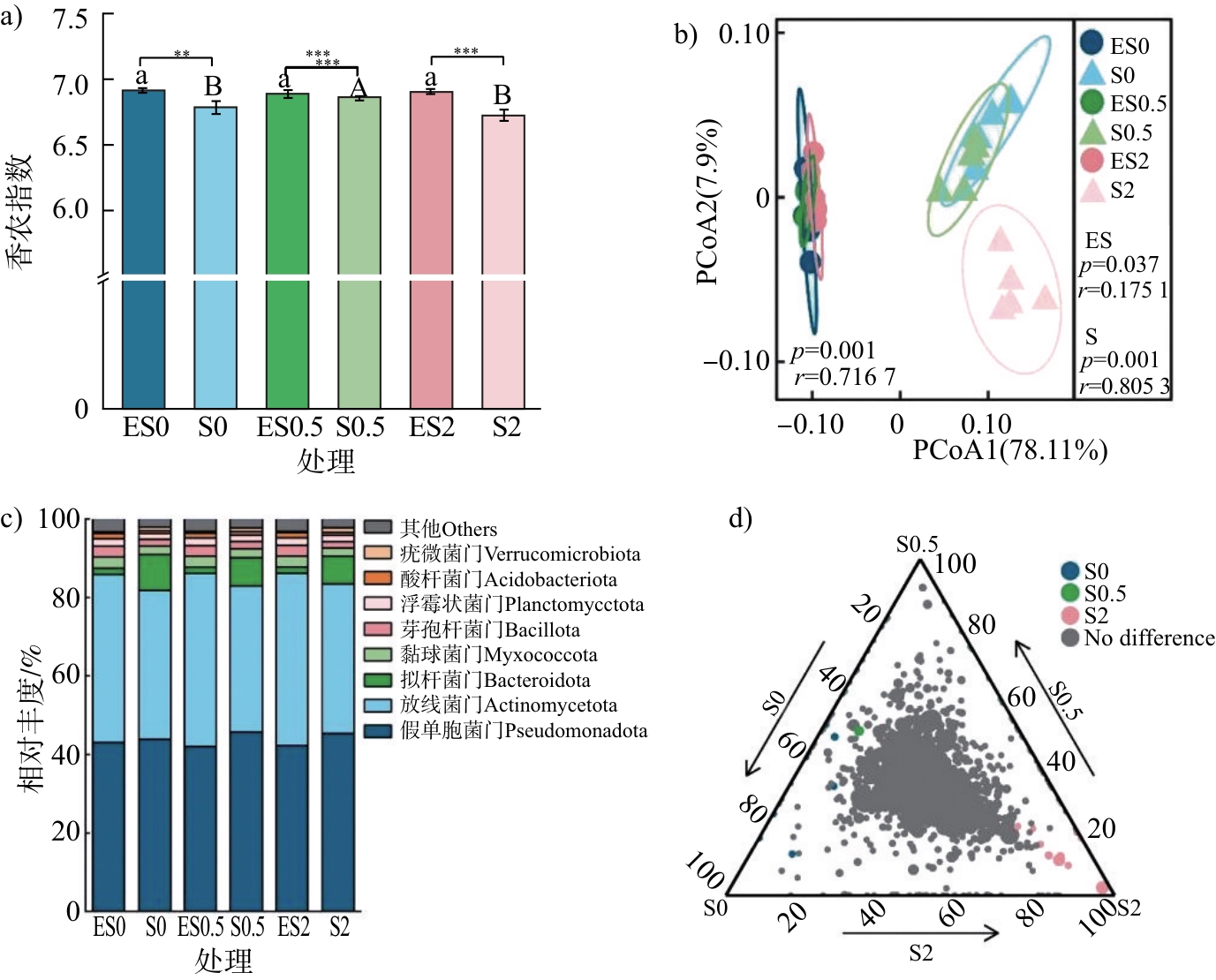
图2 蚯蚓活动对草甘膦残留土壤细菌群落的影响a,香农指数;b,主坐标分析;c,门水平微生物的相对丰度;d,无蚯蚓土壤细菌种水平三元图。
Fig.2 The effect of earthworm activity on the bacterial community in soil containing glyphosate residues
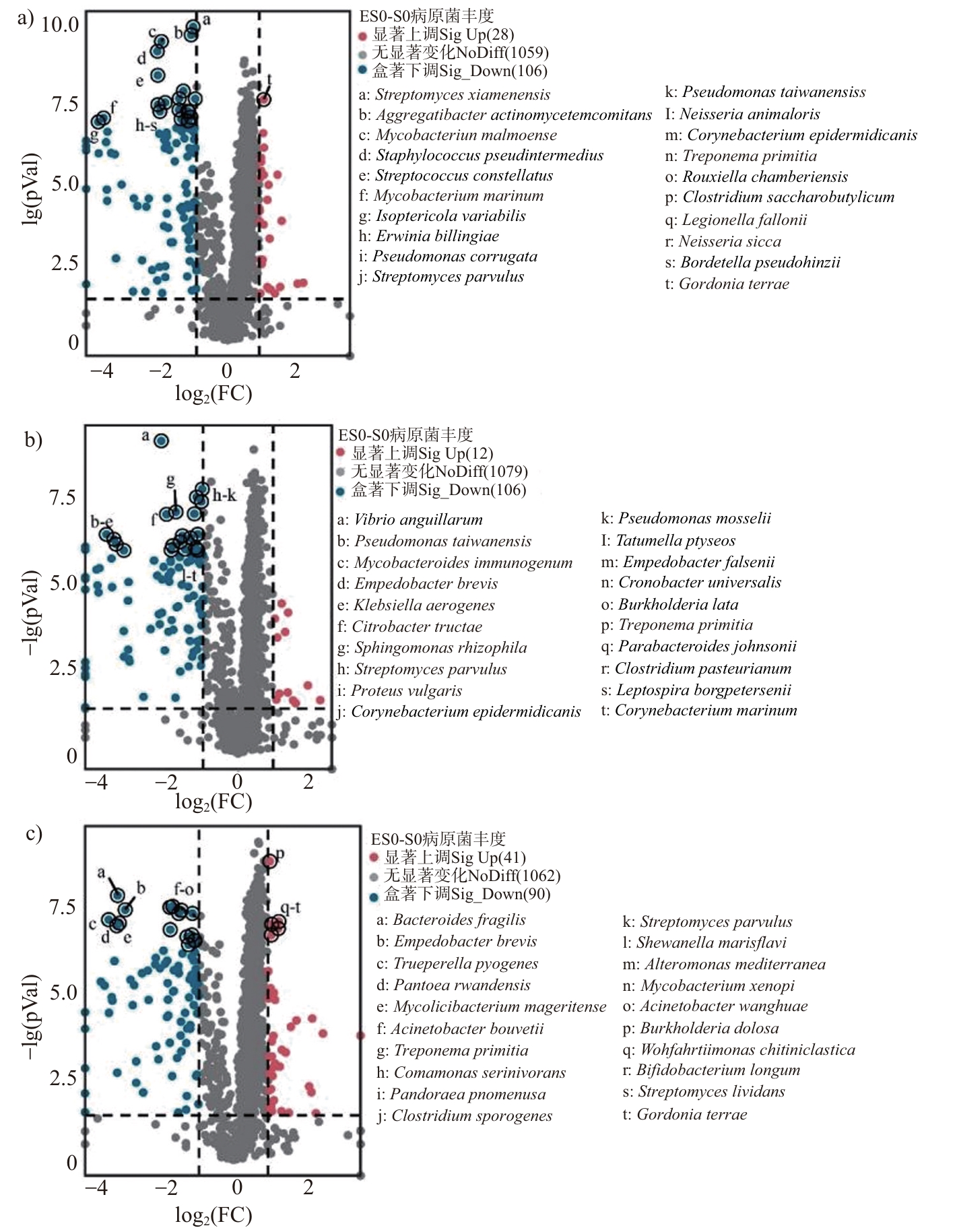
图3 土壤病原菌火山图Streptomyces xiamenensis,厦门链霉菌;Aggregatibacter actinomycetemcomitans,伴放线杆菌;Mycobacterium malmoense,玛尔摩分枝杆菌; Staphylococcus pseudintermedius,假中间葡萄球菌;Streptococcus constellatus,星座链球菌;Mycobacterium marinum,海分枝杆菌;Isoptericola variabilis,变异白蚁菌;Erwinia billingiae,比氏欧文氏菌;Pseudomonas corrugata,皱纹假单胞菌;Streptomyces parvulus,微小链霉菌; Pseudomonas taiwanensis,台湾假单胞菌;Neisseria animaloris,动物口腔奈瑟菌;Corynebacterium epidermidicanis,表皮棒杆菌;Treponema primitia,优果密螺旋体;Rouxiella chamberiensis,鲁西氏菌;Clostridium saccharobutylicum,糖丁酸梭菌;Legionella fallonii,法洛军团菌; Neisseria sicca,干燥奈瑟菌;Bordetella pseudohinzii,伪欣氏鲍特菌;Gordonia terrae,土地戈登氏菌;Vibrio anguillarum,鳗弧菌; Mycobacteroides immunogenum,免疫原分枝杆菌;Empedobacter brevis,短杆菌;Klebsiella aerogenes,产气克雷伯菌;Citrobacter tructae,鳟鱼柠檬酸杆菌;Sphingomonas rhizophila,嗜根鞘氨醇单胞菌;Proteus vulgaris,普通变形杆菌;Pseudomonas mosselii,摩氏假单胞菌;Tatumella ptyseos,痰塔特姆氏菌;Empedobacter falsenii,假肠杆菌;Cronobacter universalis,广泛克罗诺杆菌;Burkholderia lata,宽广伯克霍尔德氏菌;Parabacteroides johnsonii,约氏副拟杆菌;Clostridium pasteurianum,巴氏梭菌;Leptospira borgpetersenii,博氏钩端螺旋体;Corynebacterium marinum,海洋棒杆菌;Bacteroides fragilis,脆弱拟杆菌;Trueperella pyogenes,化脓隐秘杆菌;Pantoea rwandensis,卢旺达泛菌; Mycolicibacterium mageritense,马格里特分枝杆菌;Acinetobacter bouvetii,包氏不动杆菌;Comamonas serinivorans,食丝丛毛单胞菌; Pandoraea pnomenusa,潘多拉菌;Clostridium sporogenes,生孢梭菌;Shewanella marisflavi,黄海希瓦氏菌;Alteromonas mediterranea,地中海交替单胞菌;Mycobacterium xenopi,蟾分枝杆菌;Acinetobacter wanghuae,旺华不动杆菌;Burkholderia dolosa,多洛伯克霍尔德氏菌;Wohlfahrtiimonas chitiniclastica,污蝇杆菌;Bifidobacterium longum,长双歧杆菌;Streptomyces lividans,浅青紫链霉菌。
Fig.3 The volcano image of soil pathogen
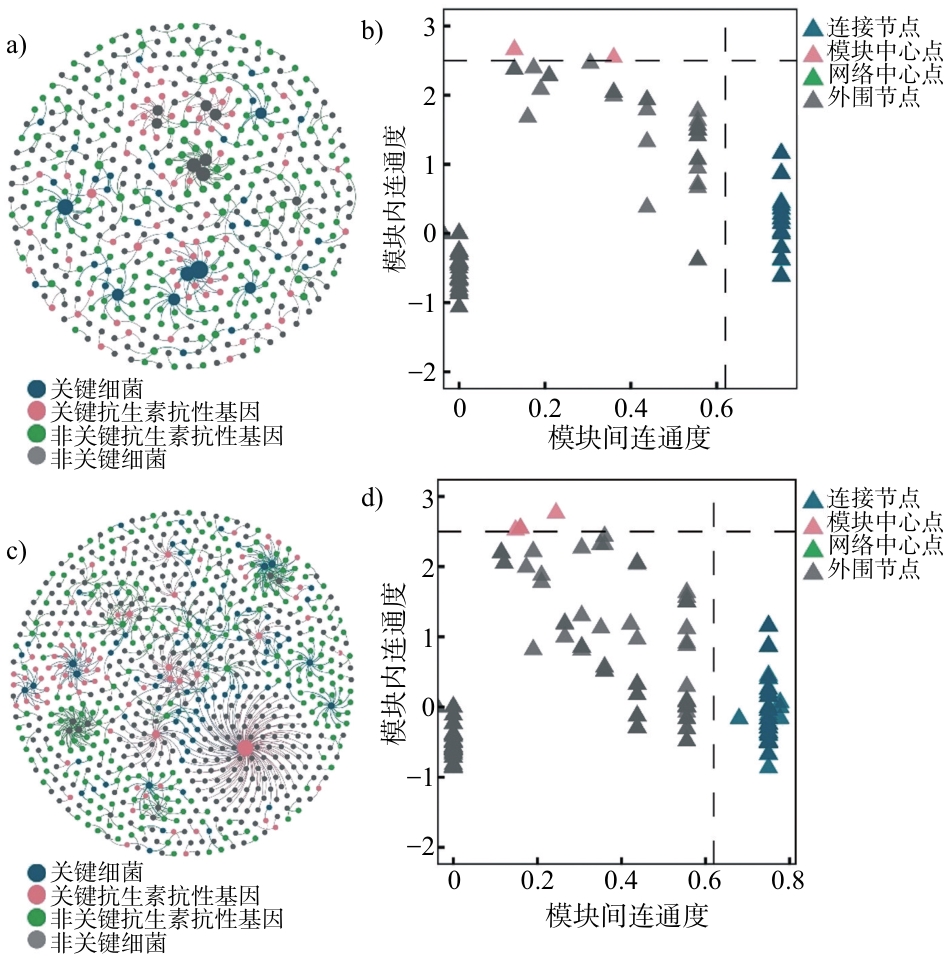
图4 蚯蚓活动土壤对病原菌-ARGs网络的影响a,有蚯蚓土壤病原菌-ARGs网络;b,有蚯蚓土壤网络关键节点;c,无蚯蚓土壤病原菌-ARGs网络;d,无蚯蚓土壤网络关键节点。
Fig.4 Effect of earthworm activity on the network of soil pathogenic bacteria-ARGs associations
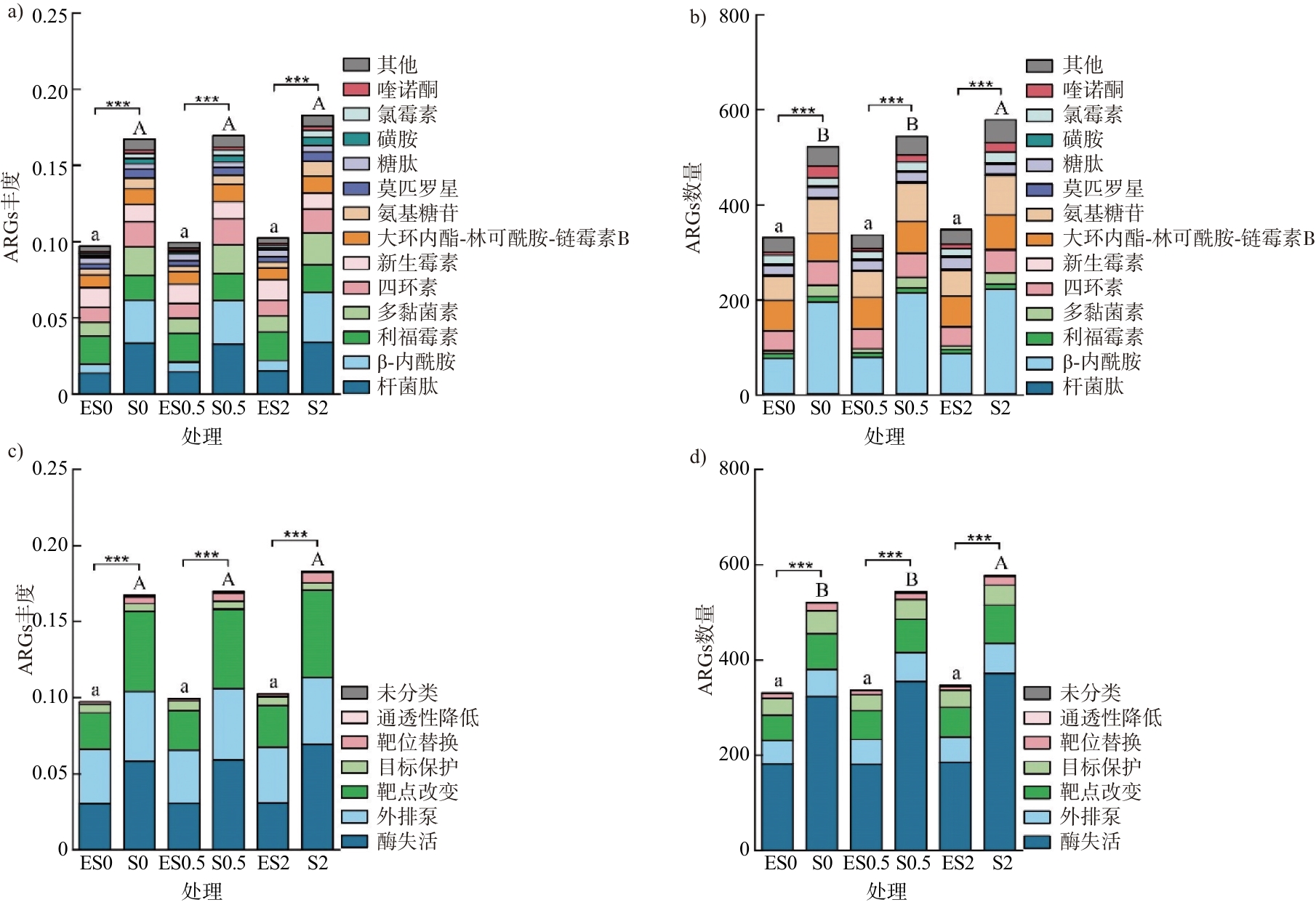
图5 不同处理下的土壤ARGs药物类别与抗性机制组成特征a,ARGs药物类别丰度;b,ARGs药物类别数量;c,ARGs药物类别作用机制丰度;d,ARGs药物类别作用机制数量。
Fig.5 Compositional characteristics of soil ARGs by drug class and resistance mechanism under different treatment conditions
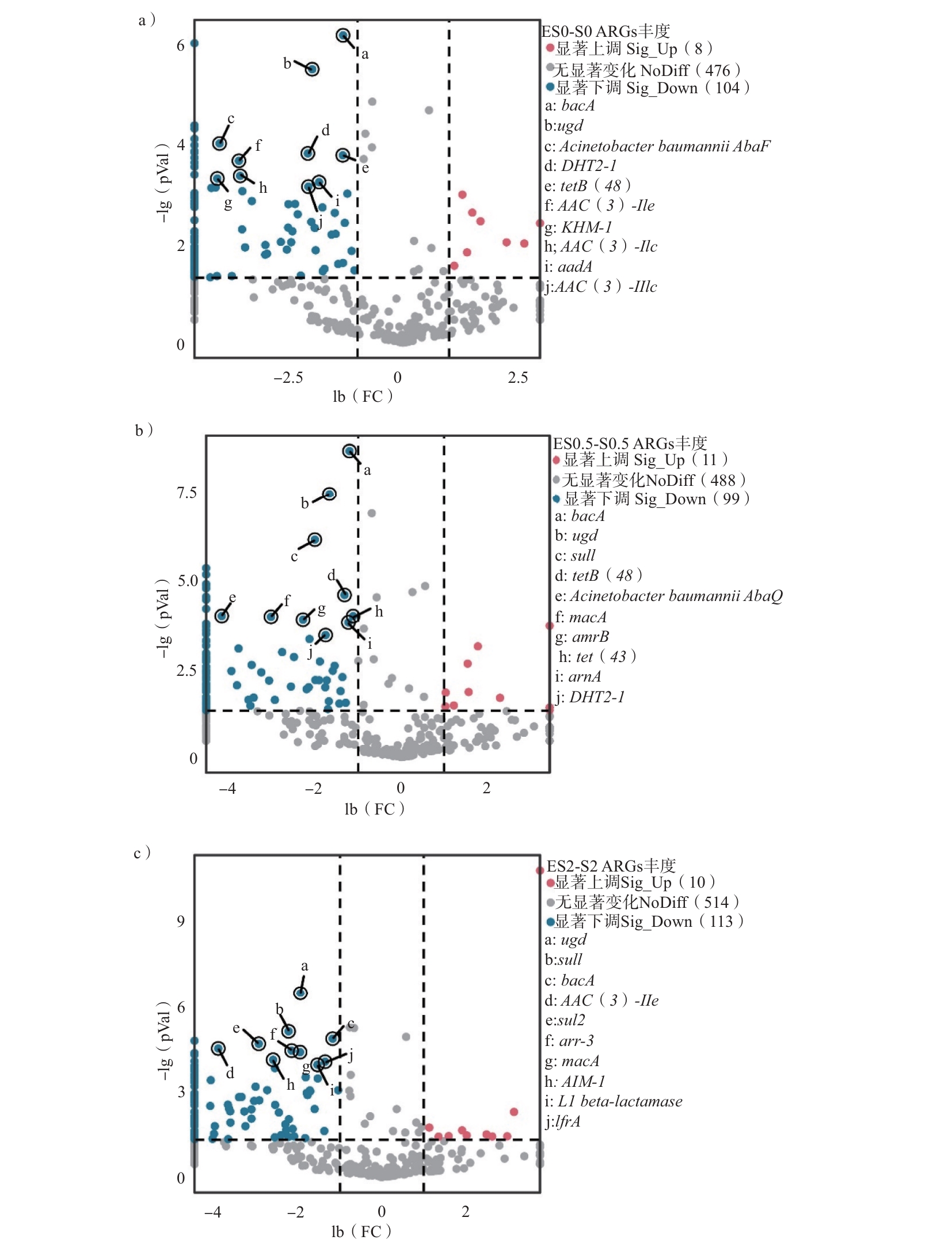
图6 不同处理下的土壤ARGs差异火山图
Fig.6 The volcano of soil ARGs under different treatments
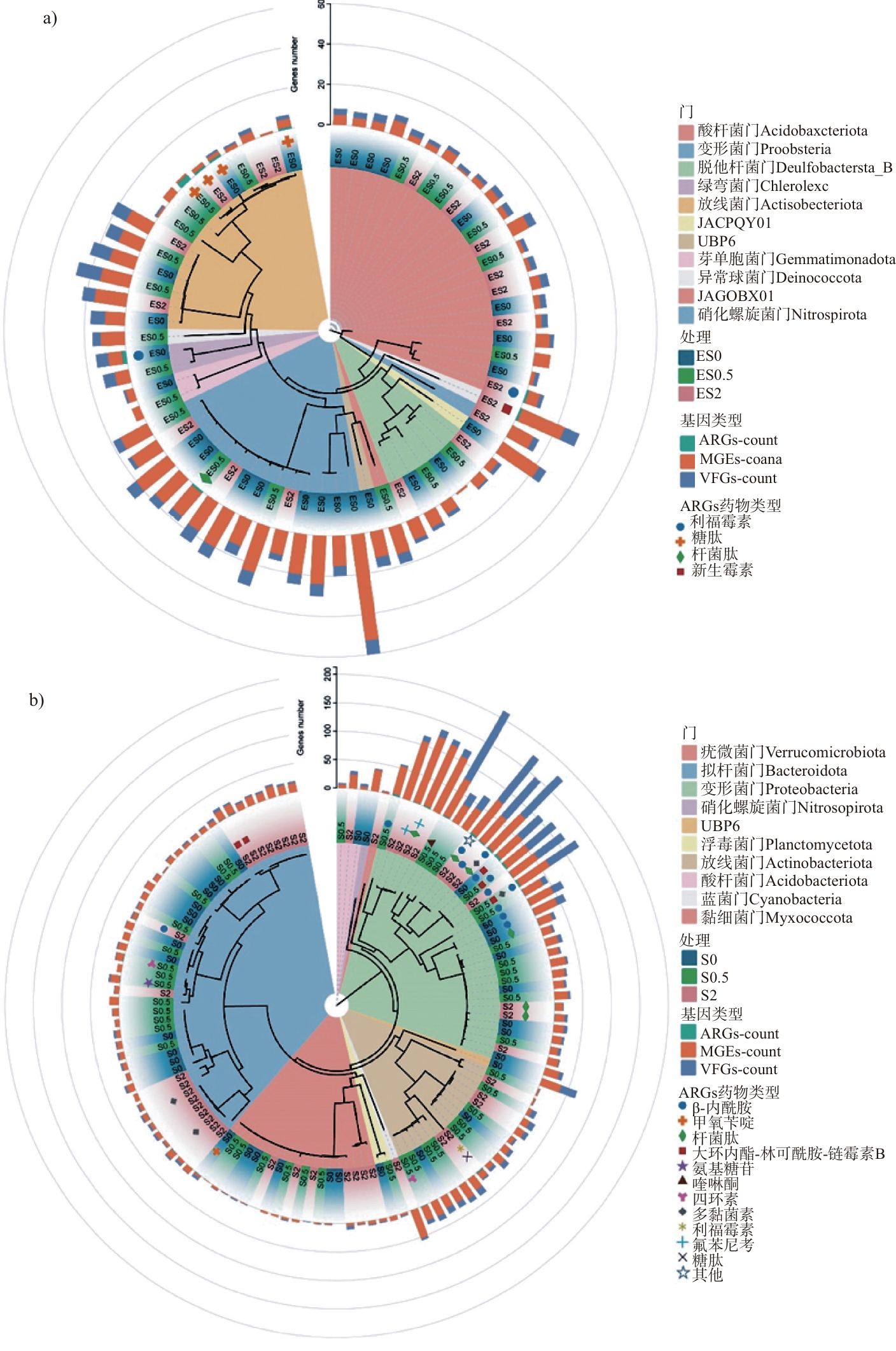
图7 蚯蚓活动对土壤MAGs系统发育及抗生素抗性基因(ARGs)、可移动遗传元件(MGEs)、毒力因子基因(VFGs)携带特征的影响
Fig.7 Effect of earthworm activity on the phylogeny and carrying characteristics of antibiotic resistance genes(ARGs),mobile genetic elements(MGEs),virulence factor genes(VFGs)in soil MAGs
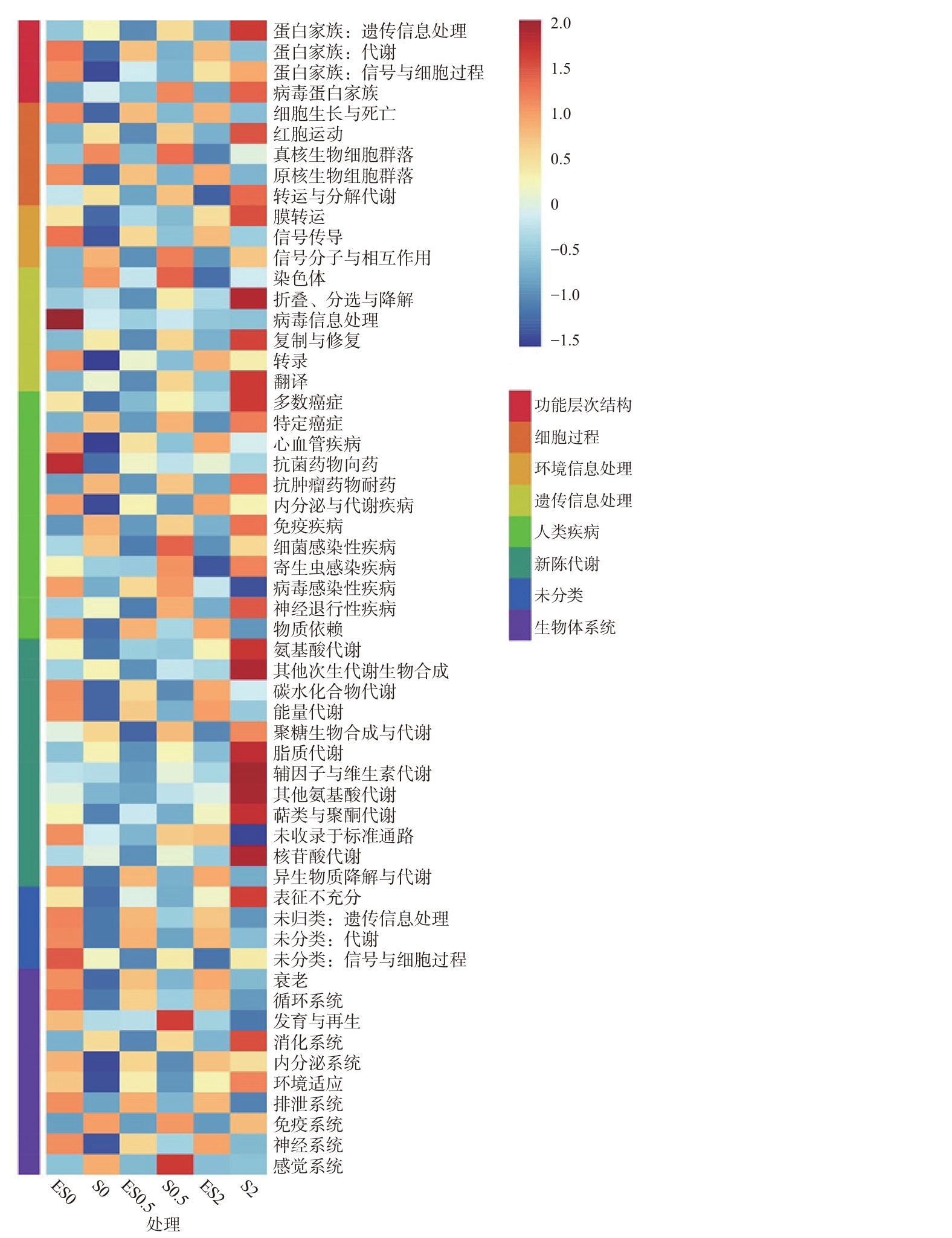
图8 不同处理下土壤微生物的KEGG功能注释
Fig. 8 KEGG functional annotation of soil microbiota under different treatments
| [1] | Singh S, Kumar V, Datta S,et al. Glyphosate uptake,translocation,resistance emergence in crops,analytical monitoring,toxicity and degradation:a review[J]. Environmental Chemistry Letters,2020,18(3):663-702. |
| [2] | Hu M F, Liu K F, Qiu J S,et al. Behavior of imidazolinone herbicide enantiomers in earthworm-soil microcosms:degradation and bioaccumulation[J]. Science of the Total Environment,2020,707:135476. |
| [3] | Pelosi C, Bertrand C, Bretagnolle V,et al. Glyphosate,AMPA and glufosinate in soils and earthworms in a French arable landscape[J]. Chemosphere,2022,301:134672. |
| [4] | Ferrante M, Rapisarda P, Grasso A,et al. Glyphosate and environmental toxicity with “One Health” approach,a review[J]. Environmental Research,2023,235:116678. |
| [5] | Ruuskanen S, Fuchs B, Nissinen R,et al. Ecosystem consequences of herbicides:the role of microbiome[J]. Trends in Ecology & Evolution,2023,38(1):35-43. |
| [6] | Lupwayi N Z, Blackshaw R E, Geddes C M,et al. Multi-year and multi-site effects of recurrent glyphosate applications on the wheat rhizosphere microbiome[J]. Environmental Research,2022,215:114363. |
| [7] | Banerjee S, van der Heijden M G A. Soil microbiomes and One Health[J]. Nature Reviews Microbiology,2023,21(1):6-20. |
| [8] | Van Bruggen A H C, He M M, Shin K,et al. Environmental and health effects of the herbicide glyphosate[J]. Science of the Total Environment,2018,616:255-268. |
| [9] | Liao H P, Li X, Yang Q E,et al. Herbicide selection promotes antibiotic resistance in soil microbiomes[J]. Molecular Biology and Evolution,2021,38(6):2337-2350. |
| [10] | Zhu Y G, Zhao Y, Zhu D,et al. Soil biota,antimicrobial resistance and planetary health[J]. Environment International,2019,131:105059. |
| [11] | Mishra S, Pang S M, Zhang W P,et al. Insights into the microbial degradation and biochemical mechanisms of carbamates[J]. Chemosphere,2021,279:130500. |
| [12] | Rossi F, Carles L, Donnadieu F,et al. Glyphosate-degrading behavior of five bacterial strains isolated from stream biofilms[J]. Journal of Hazardous Materials,2021,420:126651. |
| [13] | Sun M M, Chao H Z, Zheng X X,et al. Ecological role of earthworm intestinal bacteria in terrestrial environments:a review[J]. Science of the Total Environment,2020,740:140008. |
| [14] | Cayuela M L, Clause J, Frouz J,et al. Interactive feedbacks between soil fauna and soil processes[J]. Frontiers in Environmental Science,2020,8:14. |
| [15] | Lescano M R, Masin C E, Rodríguez A R,et al. Earthworms to improve glyphosate degradation in biobeds[J]. Environmental Science and Pollution Research,2020,27(21):27023-27031. |
| [16] | Drake H L, Horn M A. As the worm turns:the earthworm gut as a transient habitat for soil microbial biomes[J]. Annual Review of Microbiology,2007,61:169-189. |
| [17] | Zhang Q M, Saleem M, Wang C X. Effects of biochar on the earthworm(Eisenia foetida)in soil contaminated with and/or without pesticide mesotrione[J]. Science of the Total Environment,2019,671:52-58. |
| [18] | Wang H T, Ding J, Xiong C,et al. Exposure to microplastics lowers arsenic accumulation and alters gut bacterial communities of earthworm Metaphire californica [J]. Environmental Pollution,2019,251:110-116. |
| [19] | Zhu G F, Du R J, Du D L,et al. Keystone taxa shared between earthworm gut and soil indigenous microbial communities collaboratively resist chlordane stress[J]. Environmental Pollution,2021,283:117095. |
| [20] | 杨思德,常兴平,潘政,等. 蚯蚓对金霉素污染土壤酶活性和微生物群落的影响[J]. 农业环境科学学报,2021(6):1268-1280. |
| [21] | Yang Y H, Chen T T, Liu X C,et al. Ecological risk assessment and environment carrying capacity of soil pesticide residues in vegetable ecosystem in the Three Gorges Reservoir Area[J]. Journal of Hazardous Materials,2022,435:128987. |
| [22] | Parks D H, Imelfort M, Skennerton C T,et al. CheckM:assessing the quality of microbial genomes recovered from isolates,single cells,and metagenomes[J]. Genome Research,2015,25(7):1043-1055. |
| [23] | Chaumeil P A, Mussig A J, Hugenholtz P,et al. GTDB-Tk v2:memory friendly classification with the Genome Taxonomy Database[J]. Bioinformatics,2022,38(23):5315-5316. |
| [24] | Xie J M, Chen Y R, Cai G J,et al. Tree Visualization By One Table(tvBOT):a web application for visualizing,modifying and annotating phylogenetic trees[J]. Nucleic Acids Research,2023,51(W1):W587-W592. |
| [25] | Ling N, Zhu C, Xue C,et al. Insight into how organic amendments can shape the soil microbiome in long-term field experiments as revealed by network analysis[J]. Soil Biology and Biochemistry,2016,99:137-149. |
| [26] | Pass D A, Morgan A J, Read D S,et al. The effect of anthropogenic arsenic contamination on the earthworm microbiome[J]. Environmental Microbiology,2015,17(6):1884-1896. |
| [27] | Wang H T, Zhu D, Li G,et al. Effects of arsenic on gut microbiota and its biotransformation genes in earthworm Metaphire sieboldi [J]. Environmental Science & Technology,2019,53(7):3841-3849. |
| [28] | Van Groenigen J W, Van Groenigen K J, Koopmans G F,et al. How fertile are earthworm casts?: a meta-analysis[J]. Geoderma,2019,338:525-535. |
| [29] | Lubbers I M, Pulleman M M, Van Groenigen J W. Can earthworms simultaneously enhance decomposition and stabilization of plant residue carbon?[J]. Soil Biology and Biochemistry,2017,105:12-24. |
| [30] | Bertrand M, Barot S, Blouin M,et al. Earthworm services for cropping systems:a review[J]. Agronomy for Sustainable Development,2015,35(2):553-567. |
| [31] | Eriksen-Hamel N S, Whalen J K. Impacts of earthworms on soil nutrients and plant growth in soybean and maize agroecosystems[J]. Agriculture,Ecosystems & Environment,2007,120(2/3/4):442-448. |
| [32] | 周垂帆,王玉军,俞元春,等. 铜和草甘膦对蚯蚓的毒性效应研究[J]. 中国生态农业学报,2012,20(8):1077-1082. |
| [33] | Lefcheck J S, Byrnes J E K, Isbell F,et al. Biodiversity enhances ecosystem multifunctionality across trophic levels and habitats[J]. Nature Communications,2015,6:6936. |
| [34] | Martínez J L. Antibiotics and antibiotic resistance genes in natural environments[J]. Science,2008,321(5887):365-367. |
| [35] | Wang M Y, Hao Q Y, Lessing D J,et al. Pseudomonas putida HE alleviates glyphosate-induced toxicity in earthworm:insights from the neurological,reproductive and immunological status[J]. Environmental Pollution,2024,359:124554. |
| [36] | Cao G Y, Liu Y J, Liu G M,et al. Draft genome sequence of Pseudomonas strain p818,isolated from glyphosate-polluted soil[J]. Genome Announcements,2013,1(6):e01079-e01013. |
| [37] | Dempsey M A, Fisk M C, Fahey T J. Earthworms increase the ratio of bacteria to fungi in northern hardwood forest soils,primarily by eliminating the organic horizon[J]. Soil Biology and Biochemistry,2011,43(10):2135-2141. |
| [38] | Soliveres S, van der Plas F, Manning P,et al. Biodiversity at multiple trophic levels is needed for ecosystem multifunctionality[J]. Nature,2016,536(7617):456-459. |
| [39] | Liu Z T, Ma R A, Zhu D,et al. Organic fertilization co-selects genetically linked antibiotic and metal(loid)resistance genes in global soil microbiome[J]. Nature Communications,2024,15:5168. |
| [40] | Zhu D, Delgado-Baquerizo M, Su J Q,et al. Deciphering potential roles of earthworms in mitigation of antibiotic resistance in the soils from diverse ecosystems[J]. Environmental Science & Technology,2021,55(11):7445-7455. |
| [41] | Udikovic-Kolic N, Wichmann F, Broderick N A,et al. Bloom of resident antibiotic-resistant bacteria in soil following manure fertilization[J]. Proceedings of the National Academy of Sciences of the United States of America,2014,111(42):15202-15207. |
| [42] | Shehata A A, Schrödl W, Aldin A A,et al. The effect of glyphosate on potential pathogens and beneficial members of poultry microbiota in vitro [J]. Current Microbiology,2013,66(4):350-358. |
| [43] | Huang H N, Feng G Q, Wang M,et al. Nitric oxide:a neglected driver for the conjugative transfer of antibiotic resistance genes among wastewater microbiota[J]. Environmental Science & Technology,2022,56(10):6466-6478. |
| [44] | Lerner A, Matthias T, Aminov R. Potential effects of horizontal gene exchange in the human gut[J]. Frontiers in Immunology,2017,8:1630. |
| [45] | Shitha C. Impact of glyphosate and chlorpyriphos on chemical and biological properties of lateritic soil[D]. Vellanikkara, India: Kerala Agricultural University,2014. |
| [46] | Jouquet P, Dauber J, Lagerlöf J,et al. Soil invertebrates as ecosystem engineers:intended and accidental effects on soil and feedback loops[J]. Applied Soil Ecology,2006,32(2):153-164. |
| [1] | 曹译文, 孙萍, 吴嘉颀, 陈辰斐, 林贤锐, 沈建生. 不同消毒方式对连作草莓土壤微生物菌群的影响[J]. 浙江农业科学, 2026, 67(9): 2255-2264. |
| [2] | 金怡, 李海申, 孙健, 周潮滨, 姜玲, 胡淳莉, 占建勇, 王志安. 道地产区多年生杭白芍根际微生物群落特征[J]. 浙江农业科学, 2026, 67(7): 1801-1811. |
| [3] | 傅壮壮, 龚雨杭, 李飞飞. 籼稻明恢86愈伤组织的诱导与草甘膦抗性鉴定[J]. 浙江农业科学, 2026, 67(5): 1221-1225. |
| [4] | 何泉萍, 黄亮, 覃家豪, 徐冰洁, 王玉艳, 陈思雨, 杨肖娥, 刘娣. 养猪场周边林地抗生素及其抗性基因的污染分布特征[J]. 浙江农业科学, 2026, 67(2): 495-503. |
| [5] | 陈燕华, 孙莲, 陆雁, 胡亮, 李方勇, 韩科峰. 蚯蚓有机液肥对草莓生长的效果研究[J]. 浙江农业科学, 2025, 66(5): 1087-1090. |
| [6] | 童文彬, 郑则华, 杨海峻, 李荣会, 叶正钱. 畜禽有机肥与化肥配施条件下橘园土壤细菌群落分布与氮代谢的剖面分析[J]. 浙江农业科学, 2025, 66(3): 760-768. |
| [7] | 王经邦, 王亚菲, 姚燕来, 朱凤香, 王卫平, 洪春来, 朱为静, 洪磊东. 超高温堆肥在有机固体废弃物抗生素抗性基因等生物污染消减中的研究进展[J]. 浙江农业科学, 2024, 65(12): 3061-3067. |
| [8] | 王泽, 章明奎. 设施种植对果园土壤理化及生物学性状的影响[J]. 浙江农业科学, 2024, 65(11): 2607-2611. |
| [9] | 戴宇, 马良. 土壤养分管理和土壤健康研究进展与展望[J]. 浙江农业科学, 2023, 64(8): 1826-1833. |
| [10] | 郑铭洁, 余红伟, 陈志良, 章明奎. 浙西丘陵区柑橘园土壤健康状况及管理对策[J]. 浙江农业科学, 2022, 63(2): 324-329. |
| [11] | 王德权, 古明光, 高政绪, 席元肖, 王毅, 王大海, 王玉华, 刘春菊, 方敏, 杜传印. 蚯蚓肥对烤烟农艺性状和干物质积累的影响[J]. 浙江农业科学, 2021, 62(3): 527-529. |
| [12] | 尹虎成, 王瑞, 夏鹏亮, 舒照鹤, 张炜, 向炳清, 向稳, 王谦. 烟田蚯蚓现状及与连作障碍、烟草青枯病间的关系[J]. 浙江农业科学, 2020, 61(6): 1137-1139. |
| [13] | 王海候, 孟祥国, 金梅娟, 施林林, 周新伟, 陆长婴, 沈明星. 电刺激分离蚯蚓及其对蚯蚓体内生化指标的影响[J]. 浙江农业科学, 2019, 60(9): 1669-1672. |
| [14] | 孙萍, 林贤锐, 鲍慧, 沈建生. 有机肥对设施草莓土壤盐渍化及草莓生长的影响[J]. 浙江农业科学, 2019, 60(8): 1298-1300. |
| [15] | 沈卫月. 不同比例蚯蚓粪混配基质对黄瓜育苗效果的影响[J]. 浙江农业科学, 2019, 60(3): 403-405. |
| 阅读次数 | ||||||
|
全文 |
|
|||||
|
摘要 |
|
|||||
