浙江农业科学 ›› 2026, Vol. 67 ›› Issue (2): 463-469.DOI: 10.16178/j.issn.0528-9017.20240876

• 食品技术 • 上一篇    下一篇

发酵程度对九曲红梅茶风味品质的影响

崔宏春1(), 师大亮1, 叶敏1, 白培贤1, 赵芸1, 张建勇2()   

  1. 1.杭州市农业科学研究院 茶叶研究所,浙江 杭州 310024
    2.中国农业科学院 茶叶研究所,农业农村部特种经济动植物生物学与 遗传育种重点实验室,浙江省茶叶加工工程重点实验室,浙江 杭州 310008
  • 收稿日期:2024-11-19 出版日期:2026-02-28 发布日期:2026-03-07
  • 通讯作者: 张建勇
  • 作者简介:张建勇,E-mail:zjy5128@tricaas.com
    崔宏春,主要从事茶叶品质化学与质量控制研究。E-mail:chc1134@126.com
  • 基金资助:
    浙江省茶叶产业技术团队项目(2022—2024);浙江省茶叶产业技术团队项目(2020—2022);浙江省农业农村厅区域试验站项目(2024QYCY01);杭州市农科院科技创新与示范推广基金(2022HNCT-04);杭州市科技特派员项目(202412721);国家现代茶叶产业技术体系项目(CARS-19-02A)

Effect of fermentation degree on flavor quality of Jiuquhongmei tea

CUI Hongchun1(), SHI Daliang1, YE Min1, BAI Peixian1, ZHAO Yun1, ZHANG Jianyong2()   

  1. 1.Tea Research Institute,Hangzhou Academy of Agricultural Sciences,Hangzhou 310024,Zhejiang
    2.Tea Research Institute,Chinese Academy of Agricultural Sciences,Key Laboratory of Biology,Genetics and Breeding of Special Economic Animals and Plants,Ministry of Agriculture and Rural Affairs,Zhejiang Key Laboratory of Tea Processing Engineering,Hangzhou 310008,Zhejiang
  • Received:2024-11-19 Online:2026-02-28 Published:2026-03-07
  • Contact: ZHANG Jianyong

摘要:

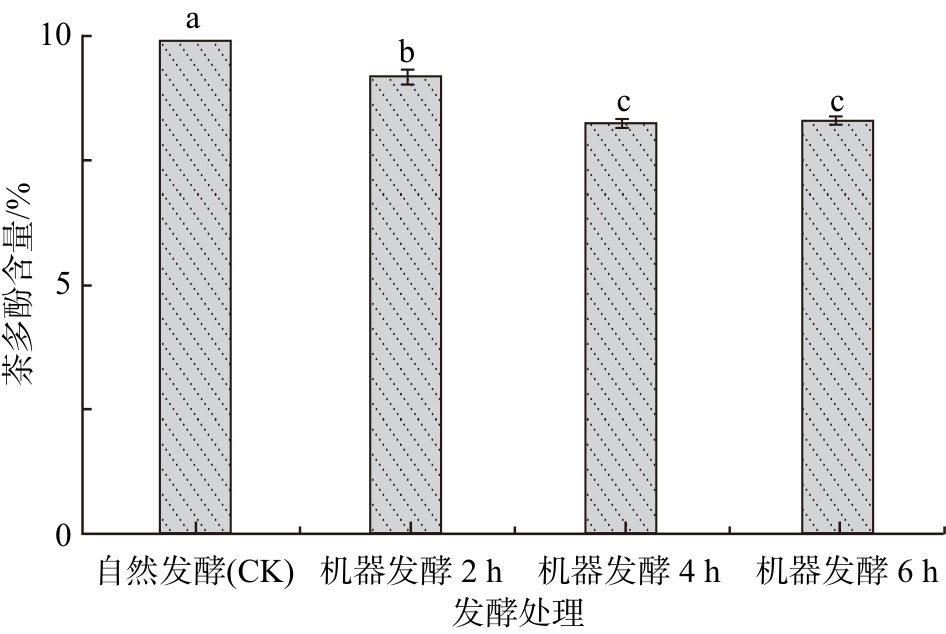
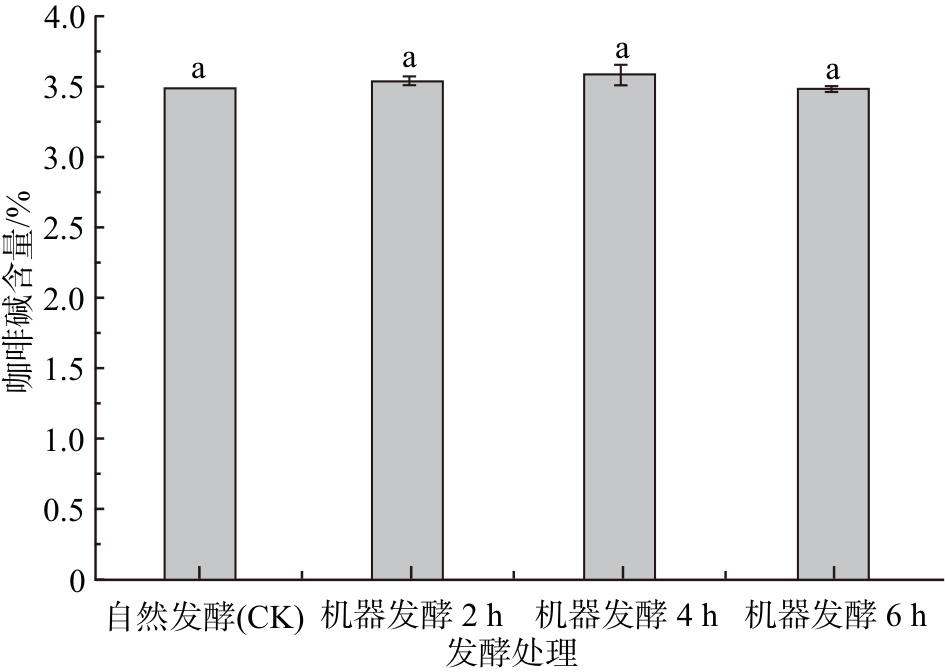
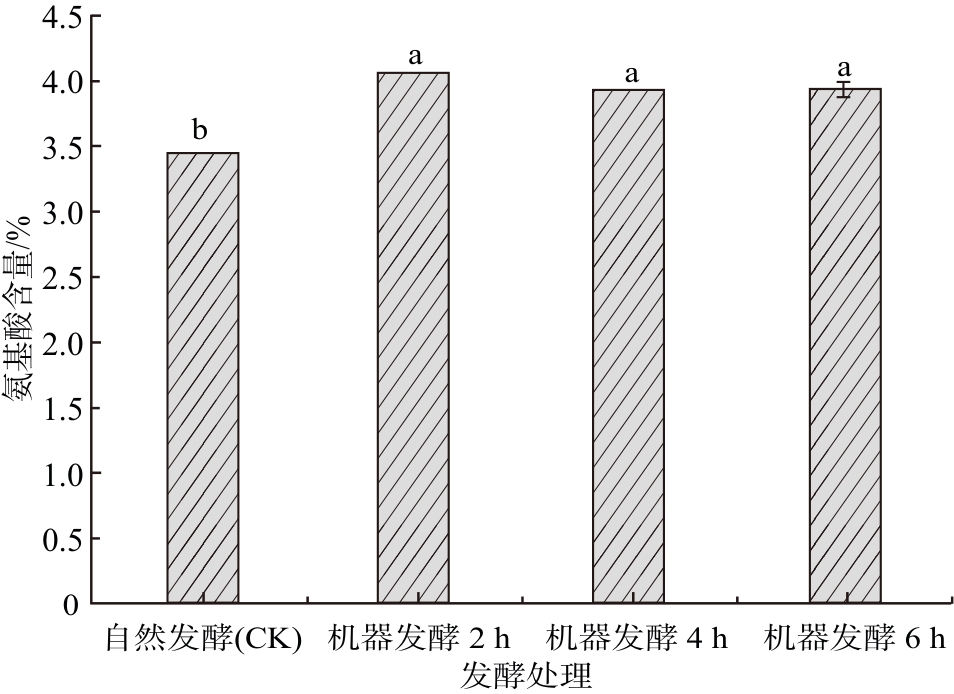
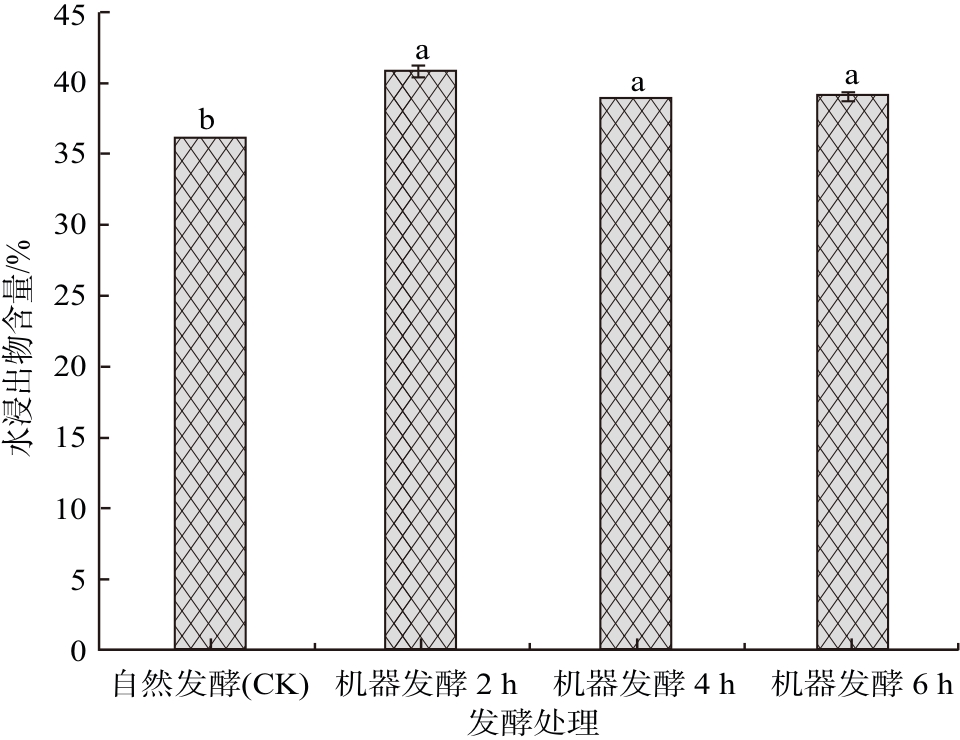
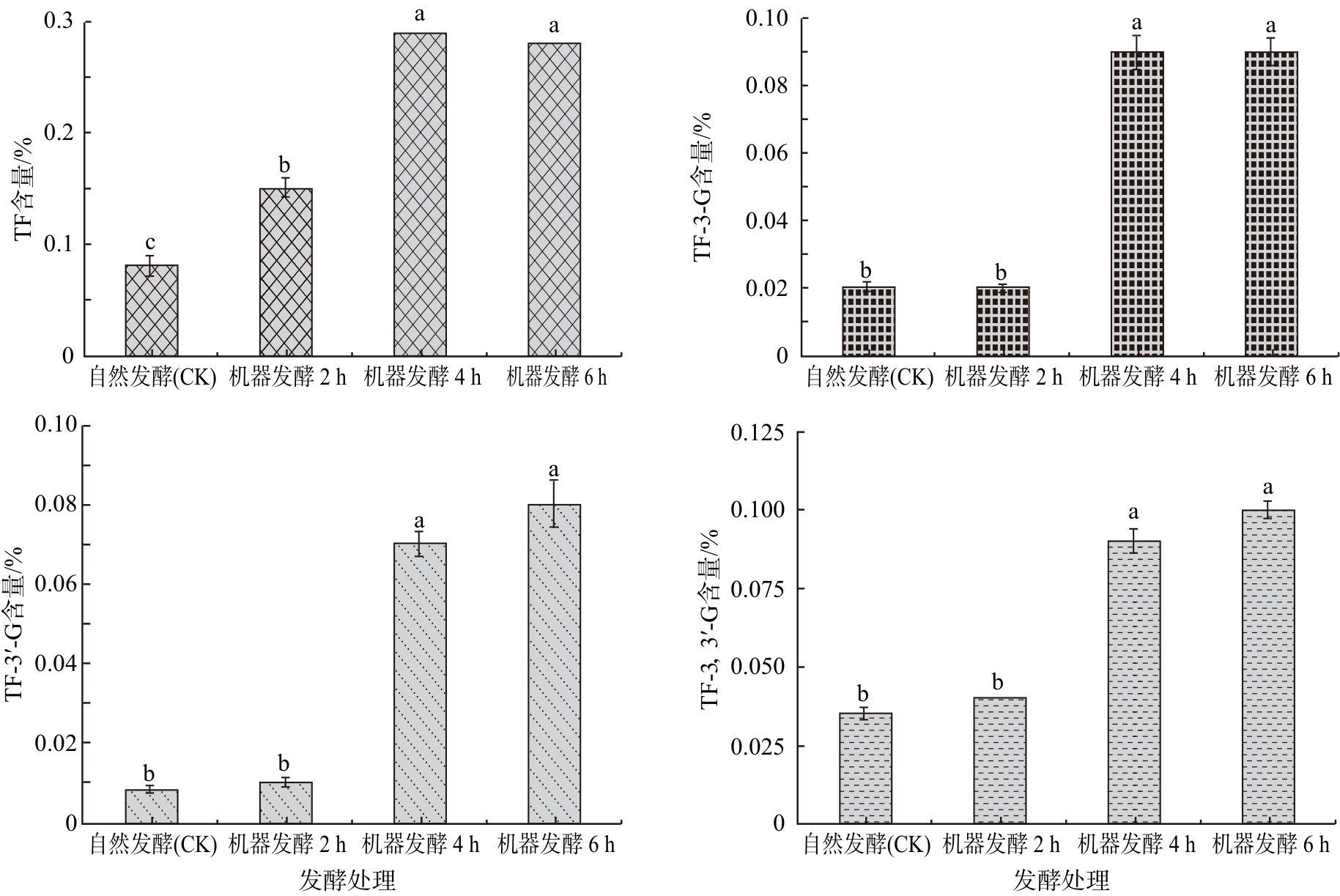
九曲红梅茶独特的风味品质,离不开加工技术和工艺的不断创新。为探明不同发酵程度对九曲红梅茶风味品质的影响,本文比较了自然发酵工艺、机器发酵2 h工艺(轻发酵)、机器发酵4 h工艺(中发酵)、机器发酵6 h工艺(重发酵)等4种不同发酵程度的加工工艺制得的九曲红梅茶的感官品质和风味化学物质含量。结果表明,“发酵4 h、发酵温度29 ℃,相对湿度95%”的中等发酵工艺下制得的九曲红梅茶的感官品质较好,茶汤橙黄稍深、滋味较甜醇、香气较浓醇、带甜香,轻发酵工艺和重发酵工艺的九曲红梅茶品质次之。与自然发酵工艺相比,机器发酵工艺加工的九曲红梅茶的茶多酚含量显著(p<0.05)降低,氨基酸、水浸出物、茶黄素(TF)、茶黄素-3-没食子酸酯(TF-3-G)、茶黄素-3′-没食子酸酯(TF-3′-G)、茶黄素-3,3′-没食子酸酯(TF-3,3′-G)的含量显著提高。此外,中发酵工艺加工的九曲红梅茶的茶多酚含量显著低于轻发酵工艺,TF、TF-3-G、TF-3′-G、TF-3,3′-G的含量显著高于轻发酵工艺,而茶黄素类物质的含量与重发酵工艺无显著差异。综上,采用“发酵4 h、发酵温度29 ℃,相对湿度95%”的中等发酵工艺,可以显著改善九曲红梅茶的风味品质,试验结果为九曲红梅茶的品质调控提供了理论依据。

关键词: 九曲红梅茶, 机器发酵, 自然发酵, 加工, 品质, 风味化学物质

Abstract:

Jiuquhongmei tea has unique flavor and quality,which is inseparable from the continuous innovation of processing technology. To explore the influence of different degrees of fermentation on the flavor quality of Jiuquhongmei tea,this paper compared the sensory quality and the content of flavor chemical substances of Jiuquhongmei tea produced by four processing techniques with different degrees of fermentation—natural fermentation process,machine fermentation 2 h process (light fermentation),machine fermentation 4 h process (medium fermentation),machine fermentation 6 h process (heavy fermentation). The results showed that the sensory quality of Jiuquhongmei tea processed by the medium fermentation process of "fermentation for 4 h,fermentation temperature 29 ℃,relative humidity 95%" was better,the color of the soup was slightly darker orange,the taste was sweeter,the aroma was thicker,and the quality of Jiuquhongmei tea processed by light fermentation process and heavy fermentation process was second. Compared with the control (natural fermentation process),the tea polyphenol content of the machine fermentation process was significantly(p<0.05) lower than that of the control. Amino acid,water extract,theaflavin (TF),theaflavin-3-gallate (TF-3-G),theaflavin-3'-gallate (TF-3'-G) and theaflavin-3,3'-gallate (TF-3,3'-G) contents were significantly higher than those of the control group. Moreover,the content of tea polyphenols in the medium fermentation process was significantly lower than that in the light fermentation process. TF,TF-3-G,TF-3'-G and TF-3,3'-G were significantly higher than those of light fermentation process. And there was no significant difference in theaflavins content between medium fermentation process and heavy fermentation process. In conclusion,the medium fermentation process of "fermentation 4 h,fermentation temperature 29 ℃,relative humidity 95%" can significantly improve the flavor quality of Jiuquhongmei tea,and provide theoretical basis for quality control of Jiuquhongmei tea.

Key words: Jiuquhongmei tea, machine fermentation, natural fermentation, processing, quality, flavor chemicals

中图分类号: